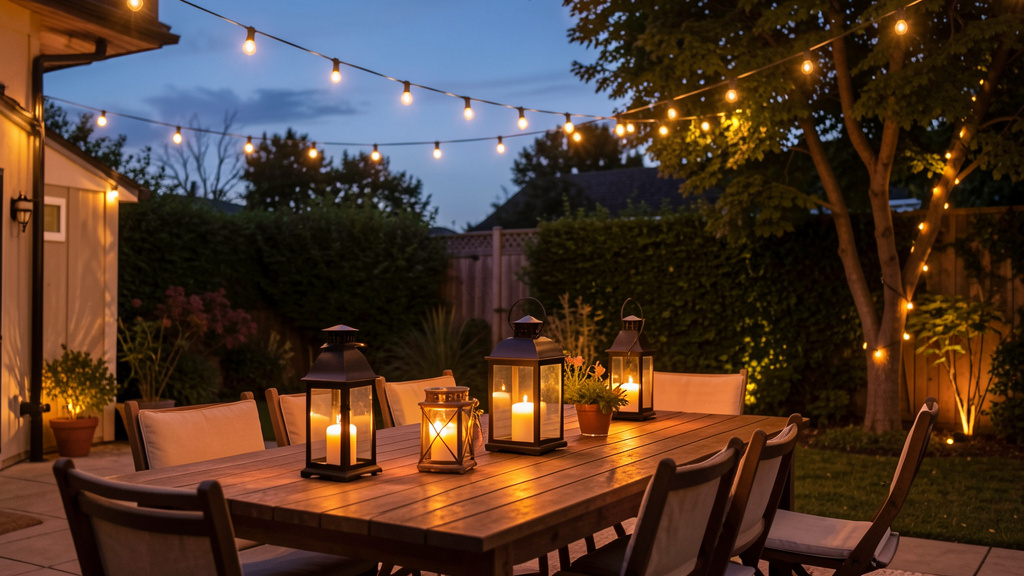
Transform Your Yard into a Safe, Inviting, and Functional Space After Dark—With a Step-by-Step Framework for Planning, Installing, and Enjoying Your Outdoor Lighting
Imagine stepping into your backyard as twilight deepens, greeted not by encroaching darkness but by a gentle, purposeful glow that reveals the curve of your garden path, highlights the texture of your stone wall, and casts a warm pool of light over your dining table. The air is cool, laughter carries from the patio, and your space feels not smaller after sunset, but expanded—a seamless extension of your home’s living area where conversations linger and quiet moments feel intentional. This isn’t magic; it’s the deliberate art and science of outdoor lighting. This guide delivers a practical framework to design, install, and enjoy a lighting system that thoughtfully extends your usable evening hours—prioritizing human experience, safety, and adaptability over mere illumination.
Introduction
As daylight hours shorten seasonally or simply fade with the evening, outdoor spaces often retreat into functional obscurity. Patios become unusable, gardens lose dimension, and pathways turn uncertain. Yet observational patterns across residential landscapes consistently reveal an opportunity: thoughtfully layered lighting doesn’t just extend time spent outside—it reshapes how spaces feel after dark. Drawing from established principles in environmental psychology, landscape architecture, and electrical safety standards observed across diverse residential contexts, this guide moves beyond superficial “lighting ideas” to deliver an actionable methodology. We examine why certain light placements support confident movement on uneven terrain, how color temperature influences comfort during social moments, and where intentional shadow enhances usability rather than hinders it. This approach centers human experience—where light serves purpose, and shadow holds meaning. Whether your space is a compact urban balcony, a suburban lot, or a rural garden retreat, these adaptable principles meet your reality. The goal is not a brilliantly lit stage set, but a naturally integrated environment where light feels discovered, not imposed—a space that invites you to stay awhile.
The Layered Lumens Framework: Designing Light That Serves Human Experience
Forget the outdated notion of “more lights = better.” True outdoor lighting mastery lies in strategic layering—a concept validated through repeated observation of how people navigate, gather, and relax in exterior spaces after sunset. The Layered Lumens Framework structures your system into three interdependent layers, each addressing distinct human needs. Safety forms the essential foundation. Ambiance builds emotional resonance and visual depth. Functionality enables specific activities without glare or distraction. Crucially, these layers operate simultaneously. A single fixture might serve safety (illuminating a step edge) and ambiance (casting a soft upward wash on a tree trunk). The framework’s strength lies in its flexibility: implement all three layers for a whole-property transformation, or apply just one to solve an immediate friction point (like a dark driveway approach). This approach has proven more effective than fixture-centric planning because it begins with human experience—not product catalogs. Before purchasing a single bulb, walk your property at dusk. Note where your eyes strain, where you hesitate, where you wish you could linger. Those observations are your true blueprint.
Step 1: The Safety Layer – Eliminating Hazards and Building Confidence
Safety lighting provides subtle visual cues that support confident movement. Its purpose isn’t to flood areas with harsh light, but to clarify changes in elevation, obstacles, or boundaries—reducing uncertainty while preserving natural night vision. This layer operates primarily at ground level and transition zones. Consider the psychological impact: when pathways are gently defined, mental tension about missteps diminishes, allowing genuine relaxation and enjoyment of the space. Without this foundation, even beautiful ambiance lighting can feel precarious.
Why This Layer Matters:
Human depth perception shifts significantly in low light. A subtle step edge or transition from patio to grass may become ambiguous. Safety lighting offers gentle visual guidance. Observational evidence from pedestrian environments suggests that consistent, low-level path illumination helps clarify terrain and may contribute to reducing trip hazards. Furthermore, even, shadow-minimized coverage communicates care for the space, which can support a sense of security without creating harsh contrasts where visual uncertainty remains.
How to Implement the Safety Layer Thoughtfully:
Pathways & Walkways: Install low-voltage path lights or in-ground well lights every 8–12 feet along primary routes. Position them so light grazes the path surface without shining directly into the eyes of oncoming walkers. Angle fixtures slightly inward on curved paths to guide movement naturally. For straight paths, stagger fixtures on alternating sides to minimize dark gaps.
Steps & Level Changes: Place a small, shielded fixture at the base of each step riser (facing upward) or embed a linear LED strip under the tread nosing. The goal is to create a visible “lip” defining each edge. Avoid relying solely on overhead lighting for stairs—it can cast shadows down the steps, obscuring edges.
Driveways & Entry Points: Use bollard lights or short post-mounted fixtures at the driveway entrance and along edges. Clearly mark the transition from street to driveway. Illuminate house numbers prominently (minimum 3-inch height) with dedicated, non-glare fixtures for visibility.
Decks & Patios: Outline deck perimeters with recessed step lights or low-profile post caps. Pay special attention to drop-offs or transitions between materials. For multi-level decks, light every change in elevation.
Gates & Thresholds:* Place a subtle fixture near gate latches and door thresholds to illuminate locks and handles without creating glare for someone approaching.
Common Considerations to Navigate:
Over-lighting: Using high-lumen path lights spaced too closely creates a runway effect, causes glare, disrupts night vision, and feels institutional. Safety lighting should feel supportive, not dominant.
Beam Angle Selection: Fixtures with wide, unfocused beams spill light onto lawns or into windows. Choose fixtures with narrow or medium beam spreads (15°–30°) precisely aimed at the walking surface.
Fixture Height: Path lights taller than 18 inches can cast long, confusing shadows ahead of the walker. Keep safety-layer fixtures low—knee height or below.
Terrain Awareness: A straight, flat path needs different spacing than a winding garden trail with roots or rocks. Adjust density based on terrain complexity. Tighter curves or uneven surfaces warrant closer fixture placement.
Color Temperature Choice:* Cool white light (4000K+) can feel clinical and increase perceived glare. Warm white (2700K–3000K) typically provides a more calming, natural-feeling guidance system.
Illustrative Scenario:
A household installed standard path lights every 10 feet along a straight backyard path. At night, distinct pools of brightness created deep shadows between them. An elderly family member consistently hesitated at each shadow gap. Solution: They replaced the lights with low-voltage 20-lumen path lights spaced 8 feet apart, angled to allow beams to overlap slightly. Two small well lights were added at the base of the porch steps. The result wasn’t “brighter”—it was smoother. The visual path became continuous, eliminating hesitation points. The family member now walks the path with greater ease, noting how “the path feels clear underfoot.”
Adaptable Alternative:
For renters or temporary solutions, heavy-duty, weatherproof LED puck lights (battery-operated with timer functions) can be adhered to deck railings at step locations or placed inside decorative glass jars buried flush with the soil along a path edge. While less permanent, they provide critical edge definition. Rechargeable stake lights with motion sensors offer targeted safety lighting only when movement is detected near hazards.
Step 2: The Ambiance Layer – Crafting Mood and Highlighting Beauty
Once safety is assured, ambiance lighting invites emotional connection. This layer sculpts your landscape with light and shadow, revealing texture, depth, and form that daylight often flattens. It transforms a generic yard into your sanctuary—a place that feels intimate, dramatic, or serene depending on your intent. Ambiance lighting works with the psychology of perception: soft upward washes on trees create a sense of height; subtle grazing on a stone wall emphasizes its character; a gentle pool of light beneath a bench suggests invitation. This layer is where lighting becomes expressive, but its success hinges on restraint. The most resonant ambiance often comes from what is not lit—from deliberate shadows that create focus and depth.
Why Ambiance Deepens Usability:
Spaces lacking ambiance can feel purely utilitarian, even if safe. A brightly lit patio with a single overhead fixture may feel exposed, create unflattering shadows during conversation, and offer little visual interest. Ambiance lighting reduces visual fatigue by softening contrasts. It supports psychological cues associated with relaxation (warm light, soft edges). When a space feels comfortable and aesthetically coherent after dark, people naturally linger longer. Conversations deepen. Evening rituals feel more intentional. This layer directly addresses the question: “Why would I want to be out here after sunset?” It provides the emotional invitation.
How to Implement the Ambiance Layer Thoughtfully:
Uplighting (The Hero Technique): Place shielded well lights or spotlights at the base of specimen trees, architectural features, or tall shrubs. Angle the beam upward to graze the trunk or surface. Start with one fixture per medium tree; larger trees may benefit from two placed asymmetrically for dimension. Use lower lumen outputs (50–150 lumens) to avoid a “searchlight” effect. The goal is to reveal form, not overwhelm it.
Downlighting (Moonlighting): Mount fixtures high in tree branches (15+ feet), aimed downward through the canopy. This mimics natural moonlight filtering through leaves, casting dappled, moving shadows on the ground—a deeply calming effect. Use fixtures with frosted lenses to diffuse the light source and prevent visible hotspots. Ideal for seating areas beneath trees.
Grazing & Wall Washing: To highlight texture on walls, fences, or rockeries, place fixtures very close (6–12 inches) to the surface. Grazing (a narrow beam) emphasizes deep texture like rough stone; wall washing (a wider beam) creates a smooth, even glow on smoother surfaces like stucco. This adds visual definition and helps shape outdoor “rooms.”
Silhouetting (Shadow Play): Place a light behind an interesting object (a sculptural plant, a piece of art) aimed at a lighter background wall. The object becomes a dramatic silhouette—a powerful focal point requiring minimal fixtures.
Water Feature Accenting: Submersible LED lights in ponds or fountains create reflective interest. Warm white often feels more natural than color-changing options. Position lights to illuminate water movement, not just the basin.
Seating Area Pools: Instead of overhead lights, use low-level sources: lanterns on tables, discreet LED strips under bench edges, or small shielded fixtures nestled in nearby plantings aimed away from seating to create a soft ambient glow on surrounding surfaces.
Common Considerations to Navigate:
Lighting Everything: Ambiance relies on contrast. If every tree, bush, and wall is lit, the eye has nowhere to rest, and the space can feel chaotic. Choose 3–5 key features max for an average-sized yard. Less often creates more impact.
Visible Light Sources: Avoid seeing the bare bulb or LED module. Always use fixtures with deep baffles, louvers, or frosted lenses that shield the direct view of the light source. Visible points of light cause glare and diminish perceived quality.
Ignoring Scale: Match fixture output and beam spread to the subject’s size. A massive oak tree needs a stronger fixture (and possibly multiple) than a slender birch.
Color Temperature Consistency: Mixing multiple color temperatures (e.g., 2700K path lights with 4000K tree lights) creates visual dissonance. Stick to one warm white temperature (2700K–3000K) throughout the entire system for cohesive ambiance. Reserve color-changing for one specific feature used intentionally.
The Interior View: At night, windows can reflect interior lights. Consider how your outdoor ambiance appears when viewed from inside your home*. Does it frame a pleasant scene? Test this perspective during installation.
Illustrative Scenario:
Homeowners had a beautiful but underutilized stone patio surrounded by mature hydrangeas. A single overhead porch light created harsh shadows and made the space feel exposed. They implemented ambiance lighting: two low-voltage well lights uplighting a nearby Japanese maple (creating a focal point), a small shielded fixture grazing the textured stone wall behind the seating area, and three miniature path lights outlining the patio edge (serving dual safety/ambiance roles). They added a dimmable string of warm-white bulbs high in the branches of an adjacent tree (not over the seating area) for a distant, starry glow. The transformation was immediate. The space felt enclosed, intimate, and intentionally designed. Evening gatherings shifted from “let’s go inside” to “let’s stay out here just a little longer.” The lighting didn’t just illuminate the patio; it redefined its emotional purpose.
Adaptable Alternative:
Strategic use of high-quality, weatherproof LED string lights or lanterns. Drape warm-white (2700K) string lights through tree branches (not just along a fence line) to create a canopy effect. Place several lanterns of varying heights on a patio table or along a low wall. Use battery-operated LED candles in hurricane vases for tabletop ambiance. While less permanent, this approach offers significant ambiance impact with minimal investment and zero wiring. Focus on creating layered pools of light at different heights.
Step 3: The Functionality Layer – Enabling Activities After Sunset
Functionality lighting empowers specific tasks and social interactions. It ensures you can safely prepare food on your outdoor kitchen counter, read a book on the lounge chair, set the dinner table without fumbling, or enjoy a board game on the patio. Unlike safety lighting (which guides movement) or ambiance lighting (which sets mood), functionality lighting is task-oriented. Its success is measured by practicality: Does it minimize shadows on the cutting board? Can text be read comfortably? Is the light positioned to avoid casting shadows from the user onto the task? This layer requires precise planning because inadequate task lighting causes immediate frustration and drives people back indoors.
Why Functionality Enables True Extension:
A space might feel safe and look beautiful, but if you can’t see your food, read a recipe, or find the door handle, its usability collapses. Functionality lighting bridges the gap between “nice to look at” and “truly livable.” It supports the activities that define evening use: dining, cooking, relaxing with a book, playing with children, or hosting guests. When task lighting is integrated seamlessly, the transition from day to night feels effortless. The outdoor kitchen becomes a viable cooking space after 6 PM. The patio transforms into a genuine living room extension. This layer directly answers the practical question: “What can I do out here after dark?”
How to Implement the Functionality Layer Thoughtfully:
Outdoor Kitchen & Grill Zones: Install linear LED tape lights under upper cabinets or shelves, aimed directly at the countertop work surface. For the grill itself, use a dedicated, heat-resistant, shielded fixture mounted above and slightly behind the cooking surface (never directly in front where smoke obscures it). Ensure light covers the entire prep area without casting shadows from your body.
Dining Areas: Avoid a single bright fixture directly over the table—it creates glare on plates and unflattering shadows on faces. Instead, use multiple lower-intensity sources:
* Option A (Ideal): A dimmable pendant light hung 30–36 inches above the table surface, with a warm-white bulb (2700K) and a fabric or opaque shade that diffuses light downward only.
* Option B (Ambiance-Focused): Several small, shielded downlights mounted in an overhead structure (pergola, gazebo) aimed precisely at the table edges.
* Option C (Flexible): A central lantern or cluster of lanterns on the table itself (battery or solar-powered for safety).
Seating & Lounge Areas: For reading chairs or benches, install adjustable wall-mounted sconces or discreet arm-mounted lights on furniture. Position the light source behind and above the shoulder of the seated person, aimed at the book or lap. Avoid lights that shine directly into eyes.
Fire Pits & Conversation Areas: Light the seating around the pit, not the pit itself (the fire provides ample light). Use low-level path lights or small bollards around the perimeter of the seating circle to define the space and prevent tripping, keeping the focus on the fire’s glow.
Play Areas (Temporary): For evening use of swing sets or play structures, use temporary, ground-mounted floodlights on timers only during active play*, positioned to minimize light spill into neighbors’ yards and avoid shining directly into children’s eyes. Prioritize safety lighting on pathways leading to the area.
Common Considerations to Navigate:
Overhead Glare in Dining Areas: A bare bulb or clear-glass pendant directly over a table is a frequent functionality challenge. It creates hotspots on food, causes squinting, and makes conversation uncomfortable. Always diffuse or shield the light source.
Insufficient Counter Light in Kitchens: Relying on a single distant fixture or the grill’s small light leaves dangerous shadows on cutting boards. Task lighting must be at the task surface.
Color Rendering Awareness: For kitchens and dining, choose LEDs with a high Color Rendering Index (CRI >90). Low-CRI lights can make food look dull or unnatural—diminishing the dining experience. Warm white (2700K–3000K) with high CRI is generally preferred.
Dimming Capability: Functionality lighting benefits significantly from dimming. Bright task light is needed for cooking; softer light is preferred for dining; minimal light suffices for lounging. Hardwired systems need dimmer switches; low-voltage systems require compatible dimmable transformers; smart systems offer app control. Non-dimmable functionality lighting can feel harsh and inflexible.
Placement Relative to User: Mounting a light directly in front of a grill means you cast a shadow on the cooking surface. Mounting a light directly in front of a reading chair means you* block the light. Always position the light source to the side or behind the user relative to the task.
Illustrative Scenario:
A couple loved their covered patio but abandoned dinners there after sunset because the single overhead fan light created blinding glare on white plates and cast deep shadows under their eyes. They installed a dimmable, fabric-shaded pendant hung precisely over the center of the table. They added two small, adjustable wall sconces on the adjacent house wall, aimed to softly wash the seating area behind the chairs (providing ambient fill without glare). For their small prep counter beside the patio door, they adhered a self-adhesive, battery-operated LED strip under the counter lip. The difference was transformative. Food looked vibrant and appetizing. Faces were softly illuminated, encouraging conversation. They could dim the pendant for dessert and coffee. Evening meals became the highlight of their day, not a compromised activity. The functionality layer didn’t just add light; it restored the purpose of the space after dark.
Adaptable Alternative:
High-CRI, dimmable LED clamp lights or adjustable desk lamps designed for outdoor use (check IP rating) can be temporarily mounted on railings or tables for task lighting during specific activities. Rechargeable, high-lumen LED work lights with magnetic bases can be positioned strategically for outdoor kitchen tasks and stored away afterward. For dining, a cluster of varying-height lanterns with warm LED candles on the table provides focused, shadow-minimizing light without wiring. While not permanent, these solutions effectively enable specific evening activities with minimal cost.
The Fundamental Principle: Lighting is not about illuminating objects; it’s about illuminating experiences. Every fixture choice, placement, and intensity should be filtered through this question: “What human moment does this light enable, protect, or enhance?”
Choosing Your Light Source: Wired Low-Voltage, Solar, or Battery-Powered?
Selecting the right power source is foundational—it impacts installation complexity, reliability, light quality, long-term effort, and environmental considerations. There is no single “best” option; the optimal choice depends entirely on your property layout, budget, technical comfort, and primary goals. Let’s examine each technology beyond marketing claims, focusing on real-world performance across critical dimensions.
Wired Low-Voltage (12V) Systems: The Foundation for Reliability & Control
This system uses a transformer (plugged into a standard GFCI-protected outdoor outlet) to step down household 120V current to a safe 12V, which then travels through buried cable to multiple fixtures. It powers the majority of professional-grade landscape lighting installations for compelling reasons.
Where It Excels:
Consistent Light Quality: Delivers stable, full-brightness output regardless of weather, season, or time of night. No dimming as batteries deplete or clouds block sun. Enables use of higher-lumen fixtures for uplighting large trees or illuminating expansive areas.
Dependable Performance: Functions reliably through weeks of cloudy weather, deep winter, or dense tree cover where solar alternatives may struggle. Critical for safety lighting where consistency supports confidence.
Precise Control & Integration: Integrates seamlessly with timers, photocells, and smart home systems (via compatible transformers). Dimming is smooth and reliable. Enables complex zoning (e.g., dim path lights after midnight while keeping entry lights on).
Long-Term Value: While initial material cost is higher ($300–$1000+ for a starter kit), fixtures and transformers are built for years of service. No recurring battery costs or solar panel replacements. Lower lifetime effort per hour of reliable operation.
Design Flexibility:* Thin, direct-burial cable (typically 14/2 or 16/2 gauge) can be routed almost anywhere—under pathways, through dense planting, around obstacles—with minimal digging (often just a slit trench). Supports dozens of fixtures on a single transformer circuit (within wattage limits).
Implementation Considerations:
Installation Effort: Requires running cable from transformer location to each fixture. In established landscapes, this means careful trenching (a flat-edged spade creates a narrow slit) or using a cable-laying tool. Always call 811 before digging to locate underground utilities.
Transformer Sizing: Critical step often overlooked. Add the wattage of all fixtures on the circuit. Choose a transformer rated for at least 20% more than your total wattage (e.g., 120W total load needs a 150W transformer). Undersizing can cause dimming or premature failure. Oversizing provides room for future expansion.
Voltage Drop Management: Over long cable runs (>50 ft) or with many fixtures, voltage can drop, causing fixtures at the end of the line to be dimmer. Mitigate by: using thicker gauge cable (14/2 vs. 16/2), creating “home-run” layouts (multiple cables from transformer instead of one long daisy-chain), or placing higher-wattage fixtures closer to the transformer.
Safety First: Must be connected to a GFCI (Ground Fault Circuit Interrupter) outlet. The transformer itself must be rated for outdoor use and mounted in a dry location (under eaves, in a protected enclosure). All connections must use waterproof wire nuts or gel-filled connectors designed for direct burial.
Ideal For: Homeowners seeking a permanent, reliable system; properties with significant tree cover or northern climates; installations requiring consistent brightness for safety or task lighting; those planning a comprehensive multi-layered system; integration with smart home controls.
Solar-Powered Lighting: Convenience with Important Context
Solar fixtures contain a small photovoltaic panel, rechargeable battery, and LED light. They charge during daylight and activate automatically at dusk via a built-in photocell.
Where It Can Work Well:
Simple Installation: No wiring, no trenching, no electrical knowledge required. Simply stake into the ground or mount where sunlight reaches. Perfect for renters, temporary setups, or adding a few accent lights with zero commitment.
Zero Operating Energy Use: Harnesses solar energy. Appeals to environmentally conscious users prioritizing operational energy reduction.
Inherent Safety: Entirely self-contained, low-voltage system. No risk of electrical shock during installation or use. Ideal for children’s play areas or water features where wiring concerns exist.
Supplemental Accent: Can work for very low-level path marking in full, unobstructed sun locations, or decorative string lights on a sunny pergola.
Important Limitations to Understand:
Weather & Season Dependent: Performance varies significantly on cloudy days, during rainy seasons, or in winter with shorter days and lower sun angles. Fixtures may provide only limited runtime after several cloudy days. Dense tree cover often prevents adequate charging.
Variable Brightness & Runtime: Output typically dims progressively through the night as the battery depletes. Runtime is rarely consistent “all night” under real-world conditions.
Placement Constraints: Panels must face south (in the Northern Hemisphere) with minimal shade to charge effectively. This often forces awkward fixture placement solely for panel exposure, not optimal lighting effect.
Component Longevity: Rechargeable batteries typically degrade within 1–3 years, especially in extreme temperatures. Replacement batteries are often proprietary or not cost-effective, leading to entire fixture replacement.
Limited Power for Core Layers:* Rarely provides sufficient, consistent lumens for effective uplighting, task lighting, or creating meaningful ambiance layers. Best suited for minimal safety-path marking only.
Making Solar Work Better:
Choose models with separate solar panels connected by a cable (5–15 ft). Mount the panel in full sun on a roof or fence, while placing the light fixture exactly where needed in shade.
Look for specifications: Minimum 100mAh battery capacity, monocrystalline solar panel (more efficient), IP67 rating or higher for weather resistance.
Clean panels regularly—dust, pollen, and debris drastically reduce charging efficiency.
Manage expectations: Treat solar as supplemental or temporary lighting, not the backbone of a critical safety or ambiance system.
Ideal For: Renters needing non-permanent solutions; adding minimal accent lighting to sunny, low-traffic garden edges; temporary event lighting; supplementing a primary low-voltage system in isolated sunny spots.
Battery-Powered (Rechargeable) Lighting: The Flexible Supplement
These fixtures use internal rechargeable batteries charged via USB cable, magnetic charging dock, or sometimes integrated solar panels. Activation is via switch, timer, or motion sensor.
Key Advantages:
Maximum Placement Freedom: No wires, no sun dependency for charging (if USB/dock charged). Place lights exactly where needed for effect—inside planters, under benches, along deck rails—regardless of sun exposure or proximity to outlets.
Consistent Light Quality: Often feature better LEDs (higher CRI, precise color temp) than budget solar lights since power isn’t constrained by tiny solar panels. Brightness remains consistent until battery depletes.
Smart Features: Many models include app control, scheduling, dimming, and color changing via Bluetooth or Wi-Fi. Motion-sensor variants provide targeted lighting only when needed.
Excellent for Targeted Tasks: Perfect for under-cabinet kitchen lighting, table lanterns, step lights on decks, or temporary pathway marking where wiring is impractical.
Critical Considerations:
Maintenance Requirement: Requires regular recharging (every 1–14 days depending on usage and battery size). Forgetting to recharge leaves areas dark. This is the primary friction point for whole-system reliance.
Runtime Variability: Brightness settings directly impact runtime. A “high” setting for task lighting may last only 4–6 hours; “low” ambiance mode may last 20+ hours. Check specs carefully.
Long-Term Component Care: Batteries degrade over 2–5 years. Replacement may not be feasible, leading to fixture disposal. Factor in the environmental consideration of battery replacement versus wired systems.
Weather Exposure: While rated for outdoor use (check IP rating!), repeated exposure to extreme cold can reduce battery capacity and lifespan. Store fixtures indoors during harsh winters if possible.
Scalability Limitation:* Impractical to manage recharging dozens of fixtures. Best used selectively for specific zones or as supplements.
Smart Implementation Strategy:
Use battery-powered lights strategically where their flexibility solves a specific problem:
Deck Steps: Rechargeable step lights with motion sensors activate only when someone approaches—safe, energy-efficient, no wiring through deck framing.
Outdoor Kitchen Countertops: USB-rechargeable under-cabinet strips provide brilliant, shadow-free task light without complex wiring. Charge them indoors weekly.
Tabletop Ambiance: High-CRI rechargeable lanterns or puck lights create perfect dining pool lighting. Charge them while not in use.
Temporary Zones: Light a newly planted garden bed for its first season with stake lights, then remove them.
Renters:* Combine with command strips or non-damaging mounts for full control without landlord permission issues.
Ideal For: Targeted task lighting (kitchens, steps); flexible accent lighting in hard-to-wire spots; renters; supplementing primary systems; temporary or seasonal installations; users comfortable with routine recharging maintenance.
Comparative Summary: Making Your Decision
| Feature | Wired Low-Voltage (12V) | Solar-Powered | Battery-Powered (Rechargeable) |
|---|---|---|---|
| Initial Cost | Moderate to High ($300-$1500+) | Low to Moderate ($20-$200) | Low to Moderate ($30-$300) |
| Operating Effort | Very Low (minimal electricity) | Zero (but weather-dependent) | Medium (regular recharging) |
| Reliability | High (weather-resilient) | Variable (weather/season dependent) | Good (depends on recharging) |
| Light Quality | High (consistent, high-CRI options) | Variable (often dim, lower-CRI) | Good to High (varies by model) |
| Installation Effort | Moderate to High (trenching) | None (place & charge) | None (place & charge) |
| Placement Flexibility | Good (cable routing needed) | Limited (requires direct sun) | Excellent (anywhere) |
| Control Options | High (timers, smart, dimming) | Limited (usually auto on/off) | Good (app, timer, motion) |
| Best Primary Use | Core system, Safety backbone, Ambiance, Task lighting | Supplemental path marking (sunny spots), Temporary decor | Targeted tasks, Renters, Hard-to-wire spots, Supplements |
| Longevity | Long (fixtures/transformer) | Shorter (battery degradation) | Medium (battery degradation) |
| Maintenance | Very Low (clean fixtures) | Low (clean panels) | Medium (regular recharging) |
The Hybrid Approach: Adaptive System Design
The most resilient and effective outdoor lighting systems often combine technologies strategically:
Core System: Use wired low-voltage for the essential Safety Layer (pathways, steps, entries) and key Ambiance Layer elements (uplighting specimen trees, wall washing). This ensures reliability where it matters most.
Strategic Supplements: Add battery-powered, motion-sensor step lights on a complex deck staircase for extra safety without rewiring. Use high-quality rechargeable lanterns on the dining table for perfect task ambiance. Place separate-panel solar lights along a sunny garden border purely for decorative accent.
Renters’ Hybrid:* Combine battery-powered path lights (recharged weekly) with USB-rechargeable under-rail deck lights and solar-powered string lights on a sunny pergola.
This layered technology approach leverages the strengths of each while mitigating weaknesses, creating a system that is both robust and adaptable to your specific constraints and goals. Never feel locked into one technology for your entire property.
Fixture Selection Decoded: Materials, Styles, and Placement Strategies for Every Zone
Choosing fixtures is where design intent meets physical reality. The right fixture protects your investment from the elements, delivers light precisely where needed, and complements your home’s architecture and landscape style. The wrong fixture becomes a visual distraction, fails prematurely, or creates glare and light pollution. This section provides a decision framework based on material resilience, optical precision, and contextual design.
Material Matters: Durability in Your Climate
Outdoor fixtures endure sun, rain, snow, salt air, and temperature swings. Material choice directly impacts lifespan, maintenance, and appearance over time.
- Die-Cast Aluminum: A standard for permanent installations. Durable, corrosion-resistant (especially with powder-coated finishes), excellent heat dissipation for LEDs, and holds fine detail. Resists warping. Ideal for coastal areas (choose marine-grade coatings), high-humidity zones, and regions with freeze-thaw cycles. Higher initial cost justified by long service life. Look for fixtures with stainless steel hardware.
- Solid Brass: Premium choice offering exceptional longevity and distinctive aesthetic. Develops a natural patina over time (greenish-blue verdigris), which many find desirable for traditional or rustic landscapes. Highly resistant to corrosion. Very heavy—ensure mounting surfaces can support weight. Significant investment, but often lasts decades. Avoid lacquered brass if you prefer the evolving patina; choose unlacquered.
- Copper: Similar premium status to brass, develops a unique green patina. Excellent corrosion resistance. Often used for artisanal or high-end custom fixtures. Softer than brass, more prone to dents.
- Stainless Steel (304 or 316 Grade): Excellent corrosion resistance, especially 316 “marine grade” for coastal installations. Modern, sleek appearance. Ensure it’s solid stainless, not just plated. Can show water spots; requires occasional wiping in hard-water areas.
- Composite/Heavy-Duty Plastic: Common in budget and solar fixtures. Modern composites (like UV-stabilized polycarbonate) can be surprisingly durable and lightweight. Best for temporary installations, children’s areas (no sharp edges if broken), or very budget-conscious projects. Avoid cheap, thin plastics that become brittle in UV light and crack within 1–2 seasons. Check IP ratings rigorously.
- Avoid: Thin zinc alloys (“pot metal”), unplated steel, or fixtures with visible seams where water can pool and cause rust. These fail quickly, especially in humid or wet climates.
Climate-Specific Guidance:
Coastal/Salty Air: Prioritize marine-grade aluminum, 316 stainless steel, solid brass, or copper. Avoid standard steel, iron, or non-marine aluminum. Rinse fixtures periodically with fresh water.
High Humidity/Rainforest Climates: Aluminum and stainless steel excel. Ensure all seals (gaskets around lenses) are intact. Avoid materials prone to mold/mildew retention (some textured plastics).
Extreme Cold (Below -20°F): Aluminum and brass handle thermal contraction well. Verify LED and driver components are rated for low temperatures (most quality LEDs are). Avoid plastics that become brittle.
Intense Sun/UV Exposure (Desert, High Altitude): Powder-coated aluminum resists fading best. Avoid dark-colored plastics that can warp. Verify UV stabilization ratings on all materials.
Optical Engineering: Beyond “Bright” – Beam Control is Everything
The fixture’s internal optics (lens, reflector, baffle) determine how light is distributed. This is more critical than raw lumen output. Poor optics create glare, light trespass, and wasted energy; precision optics deliver light exactly where intended.
- Beam Angle:
- Narrow Spot (10°–15°): For highlighting small features (a sculpture, single branch), long throws (lighting a tree 20+ ft away), or creating dramatic silhouettes. Minimizes spill light.
- Medium Flood (25°–40°): The most versatile angle. Ideal for uplighting medium trees (15–25 ft tall), grazing walls, general path lighting. Balances spread and intensity.
- Wide Flood (60°+): For washing large surfaces evenly (a broad wall, wide patio), or very close-range path lighting where wide coverage is needed. Risk of glare if not shielded properly.
- Shielding & Glare Control:
- Full Cutoff: The standard for responsible lighting. The fixture housing blocks light emitted above 90 degrees horizontal. Minimizes uplight (reducing skyglow), reduces glare. Essential for fixtures near property lines, bedrooms, or roads.
- Semi-Cutoff: Allows a small amount of uplight (typically <10% of total lumens above 90°). Can be acceptable for ambiance uplighting if carefully aimed away from sensitive areas.
- Non-Cutoff (Use Sparingly): Bare bulbs or open-top fixtures that emit light in all directions. Creates significant glare, light trespass, and skyglow. Only acceptable for fully enclosed lanterns where the glass diffuses light downward.
- Lens Type:
- Clear: Maximizes output and throw distance. Can create harsher shadows. Best for spotlights where precise beam control is needed.
- Frosted/Diffused: Softens the light source, reduces glare, creates a more even spread. Ideal for path lights, well lights, and any fixture where the bulb might be visible from seating areas.
- Patterned (e.g., “Moonlight” lens): Creates dappled effects, mimicking light through leaves. Use sparingly for specific ambiance effects.
Pro Tip: When shopping, look for photometric information from reputable manufacturers. These diagrams show exactly how light is distributed. If unavailable, scrutinize product images: can you see the bare LED module from below? If yes, it will likely cause glare. Does the fixture have a deep well or baffle? This indicates good shielding.
Zone-by-Zone Fixture Selection Guide
Pathways & Walkways:
Fixture Type: Path lights (post-mounted) or in-ground well lights.
Material: Aluminum or composite for durability.
Optics: Medium flood beam (30°), frosted lens, full cutoff design.
Height: 12–18 inches max. Taller creates long shadows ahead of walker.
Placement: 8–12 ft apart on straight paths; 6–8 ft on curves or uneven terrain. Stagger on wide paths. Angle slightly inward on curves.
Lumens: 15–30 lumens per fixture. Less is more. Goal is subtle guidance, not illumination.
Style Tip:* Match the fixture base style to your home’s architecture (e.g., Mission-style for Craftsman homes, sleek cylinder for modern).
Steps & Level Changes:
Fixture Type: Recessed step lights (for decks/stairs), low-profile well lights at base of risers, or linear LED strips under tread nosing.
Material: Stainless steel or marine-grade aluminum for moisture resistance.
Optics: Very narrow beam (15°–25°) aimed precisely at the step edge or tread surface. Full cutoff essential.
Placement: One fixture per step riser (facing up) OR continuous strip under nosing. For deck stairs, recessed lights in the vertical riser face.
Lumens: 20–50 lumens per step location. Enough to define the edge, not flood the area.
Critical: Ensure fixtures are rated for wet locations (IP67 or higher) and have non-slip surfaces if mounted on treads.
Trees & Specimen Plants (Uplighting):
Fixture Type: Well lights (in-ground) or adjustable stake-mounted spotlights. Well lights are stealthier; stakes offer easier repositioning.
Material: Heavy-duty aluminum or brass for ground burial. Must have robust gaskets.
Optics: Choose beam angle based on tree size: Narrow spot (15°) for tall/narrow trees or long throws; Medium flood (30°) for medium trees; Wide flood (45°) for broad canopies or shrubs. Adjustable aim is crucial.
Placement: Distance from trunk = 1/3 to 1/2 the tree’s height. For multi-trunk trees, place fixtures asymmetrically. Bury well lights flush with soil; use landscape staples to secure stake lights.
Lumens: 50–150 lumens per fixture. Start low; you can add more later. Over-lighting flattens the tree and kills ambiance.
Pro Technique: “Cross-lighting” – using two fixtures from opposite sides of a large tree creates dramatic depth and reveals texture. Avoid placing directly at cardinal points (N/S/E/W); offset angles feel more natural.
Walls, Fences & Architectural Features:
Fixture Type: Wall-mounted sconces, well lights for grazing, or adjustable spotlights on stakes.
Material: Match existing architectural metals if possible (e.g., black for modern, bronze for traditional). Aluminum or brass.
Optics: For grazing (emphasizing texture): Narrow beam (15°–25°), placed 6–12 inches from surface. For washing (even glow): Medium flood (30°–45°), placed 2–4 feet from surface.
Placement: For grazing a stone wall, place fixtures close to the base, aimed up. For washing a smooth stucco wall, space fixtures 6–10 ft apart along the base. For silhouetting, place fixture behind subject, aimed at wall.
Lumens: 75–200 lumens depending on wall size and desired effect. Test before final burial/mounting.
Style Integration: Choose sconces that complement your home’s exterior lighting style. A mismatched sconce draws negative attention.
Dining & Seating Areas:
Fixture Type: Pendant lights (under cover), wall sconces, discreet in-grade uplights aimed at seating backs, or high-quality lanterns.
Material: Aluminum, brass, or weather-resistant fabric/composite for shades.
Optics: Full cutoff or deeply shaded to prevent direct view of light source from seated position. Diffused light is essential.
Placement: Pendant hung 30–36″ above table surface. Sconces mounted 6–8 ft high on adjacent walls, aimed to wash seating area behind chairs. In-grade lights placed 3–5 ft from seating circle, aimed upward at backs of chairs (not at faces).
Lumens: Total 300–600 lumens for a standard 6-person table, diffused. Avoid concentrated hotspots.
Critical: High CRI (>90) and warm color temp (2700K). This makes food and skin tones look natural and appetizing.
Outdoor Kitchens & Task Zones:
Fixture Type: Linear LED tape/channel lights (under cabinets), adjustable puck lights, dedicated grill lights.
Material: Stainless steel housings, silicone-jacketed LED tape. Must be rated for wet/damp locations and heat resistance near grills.
Optics: Narrow to medium beam focused directly on work surface. Zero uplight or side spill that causes glare.
Placement: Tape lights centered under upper cabinet lip, aimed straight down at counter. Puck lights spaced 12–18″ apart under cabinets. Grill light mounted above and behind cooking surface.
Lumens: Minimum 300 lumens per linear foot of counter space.
Non-Negotiable: High CRI (>90), dimmable, and ideally on a separate switch from ambiance lighting. Heat-resistant rating near grills.
Water Features:
Fixture Type: Submersible LED well lights or dedicated pond lights.
Material: Stainless steel (316 marine grade) or high-impact plastic housings. Must have secure, waterproof cable glands.
Optics: Wide flood (60°+) to illuminate water movement and basin. Frosted lens to diffuse reflections.
Placement: Submerged near feature base, aimed upward through water flow. For fountains, place lights to highlight water arcs. Avoid aiming directly at viewing areas to prevent blinding reflections.
Lumens: 100–300 lumens depending on feature size. Start dim; water amplifies light.
Safety: Must be low-voltage (12V) with transformer located well away from water splash zones. Verify UL listing for submersion.
Style Integration: Making Fixtures Disappear (In a Good Way)
The best outdoor lighting fixtures are noticed for the light they create, not their physical presence. Achieve this through contextual harmony:
Architectural Alignment: A Victorian home suits ornate brass path lights; a mid-century modern home calls for clean-lined aluminum cylinders; a rustic cabin pairs with textured black or copper fixtures. When in doubt, choose simple, timeless shapes (cylinders, spheres) in neutral finishes (matte black, dark bronze, weathered brass).
Scale Proportionality: A massive estate can support larger, more prominent fixtures. A small urban patio demands petite, low-profile fixtures. A path light taller than your knee likely overwhelms a modest garden.
Finish Consistency: Use the same metal finish (or complementary finishes like black and bronze) across all exterior fixtures—lighting, door hardware, railings, faucets. This creates visual cohesion. Mixing chrome path lights with oil-rubbed bronze door handles feels accidental, not intentional.
Camouflage Techniques: Paint aluminum fixtures with matte spray paint to match surrounding foliage (dark green, brown). Bury well lights flush so only the lens is visible. Tuck stake lights deep into planting beds so stems hide the fixture body. The goal: during the day, fixtures should blend into the landscape; at night, only the light effect should be apparent.
Control Systems Demystified: Timers, Smart Integration, and Motion Sensors
A lighting system without thoughtful control is like a car without brakes—potentially useful, but ultimately frustrating and inefficient. Controls transform static illumination into dynamic, responsive environments that adapt to your life, conserve energy, enhance security, and deepen ambiance. This section cuts through the complexity to match control strategies to your actual needs and technical comfort level.
The Foundational Trio: Photocells, Timers, and Manual Switches
Every system, regardless of sophistication, relies on one or more of these core control methods. Understanding their strengths and limitations is step zero.
-
Photocells (Dusk-to-Dawn Sensors):
- How They Work: A light-sensitive resistor automatically turns the system ON at dusk and OFF at dawn. Integrated into many transformers or sold as standalone plugs.
- Best For: The Safety Layer (pathways, entries) where consistent nightly operation supports reliability. Ensures lights are never accidentally left off.
- Critical Consideration: Placement is everything. The sensor must be exposed to open sky, away from direct light from your own fixtures, streetlights, or porch lights. If a path light shines on the photocell, it may never trigger “dawn” and stay on all day. Mount sensors on north-facing eaves (in Northern Hemisphere) for most consistent readings.
- Limitation: Doesn’t account for seasonal changes in dusk/dawn times relative to your schedule. Lights come on at true dusk, which may be too early in summer (7 PM) when you’re not using the space yet.
-
Mechanical Timers (Plug-in or In-Line):
- How They Work: Simple dial or digital interface where you set specific ON and OFF times. Plug-in timers attach between outlet and transformer; in-line timers integrate into low-voltage cable runs.
- Best For: Budget-conscious setups; systems where usage patterns are highly predictable (e.g., lights on 7 PM–11 PM nightly); supplementing photocells for secondary circuits.
- Advantage: Very low cost, extremely reliable, no Wi-Fi or app dependency.
- Limitation: Requires manual adjustment with seasonal time changes (daylight saving time, shifting dusk times). A timer set for 7 PM ON in June means lights come on while it’s still bright daylight. Forgetting to adjust leads to lights being on during day (waste) or off when needed (safety concern). Not suitable for dynamic scheduling.
-
Manual Switches (Wall-Mounted or Inline):
- How They Work: Simple ON/OFF control. Wall switches require running low-voltage cable to a switch location; inline switches are weatherproof boxes placed along the cable run.
- Best For: Functionality Layer zones used intermittently (outdoor kitchen lights, dining area pendant); ambiance zones you want to activate only for specific occasions; providing a physical “off” override for any automated system.
- Advantage: Ultimate user control. Zero automation friction. Essential for task lighting where you decide moment-to-moment need.
- Limitation: Relies on human memory. Easy to leave lights on accidentally. Not practical for whole-property safety lighting.
Smart Control Systems: Precision, Personalization, and Peace of Mind
Smart controls leverage Wi-Fi, Bluetooth, or proprietary hubs to offer granular scheduling, remote operation, and integration with broader home ecosystems. They solve the core limitations of basic timers but introduce new considerations.
-
Smart Transformers/Controllers (The Whole-System Solution):
- How They Work: Replace your standard transformer with a Wi-Fi-enabled unit. Connects to your home network via app. Controls the entire low-voltage circuit.
- Key Capabilities:
- Sunset/Sunrise Scheduling: Automatically adjusts ON/OFF times daily based on your GPS location. No more manual seasonal adjustments.
- Custom Schedules: “Path lights on at dusk, ambiance lights on at 8 PM, all lights off at 11 PM except entry light.” Create different schedules for weekdays vs. weekends.
- Remote Control: Turn lights on/off from anywhere via smartphone app—ideal for welcoming guests or checking if lights are off.
- Integration: Works with voice assistants and sometimes smart home platforms for automations (e.g., “If front door unlocks after sunset, turn on path lights”).
- Dimming: Smooth, app-controlled dimming of the entire circuit or zones (if using multiple controllers).
- Best For: Homeowners wanting a “set-and-forget” automated system with maximum flexibility; those integrating lighting into a broader smart home; properties where precise timing matters (e.g., avoiding light trespass on neighbors after certain hours).
- Considerations: Requires stable Wi-Fi signal at transformer location (may need a mesh extender). Initial cost higher ($150–$400). Ensure compatibility with your existing fixtures/transformer wattage. Backup plan needed if internet/router fails (some have manual override).
-
Smart Fixture-Level Controls (Zonal Precision):
- How They Work: Individual fixtures (or small groups) have built-in Bluetooth/Wi-Fi or connect via a hub. Controlled per-fixture in the app.
- Key Capabilities:
- Per-Zone Control: Dim the dining area lights independently from the pathway lights. Turn off tree uplights at midnight while keeping path lights on.
- Scene Creation: “Dinner Party” scene: dining lights at 80%, path lights at 30%, tree lights off. “Movie Night” scene: all lights off except a single path light to the bathroom.
- Color Tuning: Some systems allow adjusting color temperature (e.g., warmer 2200K for late night, standard 2700K for evening).
- Geofencing: Lights turn on automatically when your phone approaches home after dark.
- Best For: Large properties with distinct zones; users who highly value customization; supplementing a primary low-voltage system with smart battery/solar fixtures for specific areas.
- Considerations: Highest complexity and cost. Requires managing multiple apps or a unified hub. Battery-powered smart fixtures still require recharging. Signal range limitations for Bluetooth models.
-
Motion Sensors: Security and Efficiency
- How They Work: Detect movement via passive infrared (PIR) and activate lights for a set duration. Available as standalone fixtures, add-on modules for low-voltage systems, or integrated into smart controllers.
- Strategic Applications:
- Security: Illuminate dark corners, side yards, or garage approaches only when motion is detected—startling potential intruders and alerting you.
- Convenience: Path lights activate as you walk from car to house; step lights on deck stairs turn on when someone approaches.
- Energy Savings: Safety/path lighting operates only when needed, not all night. Crucial for battery-powered systems to extend runtime.
- Critical Setup Tips:
- Adjust Sensitivity: Prevent false triggers from swaying branches or passing cars. Start low, increase only as needed.
- Adjust Duration: 1–5 minutes is usually sufficient for pathways; 10–15 minutes for seating areas.
- Placement: Mount sensors where they have a clear view of the approach path, but shielded from direct wind (which moves plants) and heat sources (AC units). Angle downward to avoid sky detection.
- Combine with Timers: Use a timer to enable motion sensing only between 10 PM and 6 AM, preventing lights from triggering during evening social hours when movement is expected.
- Best For: Driveway approaches, side yards, dark pathways to sheds/garages, deck stairs, areas with wildlife concerns (deters animals without constant light).
Building Your Control Strategy: A Layered Approach
The most effective systems use controls strategically per layer, not one control for everything:
1. Safety Layer: Photocell or smart controller set to “Dusk to Dawn.” Non-negotiable reliability. Motion sensors can supplement (e.g., path lights dim to 20% after midnight, brighten to 100% on motion).
2. Ambiance Layer: Smart controller with sunset/sunrise scheduling + custom OFF time (e.g., “Turn off tree uplights at 11 PM”). Allows ambiance to enhance evening hours without running all night. Manual switch override for special occasions.
3. Functionality Layer: Dedicated manual switches or smart controls per zone (e.g., “Outdoor Kitchen” switch inside the house; “Dining Area” scene in app). User activates only when needed. Motion sensors ideal for step lights on decks.
Example Whole-Property Control Plan:
Transformer: Smart controller.
Circuit 1 (Safety): Path lights, step lights, entry lights. Schedule: ON at dusk, OFF at dawn. Plus: Motion sensor module added—after 11 PM, lights dim to 30%; brighten to 100% for 3 minutes on motion.
Circuit 2 (Ambiance): Tree uplights, wall washers. Schedule: ON at dusk, OFF at 11:30 PM.
Circuit 3 (Functionality – Dining): Pendant light over table. Controlled by a weatherproof wall switch mounted near the patio door and via smart app scene (“Dinner Mode”).
Supplement: Battery-powered, motion-sensor step lights on the deck staircase (recharged monthly).
Result: Safety is always covered. Ambiance enhances prime evening hours without light pollution late night. Task lighting is user-controlled. Energy is optimized. The system feels intelligent, not automated.
Avoiding Control Overwhelm: Start Simple
If smart systems feel daunting:
1. Begin with a photocell on your main transformer for safety/path lights.
2. Add one mechanical timer for your ambiance circuit (set to turn off at your typical bedtime).
3. Install manual switches for your outdoor kitchen and dining area lights.
This “good enough” setup covers core needs reliably with minimal cost and complexity. Upgrade to smart controls later if the limitations (seasonal timer adjustments, lack of remote control) become friction points. A simple, functional control system used consistently is infinitely better than a complex smart system abandoned due to frustration.
Installation Deep Dive: Step-by-Step Guidance for Every Scenario
Installation is where planning meets earth. Done carefully, it creates a seamless, durable system. Rushed or careless installation leads to flickering lights, damaged cables, premature fixture failure, and safety hazards. This section provides meticulous, scenario-based guidance prioritizing safety, longevity, and professional results—even for first-time DIYers. Critical Safety Note: Always call 811 (USA) or your local “Call Before You Dig” service at least 3 business days before any digging begins. Locate and mark all underground utilities (power, gas, water, cable) to avoid catastrophic injury or service disruption. This is non-negotiable.
Phase 1: Pre-Installation Planning & Preparation
Create a Detailed Lighting Plan (Don’t Skip This!)
Materials: Graph paper (or digital tool), pencil, measuring tape, camera.
Steps:
1. Sketch your property to scale. Include house outline, patios, paths, trees, fences, utility boxes.
2. Walk the property at dusk with a notepad. Mark exactly where you want each fixture (use temporary stakes or spray paint). Note distances between proposed fixture locations.
3. On your sketch, label each fixture location with type (e.g., “Path Light,” “Tree Uplight”) and estimated wattage/lumens.
4. Plan cable routes: Draw the most efficient path from transformer location to each fixture, minimizing trench length and avoiding obstacles (large roots, rocks, utility lines). Group fixtures logically into circuits if using multiple transformers/zones.
5. Calculate total wattage: Sum wattage of all fixtures on each circuit. Select transformer(s) rated for at least 20% more than total wattage (e.g., 120W load needs 150W transformer).
Why It Matters:* Prevents costly mistakes like buying too-small transformer, running out of cable, or placing fixtures where they create glare. A 30-minute plan saves hours of rework.
Gather Tools & Materials
Essential Tools: Flat-edged spade or trenching shovel, work gloves, safety glasses, measuring tape, utility knife, wire strippers (for low-voltage cable), waterproof wire connectors (gel-filled or silicone-filled), cable staples (landscape staples), level, post-hole digger (for deep stakes), drill with bits (for mounting), voltage tester (non-contact).
Essential Materials: Low-voltage cable (14/2 gauge recommended for runs under 100 ft; 12/2 for longer runs or high-wattage loads), transformer, fixtures, GFCI-protected outdoor outlet access, conduit (for cable runs under hardscapes like driveways—check local code), landscape fabric (optional, for burying cable in beds).
Pro Tip:* Buy 10–15% extra cable and connectors. Unexpected obstacles happen. Having spares prevents project delays.
Transformer Location Selection
Criteria: Within 6 ft of a GFCI-protected outdoor electrical outlet. Protected from direct rain/snow (under eaves, in a weatherproof enclosure). Accessible for maintenance. Central location to minimize total cable run length. Away from high-traffic areas where cord could be tripped over.
Mounting: Secure transformer to wall or post using provided hardware. Ensure mounting surface is stable and dry. Leave slack in the power cord for strain relief.
Phase 2: Cable Installation – The Art of the Invisible Run
The Slit Trench Method (For Lawns & Soft Soil):
1. Mark the Route: Use landscaping spray paint or string to mark the exact cable path.
2. Cut the Slit: Hold flat spade vertically. Push straight down 4–6 inches deep along the marked line, rocking slightly to create a narrow slit. Remove spade, slide it forward 6 inches, repeat. Creates a clean, minimal-disturbance trench.
3. Lay the Cable: Place cable in the bottom of the slit. Avoid sharp bends (maintain minimum bend radius of 5x cable diameter).
4. Backfill: Gently press soil back into the slit with your foot. Water lightly to settle soil. Within days, grass will grow over the seam.
Advantage:* Minimal lawn damage, fast, no large piles of soil. Ideal for established lawns.
The Shallow Trench Method (For Garden Beds, Mulch Areas):
1. Clear Area: Temporarily remove mulch or top layer of soil along the route.
2. Dig Trench: Use trowel or small shovel to dig a shallow trench 3–4 inches deep.
3. Lay Cable: Place cable in trench. For added protection in high-traffic beds, lay cable on top of landscape fabric before backfilling.
4. Backfill: Replace soil/mulch. Tamp gently.
Advantage:* Easy access for future repairs or additions. Cable is protected but accessible.
Special Scenarios:
Under Hardscapes (Patios, Driveways): Do not bury cable directly under concrete/pavers without protection. Run cable through rigid PVC conduit (Schedule 40) buried at least 18 inches deep (check local code—this often requires professional help or specific permits). Conduit protects cable from shifting, moisture, and future digging. Seal conduit ends with silicone to prevent water ingress.
Across Root Systems: Avoid cutting major roots (>1 inch diameter). Route cable around the drip line of trees. If unavoidable, use a soil knife to carefully slice between roots, not through them.
Through Dense Planting: Use a dibber (pointed planting tool) or long screwdriver to create pilot holes for the cable, minimizing root disturbance.
Along Fences/Walls: Staple cable vertically up the wall (using UV-resistant cable staples every 18 inches) to reach higher fixtures (e.g., for downlighting). Conceal cable behind downspouts or trim where possible.
Critical Cable Handling Tips:
No Splices Underground: Every connection point is a potential failure point. Plan cable runs to minimize connections. If a splice is unavoidable (e.g., extending a run), use a single high-quality, gel-filled waterproof connector rated for direct burial. Never use standard wire nuts.
Avoid Sharp Edges: File sharp edges on rocks or concrete where cable passes. Use conduit sections or rubber grommets to protect cable where it passes through deck framing or retaining walls.
Leave Service Loops: At each fixture location and the transformer, leave 12–18 inches of coiled excess cable (“service loop”). This provides slack for future fixture adjustment, repair, or replacement without needing to run new cable.
Test Before Burying: After laying cable but before backfilling, connect fixtures temporarily and power on the system. Verify every light works. Fix any issues now—it’s infinitely easier than digging up buried cable later.
Phase 3: Fixture Installation – Precision Placement
Path Lights & Stake-Mounted Fixtures:
1. Position: Place stake at marked location. Ensure it’s plumb (vertical) using a small level.
2. Secure: Push stake firmly into soil. For loose soil or high-wind areas, backfill hole with soil mixed with gravel for stability.
3. Connect: Strip 1/2 inch of insulation from cable ends. Insert cable into fixture’s wire compartment. Connect fixture wires to cable wires using waterproof connector (match colors: usually red to red, black to black). Seal connector completely.
4. Aim: Adjust fixture head to desired angle before final tightening. For path lights, aim beam downward along the path direction.
5. Camouflage: Tuck any visible cable under soil or mulch near the base. Gently press soil around stake base.
In-Ground Well Lights:
1. Dig Hole: Excavate a hole slightly wider and deeper than the fixture housing. Depth should allow lens to sit flush or just below soil level.
2. Prepare Base: Place 1–2 inches of gravel or sand in the bottom for drainage and leveling.
3. Position Fixture: Set fixture in hole. Use level to ensure it’s perfectly horizontal.
4. Backfill Carefully: Replace soil around fixture, tamping gently in layers to eliminate air pockets. Avoid getting soil inside the fixture housing.
5. Final Check: Ensure lens is clean and flush. Connect cable using waterproof connector before final backfilling near the fixture. Leave service loop.
Wall-Mounted & Surface-Mounted Fixtures:
1. Mark Location: Hold fixture against mounting surface. Mark screw hole locations with pencil.
2. Drill Pilot Holes: Use appropriate drill bit for surface (masonry bit for brick/concrete, wood bit for siding). Drill holes slightly deeper than screw length.
3. Install Anchors (if needed): For masonry, insert plastic or lead anchors into holes.
4. Mount Fixture: Feed cable through fixture’s mounting hole. Secure fixture to surface with provided screws. Ensure it’s tight and stable.
5. Connect & Seal: Connect wires inside fixture compartment. Apply a thin bead of silicone sealant around the cable entry point and mounting flange before final tightening to prevent moisture ingress. Close compartment securely.
Tree Uplighting (Well Lights or Stakes):
1. Finalize Position: During daytime, place temporary stake at planned location. View from key vantage points (patio, living room window). Adjust until the light effect is optimal.
2. Install Fixture: Follow well light or stake instructions. For well lights, ensure housing is deep enough to prevent soil/water ingress into lens area.
3. Aim Precisely: At night, power on system. Adjust fixture aim while observing the effect on the tree. Make micro-adjustments. Tighten securely once perfect.
4. Secure Cable: Use landscape staples to pin cable to soil every 12–18 inches leading to the fixture. Conceal staples and cable with mulch or soil.
Critical Post-Installation Checks:
Water Test: After installation (and after first rain), check all fixtures for moisture inside lenses or housings. Wipe seals clean and reseat if necessary.
Glare Check: Walk through the space at night from multiple angles (seated, standing, approaching from street). Identify any fixtures causing direct glare. Re-aim or add shielding (black electrical tape on lens edge temporarily to test).
Neighbor Check: Stand on your property line at night. Do any fixtures shine directly into neighbors’ windows? Adjust aim immediately. Responsible lighting maintains community harmony.
Label Everything: Use a label maker to mark transformer circuits (“Front Path,” “Back Trees”) and note fixture locations on your original plan sketch. Invaluable for future troubleshooting.
Troubleshooting Common Installation Issues
- Fixture is Dim or Flickering:
- Cause: Voltage drop (cable too long/thin, too many fixtures), loose connection, undersized transformer.
- Fix: Check connections first. If multiple fixtures dim toward end of run, reconfigure cable layout (home-run vs. daisy-chain), use thicker gauge cable (12/2), or add a second transformer circuit. Verify transformer wattage exceeds total load by 20%.
- Fixture is Completely Dead:
- Cause: Broken wire, faulty connector, dead LED module, transformer issue.
- Fix: Swap the fixture with a known-working one. If new fixture works, original is faulty. If not, check connections at fixture and along cable run. Use a multimeter to test voltage at fixture location (should be 10–14V AC for low-voltage systems). Check transformer output.
- Moisture Inside Fixture:
- Cause: Compromised seal, cracked lens, improper installation allowing water ingress.
- Fix: Disassemble fixture (power off!). Dry thoroughly. Clean gasket and sealing surfaces. Apply dielectric grease to gasket before reassembly. Replace cracked lens or damaged gasket. Ensure fixture is rated for its location (wet vs. damp).
- Transformer Humming or Hot:
- Cause: Overloaded (total fixture wattage exceeds transformer rating), short circuit.
- Fix: IMMEDIATELY TURN OFF POWER. Disconnect all fixtures. Power on transformer alone—if humming stops, overload/short is in fixtures/cable. Reconnect fixtures one by one to isolate faulty component. If humming persists with nothing connected, transformer is faulty—replace. Never operate an overloaded transformer; fire risk.
- Lights Come On During Daylight:
- Cause: Photocell covered by fixture light, dirt, or foliage; faulty photocell.
- Fix: Relocate photocell to unobstructed north-facing location. Clean sensor lens. Cover sensor with opaque tape temporarily to test; if lights stay off, photocell is faulty—replace.
Maintenance and Seasonal Adaptation: Keeping Your System Brilliant Year-Round
A thoughtfully installed outdoor lighting system is designed for longevity, but like any element exposed to the elements, it benefits from proactive care. Seasonal shifts, weather events, and natural wear can gradually diminish performance. Establishing a simple, recurring maintenance rhythm ensures your system continues to deliver safety, ambiance, and functionality year after year—without unexpected failures or degraded effects. This section provides a practical, season-by-season guide to preservation and adaptation, turning maintenance from a chore into an opportunity to refine your lighting design.
The Annual Maintenance Checklist: A 30-Minute Ritual
Set a calendar reminder for a consistent date each year (e.g., the first weekend of spring). This brief annual review prevents minor issues from becoming major problems:
- Clean Every Fixture Lens and Housing: Dust, pollen, cobwebs, and mineral deposits from hard water gradually cloud lenses and reduce light output. Use a soft cloth dampened with mild soapy water. For stubborn grime on glass lenses, isopropyl alcohol on a cotton swab works well. Avoid abrasive cleaners that scratch surfaces. Rinse thoroughly with clean water. Pro Tip: Clean fixtures on a cool, overcast day to prevent water spots from drying too quickly in direct sun.
- Inspect and Tighten Mounting Hardware: Vibration from wind, thermal expansion/contraction, and soil settling can loosen screws, stakes, or mounting brackets over time. Check each fixture for stability. Tighten hardware gently—over-tightening can strip threads or crack composite materials. For stake-mounted lights wobbling in soft soil, pack additional soil or gravel around the base.
- Examine Cable Runs and Connections: Visually trace accessible cable sections (especially near the transformer and where cables emerge from the ground). Look for cuts, abrasions, rodent damage, or areas where soil erosion has exposed cable. Gently tug on waterproof connectors to ensure they are secure. If you find damaged cable, cut out the damaged section and splice in a new piece using two high-quality, gel-filled waterproof connectors (overlap the splice). For buried splices, place inside a small, sealed plastic container filled with silica gel packets before reburying for extra moisture protection.
- Test Transformer and Controls: Verify the transformer is operating within its rated wattage (re-check total fixture load if you’ve added lights). Listen for unusual humming (a sign of overload or failure). Clean the transformer’s ventilation slots with a dry brush. Test timers, photocells, and smart controls: does the system activate/deactivate at the correct times? Clean photocell sensors with a soft, dry cloth. Update smart device firmware if prompted.
- Re-aim and Reassess: Walk your property at night