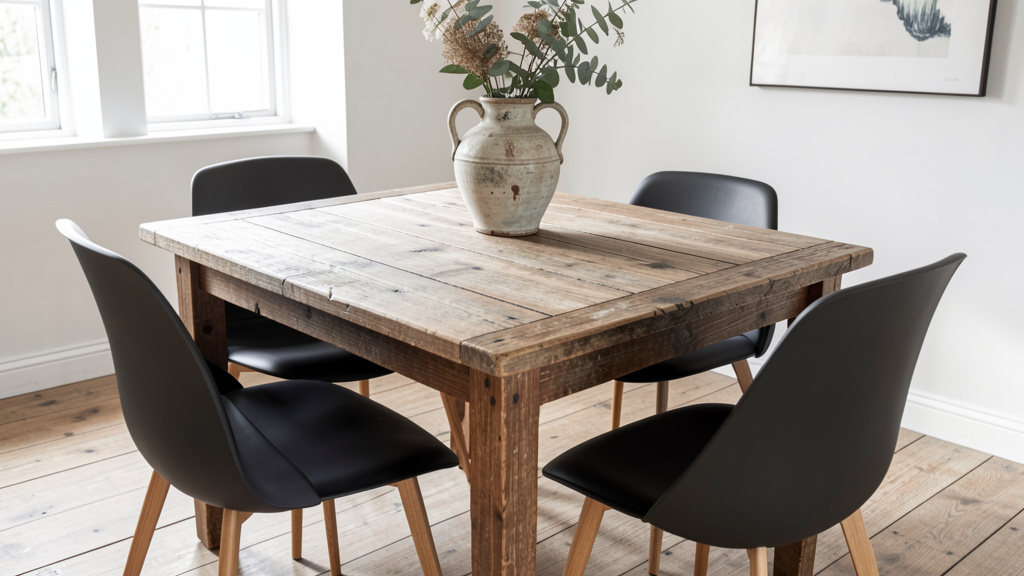
Move beyond rigid design rules and cultivate a space that feels authentically yours—without the overwhelm of clashing aesthetics.
Mixing design styles is one of the most liberating—and nuanced—approaches to home decor. It invites you to honor the antique desk passed down through generations, the sleek sofa discovered during travels, the handwoven textile collected on a meaningful journey. Yet without thoughtful intention, these cherished pieces may create visual tension rather than harmony. This guide offers a structured, psychologically informed approach to blending disparate elements into a cohesive whole. You’ll learn to identify foundational style anchors, deploy color and texture as unifying threads, apply proportion principles that support visual ease, and navigate common emotional friction points. By the end, you’ll have a flexible roadmap to cultivate a home that feels deeply personal—a space that reflects your evolving story with grace and intention.
Introduction: Why Thoughtful Eclecticism Endures
Walk through historic neighborhoods across continents, and you’ll notice homes that evolved organically across decades: Georgian facades housing Art Nouveau details, Craftsman bungalows softened with Scandinavian textiles, Mediterranean villas layered with contemporary art. These spaces feel authentic not despite their stylistic diversity, but because of it. They reflect real lives—travel, inheritance, shifting tastes, growing families. Thoughtful eclecticism—the intentional curation of meaningful objects across styles—is not a fleeting trend. It is a timeless human impulse to surround ourselves with what matters.
The critical distinction lies in intentionality. Random accumulation may feel chaotic; thoughtful synthesis creates character. Contemporary discourse sometimes presents a false choice: rigid adherence to a single style versus unstructured maximalism. This overlooks centuries of successful style fusion. Consider Parisian salons of the 1920s, where Louis XVI chairs conversed with Cubist canvases under Art Deco lighting. Or California coastal homes of the 1970s, where rustic redwood beams framed minimalist Japanese-inspired interiors. These spaces achieved harmony through underlying principles of balance, scale, narrative, and human perception—not by following rigid checklists.
Today’s challenge is amplified by digital saturation. Social media floods us with hyper-curated rooms that appear effortless yet feel emotionally distant. We absorb unspoken “rules” (“never mix metals,” “match all wood tones”) that can breed anxiety rather than creativity. The result? Many freeze, defaulting to safe, catalog-matched sets lacking soul. Or they accumulate beloved pieces haphazardly, then feel uncertainty when the room feels unsettled.
This guide offers compassionate clarity. We move beyond superficial tips to explore a structured framework used by design professionals to create spaces that feel both cohesive and deeply personal. Whether furnishing a new apartment, refining a long-held home, or navigating shared-space compromises, you’ll gain adaptable tools for confident decisions. We address common concerns: Will this feel messy? How do I honor an heirloom without making the room feel dated? Can I mix styles thoughtfully on a budget? Most importantly, we reframe the goal: Your home need not mimic a magazine spread. It should feel like you—a visual expression of texture, color, memory, and meaning. Let’s begin by shifting from “matching” to “meaningful connection.”
The Style Synthesis Framework: Anchor, Bridge, Accent
At the heart of intentional style mixing lies a three-part framework developed through established practices in interior architecture and styling. Think of it as the quiet structure behind a graceful bridge: invisible to the casual observer, yet essential for stability and flow. This method—Anchor, Bridge, Accent—creates visual hierarchy, emotional resonance, and intentional rhythm. It transforms subjective uncertainty (“Does this work?”) into observable criteria (“How does this element connect?”). We’ll explore each layer with practical detail, adaptable strategies, and compassionate guidance for every confidence level and living context.
Step 1: Identify Your Anchor Style (The Foundation)
Your anchor style forms the foundational layer of the room—establishing mood, structural rhythm, and emotional tone. This is not about selecting the “most correct” historical label. It is about identifying the aesthetic language that best supports the room’s primary function and your deepest emotional needs. Does serene minimalism foster calm for your bedroom? Does warm, tactile Rustic Modern invite connection in your living area? Does bold, expressive Hollywood Regency energize your creative workspace?
How to choose your anchor with clarity:
Begin not with style names, but with sensory and emotional mapping. Gather 15–20 images that evoke a genuine feeling—not just “I like this,” but “This makes me feel calm, inspired, grounded, or joyful.” Use physical magazines, private digital boards, or screenshots. Lay them out. Step back. What patterns emerge?
– Color temperature: Do you gravitate toward cool, muted palettes (soft grays, blues, whites) or warm, earthy tones (terracotta, ochre, walnut)?
– Line quality: Are clean, straight lines dominant (modern, contemporary) or curved, organic forms (Art Nouveau, Bohemian)?
– Texture density: Do images feel smooth and uncluttered (minimalist) or richly layered (traditional, maximalist)?
– Light interaction: Do spaces feel bright and airy (Scandinavian) or intimate and shadowed (moody traditional)?
Document your observations. If most of your “calm” images feature light wood floors, unadorned windows, and neutral textiles, your anchor may lean toward Scandinavian or Japandi influences. If your “energizing” images share deep jewel tones, reflective surfaces, and dramatic silhouettes, Art Deco or Hollywood Regency may resonate. This emotional alignment matters deeply. A room anchored in a style that contradicts its purpose—or your inner needs—may feel perpetually unsettled, regardless of execution.
Real-world application: Elena, a therapist in Seattle, felt torn between her inherited Victorian-era desk (ornate carvings, dark wood) and her desire for a calming home office. After emotional mapping, she noticed images of light-filled, uncluttered spaces consistently evoked “focus” and “clarity.” She chose a Japandi-inspired foundation for the office: light oak shelves, linen curtains, neutral walls. She kept the Victorian desk but recontextualized it—painted matte white to soften its form, paired with a minimalist ergonomic chair. The desk became a meaningful accent; the room’s foundation created the serene environment she needed. The anchor served the room’s function; the accent honored her history.
Common considerations—and gentle guidance:
– Choosing based solely on trends: A room anchored in a currently popular style may feel joyful today but emotionally misaligned later if it doesn’t resonate with your core needs. Guidance: Revisit your emotional mapping. Does this style genuinely support how you want to feel in this space daily?
– Overcomplicating the anchor layer: Selecting “Transitional” as an anchor can sometimes create ambiguity. Guidance: Reflect deeper. Does your space lean more toward traditional elements (moldings, symmetrical layout) or contemporary ones (clean lines, open plan)? Clarify the dominant influence.
– Ignoring architectural context: In a loft with exposed brick and beams, forcing a delicate French Provincial anchor may create visual tension. Guidance: Let architecture inform your anchor. Industrial elements often harmonize naturally with Modern, Rustic, or Eclectic foundations. Work with the bones of your space.
Why this layer matters: A clear anchor provides a visual resting point. Cognitive studies suggest humans seek hierarchy and pattern recognition in environments. An anchor offers stability—a “home base” for the eye. This can reduce subconscious visual stress. A room with a strong foundation can support expressive accents precisely because the base feels secure. Think of music: the anchor is the steady rhythm; without it, even beautiful melodies may feel disjointed.
Step 2: Select Your Bridge Elements (The Connectors)
Bridge elements create gentle dialogue between your anchor foundation and expressive accent pieces. They occupy a significant portion of the room’s visual composition—not as loud statements, but as subtle connectors. Bridges whisper connections through shared qualities: a neutral color appearing across multiple items, a natural material transcending stylistic boundaries, a simple form that complements without competing. They are the quiet “glue” transforming a collection of objects into a cohesive composition.
How to identify and deploy effective bridges:
Bridges commonly fall into three categories. Successful mixing often weaves bridges from multiple categories.
Category 1: Textural Bridges
Natural, tactile materials inherently unify disparate styles. Wood grain, stone veining, linen weave, wool nap—these organic patterns feel timeless and human.
– Example: In a living area with a sleek Contemporary foundation (polished floors, lacquered console), introducing a rustic Farmhouse accent (a distressed wood coffee table) may feel abrupt. The bridge? A large jute rug. Its rough, organic texture echoes the wood table’s earthiness while softening the floor’s hardness. The rug doesn’t “match” either style perfectly—it connects them.
– Guidance: Layer textural bridges thoughtfully. Over the jute rug, add a medium-pile wool throw on the sofa. The wool’s softness bridges the coolness of contemporary upholstery and the warmth of rustic wood.
Category 2: Color Bridges
A carefully chosen neutral (beyond basic beige) that appears in multiple elements creates invisible threads of unity.
– Example: Anchor = Coastal (whites, soft blues); Accent = Industrial (black metal shelving). The potential clash? Cool blue versus stark black. The bridge? Charcoal gray. Use it in throw pillows, the frame of abstract artwork, the base of a table lamp. Gray shares blue’s coolness and black’s depth, creating a gradient of connection.
– Guidance: Explore a “bridge color family.” Instead of one exact shade, select variations within a family (e.g., warm whites: ivory, oat, bone). This adds subtle depth while maintaining cohesion. Test swatches side-by-side in your room’s lighting at different times of day.
Category 3: Form Bridges
Furniture or objects with simple, transitional silhouettes that avoid strong stylistic signatures.
– Example: Anchor = Traditional (curved sofa, ornate mirror); Accent = Mid-Century Modern (Eames chair, geometric side table). The bridge? A tapered-leg wooden console table. Its clean lines nod to mid-century, while the warm wood tone and functional form feel at home in traditional settings. It serves as neutral territory.
– Guidance: Consider visual weight. If anchor furniture feels substantial (traditional), choose bridge pieces with visible legs or lighter presence (a glass-top side table). If the anchor feels delicate (Scandinavian), bridge with pieces of moderate weight (a solid wood stool).
Case Study: The Chicago Loft
A couple inherited a contemporary loft (white walls, steel beams) but cherished vintage French country pieces: a distressed armoire, floral-print armchairs. Initial attempts felt disjointed.
– Anchor reaffirmed: Contemporary foundation (white walls, minimalist sofa, exposed beams).
– Bridge deployed: A large abstract landscape painting in muted sage, ochre, and charcoal. Its organic shapes softened sharp lines; its earthy palette connected the cool contemporary base with warm vintage pieces. Light oak flooring provided additional textural warmth.
– Accent refined: The armoire placed against a blank wall, styled minimally with contemporary ceramics. Armchairs reupholstered in solid sage green fabric.
Result: The vintage pieces felt intentional. Guests remarked, “It feels collected, not decorated.”
Bridge considerations to keep in mind:
– Skipping the bridge layer: This is a frequent source of visual tension. Without bridges, anchor and accent elements may compete. Check: Stand at the room’s entrance. Do your eyes move smoothly between objects, or jump erratically? Adding bridges often creates flow.
– Choosing bridges that are stylistically loud: A highly ornate gilded mirror is not a bridge between Modern and Rustic—it may act as a competing accent. Bridges should be subtle conductors, not soloists.
– Overlooking negative space: Empty space—ma in Japanese design—is a powerful unifier. Strategic breathing room around objects allows bridges to “breathe” and connections to be perceived. Clutter can obscure bridges.
Why bridges matter: Bridges reduce visual complexity. When the eye moves from a mid-century chair to a traditional rug, a textural bridge (like a wool blanket draped over the chair) creates a subconscious “pathway.” Environments with clear visual pathways may support greater ease and comfort. Bridges are environmental psychology in gentle action.
Step 3: Introduce Accent Pieces (The Personality)
Accents are the intentional sparks of soul, story, and surprise—typically appearing as sparing highlights within the space. These are your non-negotiable treasures: the Oaxacan black pottery bowl from a meaningful journey, the framed photograph from a milestone moment, the hand-thrown mug from a child’s first pottery class. Because they carry minimal visual weight, accents can be stylistically expressive, emotionally resonant, or temporally diverse without destabilizing the room. Their power lies in scarcity and significance.
How to deploy accents with intention:
Placement matters deeply. Accents belong where the eye naturally pauses:
– On surfaces with breathing room (coffee table, console, nightstand)
– At eye level on walls (art, shelves)
– In “moments of discovery” (inside a bookshelf, on a windowsill)
Limit accents to 2–3 focal points per room. Scarcity amplifies meaning. A single vibrant textile displayed on a neutral wall commands attention; many competing textiles may create visual noise. Crucially, every accent may pass a gentle “Why Test”: Why is this here? If the answer relates to genuine meaning (“This rug reminds me of bargaining in a Marrakech souk with my sister”), it earns its place. Story is a profound unifier.
Case Study: The Brooklyn Apartment
Mark and Lena’s apartment anchors in a minimalist Japanese-inspired foundation (platform bed, shoji screen room divider, neutral palette). Bridge elements include light oak flooring, unbleached linen textiles, and woven seagrass baskets. Their accents tell their story:
– A curated collection of Mexican Talavera pottery on open oak shelves. Connection: The pottery’s cobalt blue echoes the indigo dye in their linen throw pillows.
– A vintage Italian leather armchair in the reading nook. Connection: The leather’s rich brown complements the oak flooring; its deep seat creates a deliberate contrast with the room’s low-profile furniture.
– A small framed photograph of their wedding in Kyoto on the nightstand. Connection: The black frame aligns with the shoji screen’s lines; the image’s greenery ties to the single bonsai plant.
No single accent dominates. Together, they whisper: This is a home lived in, loved in, and layered with meaning.
Accent strategies scaled to your context:
– Beginning your journey (Low Risk, High Reward): Start with small, adaptable items. A single piece of meaningful art. One throw pillow in a color pulled from your bridge palette. A ceramic vase holding seasonal branches. This builds confidence without commitment. Why it works: Small accents are easy to rotate. If it doesn’t feel right after a week, swap it. No significant penalty.
– Growing confidence (Intentional Statement): Incorporate one statement furniture piece as an accent. An Art Deco vanity in a Scandinavian bedroom. A rustic farmhouse stool in a modern kitchen. Critical consideration: Ensure it shares at least one tangible connection with your bridge layer (e.g., the vanity’s hardware matches the lamp base; the stool’s wood tone matches the flooring).
– Deepening practice (Curated Complexity): Mix multiple accent styles within one room, but deploy a unifying thread. All accents share a common color family (e.g., varying shades of terracotta). Or all accents feature metal finishes (brass candlesticks, iron bookends, copper bowl). This creates rhythm. Insight: Grouping three objects of varying heights but shared color/material on a shelf often creates visual harmony through repetition with variation.
Compassionate considerations:
– Over-accenting (“Souvenir Syndrome”): When accents exceed a sparing presence, they may dilute the foundation and create visual fatigue. Guidance: Apply a gentle “Three-Question Edit”: (1) Does this serve a function or bring genuine joy? (2) Does it connect visually to at least one other element? (3) Would I notice its absence? If “no” to two questions, it may be clutter. Store it lovingly; consider seasonal rotation.
– Scale awareness: A tiny accent may vanish in a large room; an oversized accent may overwhelm a small space. Guidance: For wall art above a sofa, width often feels balanced at two-thirds to three-quarters of the sofa’s width. For tabletop objects, vary heights intentionally (tall vase, medium book stack, small figurine).
– Honoring the “resting eye”: Accents should create points of interest, not visual chaos. Guidance: After placing accents, step back and soften your gaze. Do your eyes find peaceful resting spots between focal points? If the room feels “busy,” removing one accent may restore calm. Negative space is part of the composition.
The Guiding Principle: Harmony in eclectic design isn’t about sameness—it’s about relationship. Every element benefits from relating to at least one other element through color, texture, shape, material, or story. This creates a web of visual connections that feels cohesive, intentional, and deeply human—even when styles differ. When uncertainty arises, ask: “What connects this to something else here?” If you can name the thread, you’ve cultivated connection.
Beyond the Framework: Nuanced Execution for Everyday Living
The Anchor-Bridge-Accent framework provides structural clarity. True resonance emerges in thoughtful execution—the micro-decisions that transform theory into lived experience. Let’s explore tangible elements where style mixing finds its voice: color strategy, texture layering, scale calibration, and lighting orchestration. Each section includes adaptable techniques, real-room considerations, and solutions for diverse spaces and constraints.
Color: The Unseen Thread That Binds
Color is a potent unifier across stylistic boundaries. A consistent, intentional color story can allow a vintage mirror to converse gracefully with a minimalist console. “Consistent” does not mean monochromatic. It means purposeful—creating a visual rhythm that guides the eye comfortably, allowing disparate styles to relate rather than compete.
Developing your room-specific color story:
1. Extract from your anchor: Identify the core palette of your chosen foundation. Traditional influences often feature rich, deep hues (navy, forest green) with cream accents. Scandinavian foundations lean toward whites, light grays, and soft wood tones with one muted accent color. Modern foundations may use stark neutrals with bold saturated accents.
2. Define your bridge colors: Select 1–2 neutrals that will appear across multiple bridge elements. Nuance matters. Instead of “beige,” consider warm beige (with yellow/red undertones) or cool beige (with gray/blue undertones). Test large swatches (12″x12″ minimum) on your wall. View them at dawn, noon, and dusk. Does the color feel harmonious with your anchor’s existing elements?
3. Curate your accent colors: Choose 1–2 colors for accents. Crucially, repeat each accent color in at least three distinct places. This creates rhythm. If emerald green is your accent: a ceramic vase, the spine of books on a shelf, the piping on a pillow. Repetition signals intention.
4. Adapt visual weight distribution thoughtfully: While the common guideline suggests distributing visual weight (majority for anchor, significant portion for bridge, sparing highlights for accent), adapt it to texture and value in mixed-style rooms. Example: majority smooth surfaces (anchor: painted walls), significant medium texture (bridge: wood grain, linen curtains), sparing high texture (accent: chunky knit throw). This creates dimensional harmony beyond hue.
Real-room consideration:
– Observation: “My navy blue traditional sofa feels disconnected from my mustard yellow mid-century armchair.”
– Insight: No bridge color connects the two strong hues. The eye moves abruptly between them.
– Pathway: Introduce a bridge color present in both zones. Add charcoal gray throw pillows to the sofa (connecting to the armchair’s wood tone). Place a charcoal wool rug under both pieces. Hang abstract art featuring navy, mustard, and charcoal. The gray becomes a visual pathway. Additionally, add a textured bridge: a light oak side table between them. The wood’s warmth softens the color contrast.
Thoughtful color considerations:
– Undertone awareness: A warm beige pillow (yellow undertone) on a cool gray sofa (blue undertone) may create visual vibration. Guidance: Always test colors side-by-side in actual room lighting. Hold fabric swatches against existing elements. When uncertain, choose bridge colors with neutral undertones (greige, taupe, warm white).
– Light temperature matters: Bulb temperature alters color perception. Warm white bulbs (2700K–3000K) enhance reds, yellows, and wood tones—often suited for traditional, rustic, or bohemian foundations. Cool white bulbs (3500K–4100K) enhance blues, greens, and crisp whites—often suited for modern or coastal foundations. Guidance: Match bulb temperature to your anchor’s emotional goal. For mixed-style rooms, warm white often provides universal warmth. Dimmers allow adjustment for time of day.
– Value (lightness/darkness) awareness: Two colors may clash not due to hue, but similar value. A medium-blue rug next to a medium-green chair with no contrast may feel muddy. Guidance: Create a value sketch. Photograph your room, convert to grayscale. Do elements have clear light/dark contrast? Aim for balanced composition: light walls, medium furniture, dark accents (or vice versa). This supports visual clarity regardless of color.
Texture and Pattern: Creating Tactile Depth with Grace
Texture adds dimension and emotional warmth; pattern injects energy and personality. When mixing styles, they can harmonize disparate elements or amplify dissonance. The key is variation within cohesion—creating rhythm through intentional contrast while maintaining unifying threads. Texture and pattern are where “collected over time” feels authentic.
A gentle texture layering approach:
Approach texture systematically across your framework layers:
– Anchor layer: Select 1–2 dominant textures defining the style’s character. For a Rustic foundation: rough-hewn wood beams, stone fireplace. For a Modern foundation: polished concrete, smooth lacquer. Consideration: Avoid overwhelming the anchor layer with too many competing textures. Cohesion begins here.
– Bridge layer: Introduce textures that contrast yet complement the anchor. Against rough-hewn wood (anchor), a bridge texture could be smooth ceramic (vase) or nubby wool (rug). Against glossy lacquer (anchor), a bridge could be raw linen (curtains) or brushed metal (lamp). The bridge texture should feel like a natural visual “next step.”
– Accent layer: Use texture for intentional surprise and tactile invitation. A sleek glass lamp (modern accent) on a rough wood nightstand (rustic anchor) creates delightful tension. A chunky hand-knit throw (bohemian accent) draped over a smooth leather sofa (mid-century anchor) invites touch.
Technique: The Texture Value Scale
Assign each texture a “visual weight” from 1 (lightest) to 5 (heaviest):
1. Sheer linen, glass, polished metal
2. Smooth cotton, light wood, matte ceramic
3. Medium wool, raw silk, brushed metal
4. Nubby bouclé, rough stone, heavy linen
5. Chunky knit, rough-hewn wood, deep pile rug
Aim for balanced distribution across the scale. Too many “5s” may feel heavy; too many “1s” may feel sterile. Bridges often occupy middle values (2–4), creating transition.
Pattern mixing made intuitive:
Pattern uncertainty is common. Demystify it with these principles:
1. Vary scale deliberately: Pair one large-scale pattern (bold floral, large geometric), one medium-scale (stripes, small geometric), and one small-scale (dots, micro-print). This prevents competition. Example: Large-scale traditional damask wallpaper (anchor) + medium-scale striped curtains (bridge) + small-scale polka dot pillow (accent).
2. Share a color anchor: Ensure all patterns include at least one common color from your established palette. This is essential. A floral rug, striped pillow, and geometric art can coexist if they all contain your bridge color (e.g., olive green).
3. Balance “busy” with “calm”: If your anchor features a busy pattern (traditional wallpaper), keep bridge and accent patterns minimal or solid. Conversely, a neutral anchor (white walls, solid sofa) can support bolder patterns in bridge and accent layers.
4. Unify with scale repetition: Repeat a pattern scale in non-competing areas. A large-scale rug can harmonize with large-scale art on the wall—both command space without clashing if colors connect.
Real-room application:
A dining room with a Traditional foundation featured floral-upholstered chairs. Initial attempts to add Bohemian accents (a bold ikat runner) felt chaotic.
– Bridge intervention: Replaced the runner with a solid-color tablecloth in terracotta (pulled from the floral pattern).
– Accent refinement: Added Bohemian accents only on the sideboard: a small ikat pillow on a bench, ikat-patterned napkins. Pattern scale was reduced; shared terracotta created connection.
– Result: The Bohemian accents felt intentional. The room retained its traditional foundation while whispering global influence.
Compassionate pattern considerations:
– “Matchy-matchy” tendency: Using identical patterns across multiple items may feel dated. Guidance: Vary the pattern scale or colorway. Use the same floral motif in a smaller scale on pillows; or use the same colors in a different pattern (stripes) on the rug.
– Pattern direction awareness: Vertical stripes may elongate a space; horizontal stripes may widen it. Large-scale patterns on small furniture may feel overwhelming. Guidance: Scale patterns to the object. Use large patterns on large surfaces (rugs, wallpaper), small patterns on small items (pillows, ceramics).
– Texture as subtle pattern: Woven baskets, ribbed ceramics, or fluted wood create gentle “texture patterns” that add visual interest without color complexity. These are powerful bridges in minimalist or neutral rooms.
Scale and Proportion: Cultivating Spatial Ease
A room can have harmonious color and texture yet feel subtly “off” due to scale and proportion. Scale refers to object size relative to the room and other objects; proportion is the relationship between parts of a single object. Mastering these elements supports subconscious comfort—a space that feels “right” even if occupants can’t articulate why. This is where thoughtful design exerts quiet influence.
Guiding considerations for scale:
– Furniture-to-room ratio: In compact rooms, avoid single massive pieces. Instead, use several medium-scale items to create balance (e.g., two armchairs flanking a small sofa). In expansive rooms, group furniture into intimate zones (conversation area, reading nook) rather than floating a single sofa centrally. This creates human-scaled pockets.
– Art-to-wall ratio: Art above a sofa often feels balanced spanning two-thirds to three-quarters of the sofa’s width. Too narrow may feel lost; too wide may overwhelm. For gallery walls, maintain consistent spacing (2–3 inches between frames) and align the center point with the furniture below.
– Accessory hierarchy: On shelves or surfaces, employ a gentle “pyramid principle”: tallest object at one end, medium in middle, smallest at the other. This creates flow. Avoid uniform height—it may feel static.
– Human scale: Ensure furniture proportions support human use. A coffee table 1–2 inches lower than the sofa seat often allows comfortable reach. Dining chairs should allow clearance behind them when pulled out. Comfort supports style.
Proportion considerations—and gentle solutions:
– Conflicting leg styles: A delicate spindle-leg chair next to a chunky block-leg table may create visual tension. Pathway 1 (Bridge): Place a medium-scale patterned rug under both pieces. The rug’s pattern may draw the eye away from the leg contrast. Pathway 2 (Edit): If the table is anchor, choose chairs with simpler legs. If the chair is a cherished accent, use it sparingly (e.g., only as a desk chair).
– Honoring negative space (Ma): Clutter is often a proportion issue. Overcrowding surfaces eliminates breathing room. Guidance: Consider keeping one-third of tabletops, shelves, and walls visually open. This negative space allows the eye to rest and amplifies the impact of displayed objects. Empty space is an active design element—not void, but potential.
– Ceiling height awareness: In rooms with lower ceilings, avoid tall furniture that emphasizes compression. Choose low-profile sofas, platform beds. Use vertical art or stripes on walls to draw the eye upward. In high-ceilinged rooms, avoid dwarfing furniture. Use tall bookcases, floor-to-ceiling curtains, or statement lighting to fill vertical volume comfortably.
Case Study: The Awkward Corner
A client had a large living room with an unused corner. Placing a single armchair there felt isolated.
– Insight: Scale mismatch. The chair was too small for the void; the space lacked purpose.
– Pathway: Created a “proportionate zone.” Added a floor lamp (tall scale), a small side table (medium scale), and a narrow bookshelf (vertical scale). Grouped together, they formed a cohesive reading nook. The bookshelf’s height acknowledged the room’s ceiling; the lamp’s arc created a visual canopy. The corner transformed from dead space to destination.
Lighting: Weaving Ambiance Across Styles
Lighting fixtures carry stylistic character, but their primary role is functional and atmospheric. When mixing styles, lighting can reinforce your framework or create subtle tension. The solution lies in layered lighting—deploying different types of light for different purposes, each aligned with your Anchor-Bridge-Accent approach.
The three-layer lighting approach:
1. Ambient Lighting (Foundation Layer): Provides overall illumination. Choose fixtures aligning with your anchor style’s era and mood.
– Traditional foundation: Crystal chandelier, ornate sconces
– Modern foundation: Recessed LEDs, linear suspension
– Rustic foundation: Wagon wheel chandelier, wrought iron fixtures
Nuance: In mixed-style rooms, ambient lighting often benefits from being the least stylistically assertive layer. A simple, well-proportioned drum shade pendant may work across many foundations.
- Task Lighting (Bridge Layer): Serves specific activities (reading, cooking, working). These fixtures are inherently transitional—they prioritize function.
- An adjustable architect lamp (industrial form) may work in both Modern and Traditional settings.
- A simple ceramic table lamp (organic form) may bridge Rustic and Scandinavian styles.
-
Under-cabinet lighting in kitchens is universally functional.
Guidance: Use task lighting to introduce your bridge color or material. A black metal desk lamp may bridge Modern and Industrial accents; a wood-base lamp may bridge Rustic and Scandinavian. -
Accent Lighting (Accent Layer): Highlights architectural features, art, or objects. This is where stylistic expression shines.
- A vintage brass picture light on a traditional painting
- LED strip lighting under a floating modern shelf
- A sculptural neon sign as a focal point
Principle: Accent lighting may draw attention to your intentional accent pieces. Shine a spotlight on that inherited vase; use a small LED puck light inside a display cabinet holding travel souvenirs.
Style-mixing lighting considerations:
– The Fixture Swap: If your anchor is Traditional but you love a Modern sculptural floor lamp, deploy it only as an accent piece in a secondary zone (reading nook, corner). Its unique form becomes a conversation starter without competing with primary ambient lighting.
– Finish Harmony Over Match: Matching all metal finishes is not required. Instead, limit to 2–3 finishes, and ensure one appears across multiple layers. Example: Brushed brass ambient pendants (anchor) + black task lamps (bridge) + antique brass accent sconces (accent). The black acts as a neutral bridge between brass tones.
– Dimmers support adaptability: Installing dimmers on ambient and accent circuits allows control over the room’s emotional temperature. Light intensity dramatically alters perception of color, texture, and style. A dimmed traditional chandelier feels intimate; brightened, it feels formal.
Real-room pathway:
A dining room with a Farmhouse foundation (beamed ceiling, wood table) included a client who adored a sleek, black Modern chandelier. Initial installation felt abrupt.
– Bridge intervention: Added black metal task lamps on sideboards, and black picture frames on wall art.
– Accent refinement: Kept the chandelier but adjusted its height closer to the table (improving scale). Added a black ceramic vase as a centerpiece accent.
– Result: The repeated black finish, deployed intentionally across layers, transformed the chandelier from an intruder into a deliberate stylistic counterpoint. The room felt curated.
Navigating Common Friction Points: Compassionate Pathways for Real Homes
Even with a thoughtful framework, emotional and practical friction arises. These are not failures—they are universal human experiences in the design process. Let’s address common concerns with empathy, insight, and adaptable strategies.
“What if it looks messy or cluttered?” (The Clutter Consideration)
Clutter feels accidental; curated collections feel chosen. The pathway isn’t minimalism—it’s intentional curation. Apply these gentle filters:
The Three-Question Edit (Revisited with Depth):
For every object, ask:
1. Function or Joy? Does it serve a necessary purpose or bring genuine, sustained joy? Be honest. “It was a gift” alone may not suffice—does it bring you joy now?
2. Connection Test? Does it visually connect to at least one other element via color, texture, material, or story? If isolated, it may read as clutter.
3. Absence Awareness? If removed tomorrow, would you genuinely notice and miss it? Or would the space feel lighter?
If an item doesn’t meet two criteria, it may be clutter. Thank it for its service, then relocate it (storage, donate, gift). This isn’t rejection—it’s respect for your space and peace.
Gentle Diagnostic Tools:
– The Squint Test: Stand at the room’s entrance. Soften your gaze until shapes and values blur. What do you see? A balanced composition of light and dark areas? Or visual noise? Adjust placement to support balance.
– The Photo Test: Photograph the room. View it on your phone screen (reduces scale, highlights clutter). Print it in black and white. Without color, assess composition. Are there clear focal points? Resting spaces?
– The 24-Hour Edit: Remove one item you suspect is clutter. Live with the space for 24 hours. If you don’t notice its absence, it wasn’t essential. If you miss it, return it—but reflect on why. That insight guides future choices.
Compassionate Reminder: Clutter often stems from emotional attachment, not poor taste. Honor the memory without keeping the object. Photograph heirlooms; digitize children’s art; keep one representative item from a collection. Your space should support your present life.
“I inherited pieces that don’t match my style—how do I incorporate them?” (The Heirloom Pathway)
Heirlooms carry profound emotional weight. Forcing them where they clash may create low-grade stress. The goal is honoring without compromising.
Strategic Integration Pathways:
– Reupholster/Refinish (When Structure is Sound): A dated floral armchair with excellent bones may become a modern statement in a neutral performance fabric. A dark wood chest may be painted to align with your foundation. Consideration: Reupholstery can be a significant investment. Refinishing wood is often more accessible. Weigh emotional value against cost and effort.
– Recontextualize (Change Function or Placement): A heavy traditional desk feeling out of place in a minimalist home? Transform it into an entryway console. Style minimally: a single sculptural bowl, a small plant. A vintage china cabinet may shine as a bar cart—filled with modern glassware and one inherited decanter.
– Group with Intention (Create a Dedicated Zone): Place the heirloom where it’s celebrated, not competing. A Victorian vanity becomes a focal point in a bedroom corner, styled with minimalist objects and one modern art print above. Group multiple heirlooms together on a dedicated shelf—this signals “collection,” not “random placement.”
– Document and Release (When Necessary): If a piece causes genuine distress (allergies, traumatic associations), photograph it beautifully. Write the story it represents. Then release the physical object with gratitude. Preservation of memory does not require physical possession.
Story of Resolution:
When Maria inherited her grandmother’s ornate Victorian vanity, she worried it would clash with her serene, Japandi-inspired bedroom. She placed it against the largest blank wall, painted the room a soft warm white (bridge color), and styled the vanity with extreme minimalism: a single ceramic dish, a small wooden brush, a tiny floral arrangement. Above it, she hung a simple black-framed photograph of her grandmother smiling. The vanity became a sacred focal point—a bridge between generations. Guests consistently comment on its poignant beauty. The key was restraint in styling and intentional placement.
“I’m on a budget—can I still mix styles well?” (The Resourceful Path)
Thoughtful eclectic design thrives on resourcefulness. Some of the most compelling mixed-style spaces emerge from intentional collecting over time—not large budgets. Constraints can foster creativity and authenticity.
Budget-Conscious Framework Execution:
– Anchor Layer (Prioritize): Invest in 1–2 key anchor pieces that get heavy use and define the room’s function. A comfortable, well-proportioned sofa. A sturdy dining table. Buy the best quality you can afford for these—they anchor the space literally and figuratively. Thrift wisely: Look for solid wood frames, quality upholstery. Reupholster later if needed.
– Bridge Layer (DIY & Thrift): Create your own bridges. Stain a raw wood shelf to match your anchor furniture’s tone. Dye thrifted pillow covers to fit your bridge color palette. Paint a dated lamp base in a bridge color. Thrift stores, community marketplaces, and estate sales are goldmines for bridge elements: solid-color ceramics, simple wood furniture, neutral textiles.
– Accent Layer (Low-Cost High-Impact): Accents require minimal investment. A vintage frame spray-painted matte black holds a meaningful print. A thrifted ceramic vase holds seasonal branches. A child’s drawing, matted simply, becomes heartfelt art. Swap decor with friends—trade a modern lamp for a traditional side table.
The “One Accent Per Paycheck” Approach:
Instead of waiting to “finish” the room, adopt a slow-curated rhythm. Each paycheck, allocate a small amount for one intentional accent. Visit thrift stores with your color swatch. Wait for the right piece. This builds a space with authentic history and avoids impulsive, mismatched purchases. The room evolves with you—a visual timeline of mindful choices.
Budget Considerations to Keep in Mind:
– Avoid “Style Mashup” Furniture: Mass retailers sell pieces explicitly marketed as “eclectic” (e.g., a “farmhouse-modern” table with artificial distressing). These may feel inauthentic. Better: Buy one solid wood table and style it with intentional accents. Authenticity > forced fusion.
– Invest in Paint: Paint is high-impact, low-cost. Painting dated wood furniture in a bridge color transforms it. An accent wall in a deep bridge color adds depth and unifies disparate elements. Proper priming supports durability.
– Prioritize Meaning Over Trend: That trendy wall hanging may feel dated quickly. Better: Spend modestly on natural materials (jute twine, simple clay) and learn a basic craft. The handmade quality adds genuine texture and story.
“My space is small—will mixing styles make it feel cramped?” (The Compact Space Pathway)
Compact spaces (<800 sq ft) can benefit immensely from intentional style mixing—it adds depth, personality, and perceived spaciousness when executed thoughtfully. The goal is visual interest without visual weight.
Compact-Space Style Mixing Approach:
– Anchor Palette = Light and Reflective: Choose light, airy colors for walls and large furniture. Whites, light grays, pale wood tones maximize light reflection. Avoid dark foundations—they absorb light. Exception: A single dark accent wall may add depth if balanced with ample light and mirrors.
– Mirrors as Active Bridges: Place a mirror with a simple frame opposite a window. It reflects light and doubles visual space. Choose frame color to match your bridge palette (light wood, black, white). Avoid ornate, heavy frames—they add visual weight.
– Vertical Accents: Draw the eye upward. A tall, narrow bookshelf in a contrasting style uses vertical space efficiently. Hang art higher than standard (center at 60–65″ from floor) to elongate walls. Install floor-to-ceiling curtains—even without a tall window—to create vertical lines.
– Multi-Functional Furniture as Bridge: A storage ottoman in a bridge texture (woven seagrass) serves as seating, storage, and style connector. A wall-mounted drop-leaf table disappears when not in use. Prioritize pieces that earn their square footage.
– Pattern Strategy: Avoid large-scale patterns on walls or large furniture—they may overwhelm. Use pattern sparingly in accents: a striped pillow, a geometric coaster set, a small-scale rug. Solid colors dominate; pattern punctuates.
– Legs = Lightness: Choose furniture with visible legs (sofas, chairs, tables). This allows light to flow underneath, making the floor feel continuous and the space larger. Skirted furniture may feel heavier.
Real Example: The 500-Sq-Ft Studio
Anchor: Scandinavian-inspired (light wood floors, white walls, minimalist bed frame)
Bridge: Textural (light oak floating shelves, linen curtains, jute rug)
Accent: Global (small Moroccan rug layered on top of jute rug, single vintage map print in black frame, ceramic bowl from travels)
Result: Layered rugs add depth without clutter; vertical shelves draw the eye up; the single accent rug defines the living zone. The space feels curated, personal, and spacious.
Style Pairing Guide: Timeless Combinations with Nuance
While the Anchor-Bridge-Accent framework works universally, certain style pairings have proven harmonious. Understanding why they work—and how to navigate common execution considerations—builds confidence. Below, we explore four enduring pairings with practical detail, including material palettes, proportion tips, and diagnostic pathways.
Modern + Rustic (The Evolved Blend)
This pairing balances sleekness with warmth, intellect with comfort. Modern provides clean lines and function; Rustic adds soul and tactility. Key insight: Avoid clichés. Authentic fusion feels organic, not themed.
-
Anchor Execution (Modern Foundation):
Walls: Smooth plaster or matte paint (white, light gray)
Flooring: Light oak hardwood or polished concrete
Key Furniture: Low-profile sofa with clean lines, minimalist media console
Consideration: Avoid overly sterile surfaces. Introduce subtle texture even in anchor layer (e.g., a sofa in performance linen-look fabric). -
Bridge Elements:
Textural: Reclaimed wood coffee table (lighter stain), raw linen curtains, wool throw
Color: Warm white on walls; charcoal gray as secondary neutral
Form: Tapered-leg dining chairs; simple cylindrical ceramic vases
Guidance: Use wood tone as the primary bridge. Ensure wood elements share a similar undertone (warm or cool)—mixing red oak with white oak may create discord. -
Accent Pieces:
Vintage galvanized metal buckets used as planters
Hand-thrown pottery in earthy glazes
Single black-and-white photograph in a simple black frame
Consideration: Limit rustic accents. One or two meaningful pieces suffice. -
Diagnostic Pathway:
Observation: “My white sofa and reclaimed wood table feel disconnected.”
Insight: Missing textural bridge. The smooth sofa and rough table lack a transitional element.
Pathway: Add a medium-texture bridge: a chunky knit throw in warm white draped over the sofa; a wool rug with subtle geometric pattern under the table. The throw’s texture echoes the wood’s organic quality; the rug’s pattern bridges visually.
Traditional + Bohemian (The “Collected Over Time” Look)
Traditional provides structure, symmetry, and elegance; Bohemian adds free-spirited joy, global influence, and layered texture. Key insight: Anchor firmly in Traditional to prevent Bohemian elements from creating chaos. Bohemian is inherently expressive; Traditional provides the necessary container.
-
Anchor Execution (Traditional Foundation):
Architecture: Crown molding, wainscoting (if present)
Layout: Symmetrical furniture arrangement
Key Furniture: Rolled-arm sofa, Queen Anne chairs, wood-framed mirror
Consideration: Choose traditional forms with cleaner lines (e.g., Chippendale-inspired chairs without excessive carving). -
Bridge Elements:
Textural: Sisal or seagrass rug layered over a traditional patterned rug
Color: Cream or oat-colored upholstery on traditional furniture shapes
Form: Simple ceramic lamps with linen shades; solid-color curtains in bridge hue
Guidance: Use the traditional rug as the foundational layer. Its pattern grounds the space. The neutral sisal rug on top adds Bohemian texture while muting the traditional pattern’s intensity. -
Accent Pieces:
Global textiles: One Moroccan rug layered on top of the sisal rug (small scale), ikat pillow on sofa
Art: Gallery wall mixing vintage botanical prints (traditional) with one vibrant contemporary painting (bohemian accent)
Objects: Macramé wall hanging above the traditional console table; brass trays holding collected objects
Consideration: Avoid covering every surface. Let the traditional architecture and furniture breathe. -
Diagnostic Pathway:
Observation: “My traditional living room feels stiff; adding Bohemian pillows made it look messy.”
Insight: Bohemian accents were added without bridge layer. Pillows competed with existing patterns.
Pathway: Reupholster sofa in solid bridge-color fabric (oat). Add sisal rug over existing traditional rug. Then introduce one Bohemian accent: a single ikat pillow in colors pulled from the traditional rug. The solid sofa and neutral rug create calm; the pillow adds intentional pop.
Industrial + Scandinavian (The “Hygge Loft” Blend)
Industrial’s raw honesty meets Scandinavian coziness (hygge). Industrial provides architectural interest; Scandinavian adds warmth, light, and human scale. Key insight: Scandinavian is the emotional anchor here—Industrial elements are accents. Without Scandinavian warmth, Industrial may feel cold.
-
Anchor Execution (Scandinavian Foundation):
Walls: White or very light warm gray
Flooring: Light oak hardwood
Key Furniture: Light wood dining table, simple upholstered chairs, functional shelving
Consideration: Avoid dark wood floors or heavy furniture. Scandinavian anchor must feel light and airy. -
Bridge Elements:
Textural: Wool textiles (throws, rugs), sheepskin draped over chair
Color: Black as a bridge color—used in lamp bases, frame details, hardware
Form: Simple black metal light fixtures; raw wood stools
Guidance: Black is the critical bridge. Use it consistently but sparingly: black lamp base, black picture frames, black chair legs. This connects Scandinavian simplicity with Industrial edge. -
Accent Pieces:
Exposed brick wall (if architectural feature)—styled minimally with one large mirror
Vintage factory cart repurposed as coffee table (keep styling sparse: one book, one plant)
Single industrial pipe shelf in a hallway (holds keys, one small plant)
Consideration: Limit Industrial accents. One or two suffice. Overuse may feel institutional. -
Diagnostic Pathway:
Observation: “My light Scandinavian room feels cold with the exposed brick wall.”
Insight: Brick is acting as a competing anchor, not an accent. No bridge elements soften its rawness.
Pathway: Add abundant Scandinavian bridge elements: a large wool rug in front of the brick, floor-length linen curtains on adjacent windows, a sheepskin throw on the nearby chair. Style the brick wall minimally—a single large mirror to reflect light, one trailing plant. The textiles and greenery bridge the brick’s hardness with Scandinavian warmth.
Mid-Century Modern + Art Deco (The “Vintage Glam” Fusion)
Both styles celebrate geometry, craftsmanship, and optimistic design. Mid-Century provides organic shapes and accessibility; Art Deco adds luxury, drama, and historical depth. Key insight: Mid-Century is the functional anchor; Art Deco is the luxurious accent. Balance Mid-Century’s warmth with Art Deco’s cool elegance.
-
Anchor Execution (Mid-Century Foundation):
Key Furniture: Tapered-leg dining table, Eames-style lounge chair, low-profile sofa
Materials: Warm walnut or teak wood, molded plywood
Consideration: Seek authentic vintage or high-quality reproductions with correct proportions. -
Bridge Elements:
Color: Brass or gold metal finishes—used in lamp bases, drawer pulls, mirror frames
Form: Sunburst mirror (Art Deco form with Mid-Century scale), geometric-patterned rug in Mid-Century colors (mustard, teal, olive)
Texture: Velvet upholstery on one Mid-Century chair
Guidance: Wood tone is critical. Ensure wood elements share a warm undertone. Art Deco often used dark woods; balance with Mid-Century’s lighter walnut. -
Accent Pieces:
Velvet Art Deco-inspired accent chair (in a jewel tone pulled from the rug)
Geometric brass bookends on a Mid-Century shelf
Single vintage Art Deco perfume bottle displayed on mantel
Consideration: Limit Art Deco accents. One or two create glamour; more may feel costume-like. -
Diagnostic Pathway:
Observation: “My walnut Mid-Century furniture clashes with the black Art Deco mirror.”
Insight: Missing material bridge. Black and walnut compete without connection.
Pathway: Add brass bridge elements: brass lamp on console below mirror, brass picture frames on nearby shelf. The brass reflects light, connects the black mirror’s elegance with the walnut’s warmth. Reposition mirror to reflect a light source or window—this integrates it functionally.
Your Questions, Answered
Q: How do I know if my mix of styles is working?
A: Apply three gentle tests. First, the 24-Hour Reset: Leave the room for a full day. Return with fresh eyes. Does the space feel calm and inviting? Second, the Black-and-White Photo Test: Photograph the room and view it in grayscale. Assess balance of light/dark values and scale. A harmonious composition reads clearly even without color. Third, the Story Test: Can you articulate the narrative? “This room anchors in Scandinavian calm, bridges with warm textiles, and accents with my grandmother’s pottery.” If the story feels coherent, the mix is working. Trust your emotional response—does the space feel like you?
Q: Can I mix more than two styles in one room?
A: Yes, with clear hierarchy. The Anchor-Bridge-Accent framework scales: Anchor = Style A (foundation), Bridge = Elements connecting Style A + B, Accent = Style C (sparingly). Example: Anchor = Scandinavian (light wood, white walls), Bridge = Rustic elements (jute rug, linen textiles), Accent = Single Bohemian textile (Moroccan rug). Ensure every new element relates visually to at least one existing element. When beginning, mastering two-style mixing builds confidence. Complexity without foundation may feel chaotic.
Q: What if my partner and I have completely different style preferences?
A: This is a solvable design challenge. Begin by identifying shared values, not styles: “We both want the living room to feel welcoming,” “We need durable surfaces,” “We value natural light.” Let shared values guide the anchor style. Then, allocate “accent zones”: one corner features your preferred style accents, another features your partner’s. Bridge elements (neutral rug, shared color palette) unify the space. Compromise isn’t dilution—it’s co-creation of a new, shared style. Schedule “design dates” to shop together; focus on how pieces make you feel together.
Q: How do I mix styles in an open-concept space where rooms flow together?
A: Treat the entire space as one project with a master anchor style (e.g., the whole apartment anchors in Contemporary: light floors, neutral walls, clean lines). Then, let individual rooms express variation through bridges and accents. Living room: bridges with warm wood tones, accents with Bohemian textiles. Dining area: bridges with black metal, accents with Industrial lighting. Maintain continuity through: (1) consistent wall color or finish, (2) repeating one bridge element in every room (e.g., light oak wood tone), (3) consistent lighting temperature (all 2700K bulbs). This creates a cohesive journey with intentional moments of surprise.
Q: Are there any style combinations that should never be mixed?
A: There are no absolute “never” rules—only considerations requiring thoughtful navigation. Styles with opposing philosophies (e.g., Ultra-Minimalist and Maximalist) demand extra care. Pathway: Use a strong bridge layer. In a Minimalist-anchor room, introduce Maximalist accents sparingly: one gallery wall of art, one patterned rug. Honor Minimalism’s clarity while allowing Maximalism’s joy in controlled doses. The key is respecting each style’s core principle. When uncertain, lean toward the style that supports the room’s primary function and your emotional needs.
Q: How do I incorporate trends without dating my space?
A: Treat trends exclusively as potential accent pieces, never anchors. A trending color can appear in throw pillows, art, or ceramics—items easy to swap. Avoid trend-driven anchor investments (a colored sofa). Before purchasing any trend item, ask: “Will I still love this in a few years?” If unsure, limit its presence. Timeless anchors (quality materials, classic forms, neutral foundations) ensure your space ages gracefully. Trends should feel like seasonal accessories—not structural elements.
Q: What role does artwork play in mixing styles?
A: Artwork is a supremely flexible bridge or accent tool. Abstract art often bridges styles because it lacks era-specific references—a bold brushstroke painting may work in Traditional, Modern, or Bohemian rooms if colors connect. Vintage landscape paintings may anchor Traditional rooms; contemporary photography may accent Modern spaces. When mixing, choose art that shares colors with your established palette. Grouping art of different styles but similar frames creates unity. Most importantly: select art that resonates with you personally. Its emotional connection outweighs stylistic “rules.” A child’s drawing, lovingly framed, can be the most powerful accent of all.
Q: How do I handle mixing styles with children or pets in the home?
A: Functionality and durability are essential anchors. Choose performance fabrics for sofas and chairs—available in beautiful textures and colors that fit any bridge palette. Opt for wipeable surfaces for tables. Save delicate accents for high shelves or adult-only zones. Involve children in selecting their accent pieces: a favorite colored pillow, a display of their artwork in matching frames. For pets, integrate needs stylishly: a woven seagrass basket (matching your bridge texture) for toys, a feeding station with ceramic bowls that complement your anchor style. Design with life, not against it. A scuff on a wood table isn’t failure—it’s evidence of living.
Q: Can I mix architectural styles (e.g., original moldings) with modern furniture?
A: Absolutely—this is where eclectic design achieves its highest expression. Original architectural details (crown molding, hardwood floors, fireplace) often serve as the de facto anchor. Modern furniture then functions as bridge or accent. Example: In a Victorian home with ornate moldings (anchor), choose furniture with clean lines (bridge) and add contemporary art (accent). The contrast highlights the beauty of both old and new. If architectural details feel overwhelming, paint moldings the same color as walls to reduce visual weight. Never fight the bones of your home—collaborate with them. Architecture tells the house’s story; your furnishings tell your story within it.
Q: How often should I refresh my mixed-style space?
A: Eclectic spaces are meant to evolve organically. There is no timeline—refresh when the space no longer reflects your current life. Start small: swap accent pillows seasonally, rotate art annually. Every few years, reassess your anchor. Life changes (new career, growing family) may shift your emotional needs. The beauty of the framework is its flexibility: you can update accents without overhauling the entire room. A well-mixed space should feel like a living document—not a museum piece frozen in time. Honor your growth.
Conclusion and Next Step
Creating a home that thoughtfully blends multiple design styles is ultimately an act of self-definition. It requires patience, curiosity, and the courage to trust your instincts over external noise. You now hold a flexible framework to transform uncertainty into intention: Anchor for stability, Bridge for connection, Accent for soul. This is not about achieving perfection. It’s about cultivating a space that feels authentically, unapologetically yours—a sanctuary that holds your history, supports your present, and welcomes your future.
Recap: Three Guiding Principles
- Anchor with Emotional Purpose: Choose a foundational style that aligns with how you want to feel in the space—not how you think you “should” decorate. Let function and feeling guide your foundation.
- Bridge with Intentional Connection: Deploy color, texture, and form to create visible pathways between styles. Bridges are the quiet conductors that make eclectic harmony feel natural.
- Accent with Meaningful Story: Let personal narrative guide your accent choices. Every piece benefits from earning its place through connection or significance. Scarcity amplifies impact; story creates resonance.
The 24-Hour Rule
Before making any purchase or significant change, honor this pause: Live with the idea for 24 hours. Sketch it. Photograph the space and imagine the change. Sleep on it. This simple ritual supports intentional decisions over fleeting impulses. After 24 hours, if the idea still resonates deeply and fits within your framework, proceed with quiet confidence. This practice transforms reactivity into intentionality—one of the most powerful shifts in creating a home that endures.
The Bigger Picture
Your home is not a static showcase. It is a dynamic reflection of a life in progress—a visual expression written in texture, color, form, and memory. The most resonant spaces aren’t those that perfectly execute a style label. They are the ones that feel lived-in, loved-in, and layered with meaning. Embrace the gentle harmony of a room that holds your grandmother’s quilt beside your favorite contemporary art print. That tension isn’t a flaw; it’s the fingerprint of a life fully lived. It whispers: This is where I belong. This is who I am.
Explore Our Complete System:
[The Psychology of Color in Home Design] | [Vintage Furniture Restoration: A Gentle Guide] | [Small Space Solutions: Making Every Square Foot Count] | [Texture Layering: Creating Depth on Any Budget] | [How to Create a Mood Board That Reflects Your True Style] | [Sustainable Decorating: Thoughtful Choices for Every Home] | [Lighting Layouts: Illuminating Your Space with Purpose]