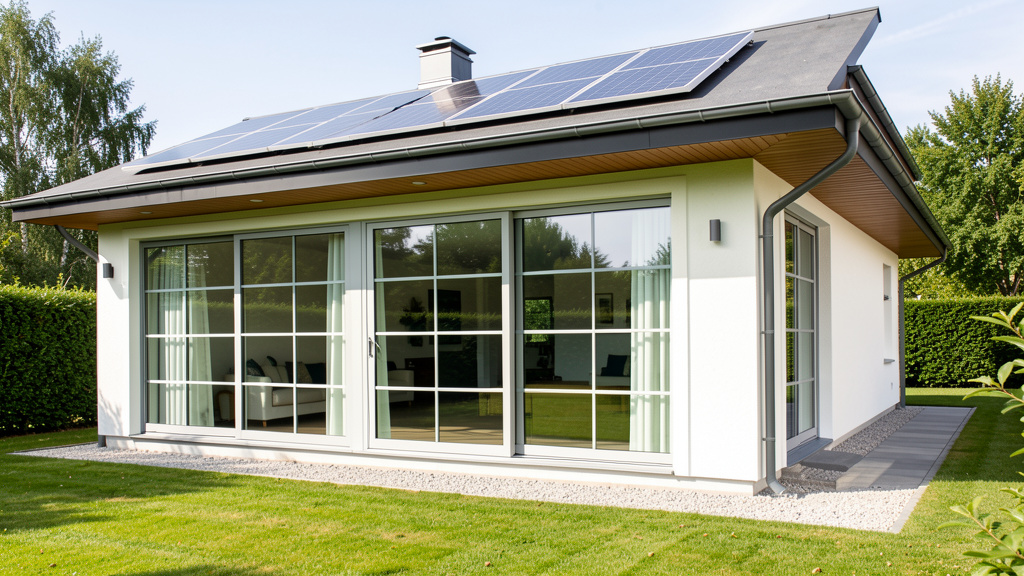
Achieve up to 90% reduction in heating and cooling energy demand, eliminate thermal discomfort, and create a resilient, healthy living environment—through physics-driven design that harmonizes performance, comfort, and long-term value.
Imagine stepping into your home on a frigid winter morning. Outside temperatures hover near freezing. Inside, surfaces remain uniformly warm; no drafts whisper near windows, no thermostat adjustments are needed. Now picture a peak summer afternoon. While conventional homes rely on roaring air conditioners, your space stays calmly temperate, with air quality noticeably fresh. This is not speculative design. It is the documented outcome of Passive House methodology—a performance-based building standard grounded in thermodynamics, fluid dynamics, and decades of global validation. Developed from foundational research in the late 1980s and first realized in Darmstadt, Germany (1991), the approach has since been adapted across diverse climates and building types worldwide. Unlike point-based certification systems, Passive House requires holistic integration: every assembly, orientation, and material choice must contribute to a unified energy-flow system. With buildings contributing significantly to global energy-related emissions, this methodology offers a scalable pathway toward comfort, resilience, and resource stewardship. This guide translates rigorous principles into actionable understanding—clarifying how components interact, why precision matters, and where flexibility exists within real-world constraints. Whether your interest stems from environmental responsibility, occupant health, long-term economics, or design integrity, the journey begins with five interdependent pillars.
Introduction: Clarity Amid Complexity
In a landscape often clouded by ambiguous sustainability claims, Passive House provides measurable, physics-anchored criteria. Originating from collaborative research by Dr. Wolfgang Feist and Professor Bo Adamson, the standard emerged from a fundamental inquiry: Could building design minimize active energy demand while maximizing human comfort? The resulting framework—maintained today by the Passive House Institute (PHI) and regional affiliates like PHIUS—defines success through quantifiable metrics rather than isolated features. Certification requires verification of whole-building performance, not checklist compliance. This systems-oriented perspective acknowledges that comfort is influenced not only by air temperature but by radiant surface temperatures, air quality, humidity, and acoustic stability.
Global building operations account for a substantial portion of energy-related carbon emissions (International Energy Agency data). In this context, Passive House represents a proven strategy for deep energy reduction without compromising livability. Field data from thousands of certified projects across six continents demonstrates consistent outcomes: stable interior conditions, exceptional indoor air quality, and resilience during grid disruptions. This guide synthesizes established building science, climate-responsive adaptations, and practical implementation pathways. It avoids speculative promises, focusing instead on evidence-based relationships between design choices and lived experience. Understanding begins with recognizing that Passive House is not a product, brand, or aesthetic style—it is a methodology rooted in predictable physical laws.
The Five Pillars Framework: An Interdependent System
Passive House performance relies on five principles that function as a unified ecosystem. Compromising one element affects the integrity of the whole. These pillars are not sequential steps but concurrent design considerations, refined through iterative modeling and field validation. Certification metrics—established by PHI and adapted regionally by PHIUS—serve as performance guardrails:
- Heating Demand: ≤ 15 kWh/m²/year (or ≤ 4.75 kBtu/ft²/year)
- Cooling Demand: ≤ 15 kWh/m²/year + climate-adjusted dehumidification allowance
- Primary Energy Demand: ≤ 120 kWh/m²/year (total household energy)
- Airtightness: ≤ 0.6 air changes per hour at 50 Pascals (ACH50), verified by blower door test
- Thermal Comfort: ≤ 10% of annual hours exceeding 25°C (77°F) without active cooling
These thresholds reflect the point where conventional heating and cooling systems become functionally unnecessary. Achieving them requires intentional coordination across all building disciplines. Below, each pillar is examined through purpose, implementation pathways, contextual adaptations, and common friction points.
Pillar 1: Superinsulation—Engineering Thermal Stability
Superinsulation creates a continuous thermal barrier that minimizes heat flow between interior and exterior environments. Its purpose extends beyond “adding R-value”: it ensures interior surface temperatures remain within 1–2°C (1.8–3.6°F) of ambient air temperature. This uniformity directly supports human comfort, as radiant heat loss to cold surfaces (like windows or walls) is a primary source of perceived chill—even when air temperature is adequate.
Why this matters:
Heat migrates predictably from warm to cold. In standard construction, thermal gradients across assemblies drive significant energy loss and discomfort. Superinsulation slows this transfer rate. Required performance levels vary by climate:
– Cold climates (e.g., Minneapolis, CZ6): Exterior walls typically target R-40 to R-60 (RSI 7–10.6)
– Mixed climates (e.g., Denver, CZ4): Walls may range R-30 to R-45 (RSI 5.3–7.9), with roof insulation prioritized
– Hot-humid climates (e.g., Miami, CZ1): Roof assemblies often require R-40+ (RSI 7.0+) to block solar gain; wall values moderate (R-25–R-35)
Implementation pathways:
1. Continuity is non-negotiable. Avoid cavity-only insulation. Thermal bridging through structural elements (studs, joists) can reduce effective performance by 30–50%. Solutions include:
– Exterior rigid insulation wraps (mineral wool, EPS)
– Double-stud walls with dense-packed cellulose
– Structural Insulated Panels (SIPs) or Insulated Concrete Forms (ICFs)
2. Seamless integration at transitions: Insulation must bridge wall-roof, wall-foundation, and window interfaces without gaps. Compression or voids create weak points.
3. Material selection considerations:
– Mineral wool: Vapor-permeable, fire-resistant, sound-absorbing. Ideal for humid climates. R-value: ~R-4/inch.
– Expanded Polystyrene (EPS): Cost-effective, moisture-tolerant. Requires greater thickness. R-value: ~R-3.8–4.2/inch.
– Polyisocyanurate: Higher R-value per inch but performance diminishes below freezing. Best suited for warmer zones or interior applications. R-value: ~R-5.6–6.5/inch (at 75°F).
– Cellulose (dense-packed): High recycled content, excellent air-sealing when installed correctly. Requires moisture management planning. R-value: ~R-3.5–3.8/inch.
Illustrative case: A retrofit of a 1920s Portland bungalow added 6 inches of exterior mineral wool insulation. Historic interior details remained preserved. Post-upgrade monitoring confirmed interior wall surfaces maintained temperatures above 18°C (64.4°F) during exterior lows of -5°C (23°F), eliminating previously reported cold-wall sensations.
Critical considerations:
– Thermal mass placement: In climates with large day-night temperature swings, locate thermal mass (e.g., concrete slabs, tile floors) inside the insulation layer to absorb and slowly release heat. Mass placed outside the thermal boundary offers minimal benefit.
– Foundation strategy: Insulate vertically down foundation walls and horizontally beneath slabs. Frost-Protected Shallow Foundations (FPSF) use perimeter insulation wings to prevent ground freezing, reducing excavation depth.
– Vapor control: Retarder placement depends on climate. Cold climates typically require interior-side control; hot-humid climates may benefit from exterior-side or variable-permeability membranes (e.g., “smart” retarders that adapt to humidity). Avoid impermeable barriers on both sides of assemblies.
Adaptive pathways by constraint:
– Geometry optimization (new builds): Compact forms (cubes, rectangles) reduce surface-area-to-volume ratio, lowering insulation needs by 15–20% versus complex footprints.
– Retrofit prioritization: In heating-dominated climates, address attic/roof first (heat rises), then walls, then foundation. In cooling-dominated zones, roof insulation delivers highest impact. Blown-in cellulose suits existing wall cavities with minimal disruption.
– Material flexibility: Reclaimed rigid foam (inspected for damage) may supplement non-critical areas. Hybrid assemblies (e.g., EPS base with thinner polyiso cap) can balance cost and performance.
Core Insight: Insulation moderates the rate of heat transfer. True comfort emerges when all interior surfaces radiate temperatures closely aligned with the air you breathe.
Pillar 2: Airtight Construction—Precision Control of Airflow
Airtightness seals unintended pathways for air movement. While conventional homes often exceed 5–10 ACH50 (air changes per hour at 50 Pascals), Passive House requires ≤ 0.6 ACH50—a threshold verified by mandatory blower door testing. This rigor addresses three critical issues: energy loss from infiltration, moisture transport into assemblies (causing condensation and decay), and unfiltered pollutant entry (dust, pollen, vehicle exhaust). Crucially, airtightness does not mean “unventilated.” It shifts airflow control from random leaks to a dedicated, filtered mechanical ventilation system.
Why this matters:
Uncontrolled air movement carries moisture. When warm, humid interior air infiltrates a cold wall cavity (common in winter), condensation forms on structural elements—promoting mold growth and material degradation over time. Simultaneously, drafts create localized discomfort independent of thermostat settings. Physics indicates that below 0.6 ACH50, infiltration-related heat loss becomes negligible compared to conductive losses, making targeted ventilation both efficient and essential for health.
Implementation pathways:
1. Define the airtight layer early: Typically located at the interior sheathing plane (OSB, plywood) or a dedicated membrane (e.g., Pro Clima Solitex, Siga Majpell). This plane must be continuous and accessible for sealing.
2. Systematic sealing protocol:
– Foundation-to-wall: Fluid-applied sealants or compressible gaskets at mudsill
– Windows/doors: Airtight tapes (e.g., Tescon Vana) applied to both interior and exterior flanges; avoid reliance on caulk alone
– Penetrations: Seal electrical boxes with gaskets; use fire-rated sealants around pipes, wires, and ducts
– Attic interfaces: Seal chimneys, vents, and light fixtures with metal flashing and sealant
3. Phased verification: Conduct a preliminary blower door test before drywall installation. This identifies leaks while assemblies remain accessible, preventing costly corrections later. Final certification requires post-construction testing.
Illustrative case: During construction of a Vermont project, a pre-drywall blower door test revealed leakage at a roof vent penetration. The crew sealed the rubber boot interface with tape within minutes. Had drywall and roofing been completed first, repair would have required significant demolition.
Critical considerations:
– Airtightness ≠ vapor control: An airtight layer stops bulk air movement; vapor retarders manage moisture diffusion. They may coexist in one product (e.g., smart membrane) but serve distinct functions. Breathable airtight layers support assembly drying.
– Ventilation dependency: Airtightness mandates balanced mechanical ventilation (Pillar 5). Never seal an existing structure without upgrading ventilation—indoor air quality risks increase significantly.
– Material suitability: Standard duct tape fails rapidly. Use tapes with acrylic adhesives, UV stability, and flexibility. Sealants should remain permanently pliable (e.g., Tremco Acoustical Sealant).
Adaptive pathways by constraint:
– Retrofit focus: Target “big leaks” first: attic hatches (add insulated, gasketed covers), recessed lights (replace with ICAT-rated fixtures or seal with foam domes), rim joists (seal with rigid foam and low-expansion foam). These often resolve 60–70% of leakage.
– Airtight Drywall Approach (ADA): Seal all drywall seams, corners, and penetrations with gaskets and sealant. Labor-intensive but uses familiar materials; pair with meticulous window/door detailing.
– Diagnostic testing: Hire a technician for a diagnostic-only blower door test. Smoke pencils or infrared imaging pinpoint leaks for targeted sealing. Retest to confirm progress.
Pillar 3: High-Performance Windows and Doors—Strategic Apertures
Windows are dynamic components—not passive holes in the wall. In conventional buildings, they are primary sources of heat loss, solar heat gain, and discomfort. Passive House requires triple-glazed units with insulated frames (U-factor ≤ 0.14 / 0.8 W/m²K) and climate-optimized Solar Heat Gain Coefficient (SHGC). Equally critical is strategic placement: orientation, size, and shading determine whether windows act as energy assets or liabilities.
Why this matters:
Windows serve three simultaneous functions: daylighting, views, and solar energy management. Triple glazing creates two insulating gas cavities (argon/krypton), reducing conductive and convective losses. Warm-edge spacers minimize perimeter heat transfer. Frame insulation prevents condensation and thermal bridging. SHGC must align with climate:
– Heating-dominated zones: Higher SHGC (0.50–0.60) captures beneficial winter sun
– Mixed climates: Moderate SHGC (0.35–0.45) balances seasonal needs
– Cooling-dominated zones: Lower SHGC (<0.30) minimizes unwanted summer gain
Ignoring this balance risks summer overheating—a solvable challenge through integrated design.
Implementation pathways:
1. Model before specifying: Use energy modeling tools (PHPP, WUFI Passive) to simulate performance based on:
– Precise orientation and tilt
– Local climate data (sun angles, temperature extremes)
– Site-specific shading (trees, terrain, adjacent structures)
– Frame/glazing specifications
2. Orientation strategy (Northern Hemisphere):
– Maximize south-facing glazing for winter solar gain
– Limit east/west glazing to ≤ 10% of total window area; use dynamic or fixed shading
– Minimize north-facing glazing in cold climates (primarily for daylight)
3. Certification verification: Specify windows certified by PHI or PHIUS, confirming:
– U-factor compliance
– Climate-appropriate SHGC
– Airtight installation details (tested as a unit)
– Condensation Resistance Factor (CRF) > 70
Illustrative case: A Denver project used windows with SHGC 0.38 on south facades, paired with fixed exterior shades angled to block high summer sun while admitting low winter sun. East/west windows featured SHGC 0.28 and interior light shelves. Post-occupancy data confirmed no overheating incidents across 300+ sunny days annually.
Critical considerations:
– Size versus performance: Oversized glazing on non-optimal orientations (e.g., west-facing “view walls”) creates cooling loads. Compromise: use smaller, high-performance units on challenging exposures; concentrate larger windows where solar gain is beneficial.
– Installation integrity: The “innie” method (setting window within insulation layer) minimizes thermal bridging. Seal all gaps with backer rod and sealant; use airtight tapes. Poor installation negates high-performance glazing.
– Operability: Tilt-turn windows provide superior airtightness when closed and versatile ventilation modes. Operable windows remain essential for natural ventilation during mild conditions and emergency egress.
Adaptive pathways by constraint:
– Glazing optimization: Reduce total window area by 15–20% versus conventional designs. Concentrate high-performance units on optimal orientations.
– Hybrid glazing strategy: In budget-constrained new builds, use triple glazing on north/east/west exposures; high-spec double glazing (low-e, argon) on south—with rigorous modeling to verify summer comfort.
– Retrofit sequencing: Replace single-pane or metal-framed units first. Prioritize north and west exposures. Add exterior storm windows with low-e coatings to existing double-pane units; supplement with insulated curtains closed at night.
Pillar 4: Thermal Bridge-Free Design—Eliminating Hidden Weak Points
A thermal bridge is any material or detail that creates a localized “short circuit” for heat flow, bypassing insulation. Common examples: structural steel connectors penetrating walls, uninsulated concrete slabs, metal studs, or even brick veneer ties. In standard construction, thermal bridges can increase heat loss by 20–30% and create cold interior surfaces where condensation forms—triggering mold growth and material decay. Passive House requires all significant thermal bridges to be eliminated or precisely calculated and compensated within the energy model.
Why this matters:
Thermal bridges compromise both energy performance and durability. During a Minneapolis winter, a steel lintel extending through a wall might cause the interior drywall surface to drop to 5°C (41°F) while room air is 20°C (68°F). Moisture in the air condenses on this cold spot, fostering hidden mold. Certification requires no interior surface falls below 17°C (62.6°F) under design conditions. Achieving this demands 3D thermal modeling (using Therm, Flixo) during design to identify and resolve problematic details before construction.
Implementation pathways:
1. Thermal-break integration:
– Balconies: Use structurally isolated systems (e.g., Schöck Isokorb) with insulating elements between interior and exterior concrete
– Roof overhangs: Frame with wood (lower conductivity than steel); insulate soffits continuously
– Foundations: Insulate vertically down exterior foundation walls and horizontally beneath footings; consider ICFs
2. Detail-centric documentation: Every junction—wall-to-roof, wall-to-foundation, window bucks—requires explicit drawing and thermal modeling. Specify thermal-break hardware (neoprene pads, specialized plastics) at metal connections.
3. Construction verification: Use infrared thermography during cold-weather construction phases to identify thermal anomalies before assemblies are covered.
Illustrative case: During design of a Toronto project, thermal modeling revealed significant heat loss through proposed steel window lintels. Switching to reinforced concrete lintels and adding supplemental exterior insulation at the head detail eliminated the bridge. The adjustment added modest material cost but prevented an estimated 8% increase in heating demand and potential moisture issues.
Critical considerations:
– Continuous insulation limitations: Even with exterior rigid foam, penetrations (structural ties, conduits) create bridges. Minimize metal fastener density; use plastic washers under screw heads.
– Interior details matter: Recessed electrical boxes in exterior walls, un-insulated plumbing chases, or metal shelf brackets can create localized condensation points. Seal and insulate all penetrations.
– Ground interface: Uninsulated slabs or footings conduct heat directly to earth. Insulate under entire slabs and down foundation exteriors in cold climates.
Adaptive pathways by constraint:
– Geometry simplification: Avoid complex features prone to bridging (deep cantilevers, intricate roof lines). Simple rectangular forms are inherently easier to detail.
– Material substitution: Choose wood framing over steel where structurally feasible (wood conductivity is ~1/3 of steel). Specify thermally broken connection hardware.
– Retrofit triage: Focus on severe bridges: slab edges (add vertical perimeter insulation), balcony connections (apply exterior insulation wrap), rim joists (seal and insulate thoroughly). Accept that some structural elements may require professional assessment.
Pillar 5: Mechanical Ventilation with Heat Recovery (MVHR)—Controlled Fresh Air
In an airtight building, stale air does not escape through cracks. Without intentional ventilation, indoor pollutants (CO₂, VOCs, humidity) accumulate, degrading air quality and health. MVHR systems resolve this by continuously supplying filtered fresh air while exhausting stale air, transferring 75–95% of the thermal energy (heat or “coolth”) between airstreams via a heat exchanger. In winter, incoming cold air is pre-warmed by outgoing warm air; in summer, incoming hot air is pre-cooled. Crucially, MVHR is not a heating or cooling system—it is an energy-recovery ventilation system. Due to ultra-low heating demands in Passive Houses, a small supplemental heater (often integrated into the MVHR ductwork) typically suffices for extreme conditions.
Why this matters:
Indoor air quality significantly impacts health and cognitive function. The U.S. EPA identifies indoor pollution as a top environmental health risk—often exceeding outdoor levels. MVHR delivers:
– Controlled air exchange: Typically 0.3–0.4 air changes per hour—sufficient to remove pollutants without drafts
– Filtration: MERV 13+ filters capture pollen, dust, wildfire smoke particles, and pathogens
– Humidity management: In humid climates, Energy Recovery Ventilators (ERVs) transfer some moisture between streams, reducing latent cooling loads
– Acoustic comfort: Properly sized and installed units operate near whisper-quiet levels (<25 dB)
Physics confirms that below 0.6 ACH50, natural infiltration is insufficient for healthy air exchange—making mechanical ventilation essential.
Implementation pathways:
1. Right-sizing: Calculate airflow based on floor area, bedroom count (PHI formula: 0.035 cfm/ft² + 15 cfm per bedroom), and climate. Oversized units cycle inefficiently; undersized units fail to meet demand.
2. Ductwork design:
– Use rigid, insulated metal ducts (flex duct increases leakage and resistance)
– Minimize length and bends; balance supply (bedrooms, living areas) and exhaust (kitchen, bathrooms) grilles
– Position supply grilles near exterior walls to counter radiant cooling; place exhaust grilles directly above moisture sources
3. Maintenance integration: Locate the unit for easy filter access (changed every 3–6 months). Include cleanout ports in duct runs. Specify units with automatic summer bypass to prevent over-preheating supply air during mild seasons.
Illustrative case: A Seattle retrofit to EnerPHit standard installed an ERV to manage Pacific Northwest humidity. During wildfire events, occupants kept windows closed while the ERV’s MERV 13 filters maintained indoor PM2.5 levels below hazardous thresholds. CO₂ remained under 800 ppm (versus 1,500+ ppm in neighboring sealed homes), and relative humidity stabilized near 45%.
Critical considerations:
– Duct design is non-optional: “Hooking up” without engineering leads to noise, imbalance, and poor performance. Engage an HVAC designer experienced with low-flow Passive House systems.
– No standalone exhaust fans: Bathroom or kitchen exhaust fans bypass the heat exchanger, dumping conditioned air outside. All exhaust must route through the MVHR unit.
– Climate adaptation: In very cold climates, ensure the unit has defrost capability. In hot-humid zones, ERV cores with moisture-transfer capability are often preferable.
Adaptive pathways by constraint:
– Decentralized systems: For small homes (<1,200 sq ft) or retrofits where central ductwork is impractical, consider paired single-room units (e.g., Lunos e2). These install through walls and recover heat between supply/exhaust units—less efficient than central systems but vastly superior to unventilated spaces.
– Phased implementation: Install ductwork during construction but begin with standard filtration. Upgrade to higher-MERV filters or ERV core later as budget allows.
– Owner maintenance: Train occupants on filter changes and grille cleaning. Keep spare filters accessible; monthly intake grille cleaning preserves airflow efficiency.
The Synergy Effect: Systemic Amplification
The true power of Passive House emerges not from isolated pillars, but from their intentional interaction—a cascade where optimizing one element amplifies others:
- Superinsulation and airtightness reduce heating demand to approximately 10% of a conventional home.
- This minimal demand can often be met entirely by solar gain through strategically placed windows on sunny winter days—eliminating the need for active heating.
- Thermal bridge-free design ensures interior surfaces remain warm, allowing occupants to feel comfortable at slightly lower air temperatures (further reducing energy use).
- MVHR delivers continuous fresh, filtered air using minimal electricity (often <50 watts)—easily powered by modest renewable generation.
- The integrated result: stable interior temperatures (typically 20–22°C / 68–72°F year-round) with mechanical systems dramatically smaller than conventional counterparts.
This synergy creates inherent resilience. Documented cases show certified Passive Houses maintaining interior temperatures above 15°C (59°F) for 72+ hours during winter power outages—well above critical thresholds—while neighboring structures dropped below freezing. Similarly, during extreme heat events, Passive Houses in California maintained temperatures below 26°C (79°F) without active cooling, leveraging shading, thermal mass, and night flushing protocols. Robustness arises from physics, not added complexity.
Climate-Responsive Adaptation Framework
Passive House is not a rigid template. PHIUS developed climate-specific criteria because strategies effective in Alaska prove counterproductive in Florida. Key adaptations follow a clear decision logic:
| Climate Zone | Primary Challenge | Strategic Response | Critical Decision Point |
|---|---|---|---|
| Cold (Zones 6–8) | Heat loss | Maximize south glazing; ultra-high insulation (R-60+ roofs); high-SHGC windows | IF winter solar access is unobstructed, THEN optimize south glazing; ELSE prioritize insulation levels |
| Mixed (Zones 3–5) | Seasonal balance | Moderate insulation; balanced glazing; thermal mass for stabilization | IF significant diurnal temperature swings exist, THEN incorporate interior thermal mass; ELSE focus on airtightness |
| Hot-Humid (Zones 1–2) | Heat gain & moisture | Minimize east/west glazing; low-SHGC windows; exterior shading; ERV essential | IF humidity consistently exceeds 60%, THEN specify ERV with dedicated dehumidification mode; ELSE standard MVHR may suffice |
| Arid | Dry heat, night cooling | High-mass construction; moderate insulation; operable windows for night flushing | IF nighttime temperatures drop significantly, THEN design for secure night ventilation; ELSE prioritize shading and insulation |
Comparative illustration: A PHIUS-certified Miami home emphasizes roof insulation (R-49), windows with U-factor ≤ 0.17 and SHGC ≤ 0.25, fixed exterior louvers, light-colored roofing, and an ERV with dehumidification mode. The same standard applied in Minneapolis prioritizes roof insulation (R-80), windows with U-factor ≤ 0.12 and SHGC ≥ 0.50, MVHR with ≥90% heat recovery, and dark roofing (where snow cover is intermittent). Both achieve ≤ 15 kWh/m²/year heating/cooling demand through radically different, climate-intelligent designs.
Retrofitting Reality: The EnerPHit Pathway
The misconception that “Passive House only works for new builds” overlooks over 1,000 certified retrofits globally. EnerPHit—the Passive House retrofit standard—acknowledges existing constraints while targeting 75–90% energy reduction. Success requires honest assessment of structural, moisture, and historical factors.
Structural and Moisture Considerations
Adding insulation to historic masonry demands engineering review:
– Exterior insulation: Requires assessment of foundation capacity and facade attachment. Breathable renders over mineral wool protect historic surfaces while adding performance.
– Interior insulation: Use vapor-open assemblies (wood fiberboard, lime plaster) allowing walls to dry inward. Embed moisture sensors for monitoring.
– Hybrid strategy: Aggressively insulate attics and basements (often less constrained), then address walls selectively during phased renovations.
Phased Implementation Framework
Most retrofits benefit from a staged approach aligned with budget and disruption tolerance:
1. Phase 1 (Year 1): Comprehensive air sealing + attic insulation upgrade. Conduct blower door test to establish baseline and verify progress. Install MVHR if feasible.
2. Phase 2 (Year 2): Replace windows on highest-impact exposures (north, west). Add exterior insulation to accessible wall sections (e.g., garage side, rear elevation).
3. Phase 3 (Year 3+): Integrate remaining envelope upgrades during planned interior renovations (kitchen, bathrooms). Finalize airtightness detailing and system balancing.
Documented retrofit: A Chicago project transformed a drafty 1920s brick bungalow. Constraints included load-bearing walls and preservation concerns. The team installed 4 inches of mineral wool insulation on the interior of exterior walls using a vapor-open assembly, preserving the historic facade. Triple-glazed windows were set deep into the insulation layer. Attic insulation reached R-60; an ERV was installed in the new conditioned attic space. Post-retrofit monitoring showed heating energy use reduced by 85%. Interior wall temperatures remained above 18°C (64°F) during -15°C (5°F) conditions. Occupants reported elimination of cold spots and notable improvement in respiratory comfort. The project achieved certification at approximately 15% premium over a standard renovation, with energy savings contributing to long-term value.
When Full Retrofit Isn’t Feasible
Honest assessment is essential. Significant barriers may include:
– Severe structural deterioration requiring near-complete rebuild
– Historic preservation mandates prohibiting envelope modifications
– Extremely complex geometry with intractable thermal bridges
In these cases, apply Passive House principles without pursuing certification: conduct a deep energy audit, implement targeted air sealing, upgrade the worst-performing windows, and install balanced ventilation. Each step toward a tighter, better-insulated envelope yields measurable comfort and efficiency gains.
Cost Analysis: Value Beyond Initial Investment
Discussions of cost require nuance. Oversimplified claims like “20% more expensive” obscure critical variables. Industry analyses (including PHIUS studies) indicate new Passive House construction typically carries a 3–8% premium over code-minimum builds in North America and Europe. This range reflects context:
– Custom homes: Premium often narrows to 3–5% because baseline costs are higher; superinsulation represents a smaller incremental increase.
– Production housing: Initial premiums may reach 8–10% due to supply chain learning curves, but drop to 3–5% with builder experience and volume purchasing.
– Retrofits: Premiums vary widely (10–25%) based on existing conditions, but EnerPHit projects frequently achieve 75% energy reduction for 15–20% of a full renovation budget.
Budget Reallocation Perspective
Passive House shifts expenditure rather than simply adding cost:
| Conventional Home Allocation | Passive House Reallocation | Net Impact Insight |
|---|---|---|
| Large furnace/AC system ($10k–$15k) | Compact heating element + MVHR ($5k–$8k) | Eliminates ductwork, multiple zones, fuel lines |
| Standard windows ($8,000) | High-performance windows ($12,000) | Higher upfront cost offset by eliminated HVAC complexity |
| R-20 wall insulation ($3,000) | R-40+ assembly ($6,000) | Added insulation cost balanced by smaller mechanical systems |
| Total mechanical system cost | Reduced by 30–50% | Savings often partially offset envelope upgrades |
Additional value streams emerge:
– Energy savings: A 2,000 sq ft Passive House in a cold climate may save $1,500–$2,200 annually versus code-built counterparts (highly dependent on local energy rates and usage patterns). Over 30 years, cumulative savings become substantial, especially as energy costs trend upward.
– Resilience value: Avoided costs during grid outages (no emergency lodging, reduced food spoilage).
– Health value: Studies associate balanced ventilation with reduced respiratory symptoms; quantifiable medical cost avoidance varies by individual health profile.
– Asset value: European real estate analyses indicate certified high-performance homes often sell faster and at modest premiums. Appraisal recognition is growing but remains market-dependent.
– Maintenance reduction: No furnace replacements every 15–20 years; fewer duct repairs; durable envelopes require less upkeep.
Financing Pathways
– Energy Efficient Mortgages (EEMs): Fannie Mae/Freddie Mac programs permit higher loan amounts based on projected utility savings.
– PACE financing: Property Assessed Clean Energy programs fund retrofits via property tax assessments (repayment over 10–20 years). Availability varies by municipality.
– Utility incentives: Many utilities offer rebates for high-performance construction (e.g., Efficiency Vermont’s Passive House bonus).
– Phased investment: Spread costs across multiple years while capturing immediate savings from early-phase upgrades (e.g., air sealing, attic insulation).
Addressing Common Concerns with Evidence
Persistent misconceptions can hinder informed decisions. Clarification grounded in field data supports better understanding.
Concern: “You can’t open windows in a Passive House.”
Clarification: Operable windows are standard and encouraged. MVHR provides baseline ventilation for consistent air quality; windows enable natural ventilation during favorable conditions, connection to outdoors, and emergency egress. Many occupants report greater appreciation for opening windows intentionally, as the quiet envelope makes outdoor sounds more noticeable and enjoyable.
Concern: “Passive Houses overheat in summer.”
Clarification: Early projects (pre-2000) occasionally lacked robust shading strategies. Modern Passive House design requires summer comfort verification via energy modeling (PHPP). Solutions are integral: exterior shading (fixed or operable), climate-appropriate SHGC glazing, night flushing protocols, and thermal mass. Certified projects in Phoenix and Athens consistently demonstrate overheating hours well below the 10% threshold.
Concern: “It only works in cold climates.”
Clarification: Over 30% of certified Passive Houses are located in warm or hot climates. The methodology adapts: focus shifts to minimizing heat gain (shading, reflective surfaces), managing humidity (ERVs), and optimizing night cooling. Projects in Singapore, Florida, and Spain validate the approach’s climate versatility.
Concern: “The financial payback is too long.”
Clarification: Simple payback (premium ÷ annual savings) is an incomplete metric. It ignores rising energy costs, increased property value, health/resilience benefits, avoided future HVAC replacements, and non-monetary value (comfort, quiet). Lifecycle cost analysis over 30+ years typically shows strong economic rationale, particularly in regions with high energy costs or volatile pricing.
Concern: “It restricts architectural expression.”
Clarification: Certified projects span curved timber structures in Norway, urban infill townhouses in Brooklyn, and historic retrofits across Europe. Constraints are performance-based, not aesthetic. The methodology challenges designers to integrate details thoughtfully—but does not prescribe style. Firms like GO Logic, NK Architects, and others demonstrate that beauty and efficiency coexist through skilled detailing.
Your Questions, Answered
Q: Can a motivated homeowner undertake a Passive House project as a DIY effort?
A: Enthusiasm is valuable, but Passive House demands precision in critical areas. Tasks like PHPP modeling, airtightness detailing, and MVHR design require specialized knowledge. DIY success is most feasible when: partnering with a certified Passive House designer for plans and key oversight; focusing personal efforts on non-critical interiors; attending workshops (e.g., Passive House Academy); and starting with a small ancillary structure (studio, garage). Never attempt airtightness or ventilation design without expert review—errors risk moisture damage or indoor air quality issues.
Q: How do Passive Houses perform during extreme weather events like wildfires or polar vortices?
A: Resilience is a documented benefit. During wildfires, MVHR systems with MERV 13+ filters maintain safe indoor air quality with windows closed—critical when outdoor Air Quality Index exceeds hazardous levels. In extreme cold events, the superinsulated envelope slows temperature decline significantly; multiple case studies show interiors remaining above 15°C (59°F) for multiple days without power. Post-disaster shelters built to Passive House principles in Puerto Rico provided safe havens during prolonged grid outages after Hurricane Maria. This “passive survivability” is increasingly relevant in a changing climate.
Q: Does extreme airtightness create indoor air quality concerns?
A: Evidence indicates the opposite when paired with proper ventilation. MVHR delivers continuous, filtered fresh air—reducing exposure to outdoor pollutants (pollen, smoke, traffic emissions) and indoor contaminants (CO₂ buildup, VOCs from furnishings). Studies of certified Passive Houses report lower rates of asthma exacerbation and improved sleep quality, attributed to stable temperatures, quiet operation, and superior air filtration. Critical success factors include: regular filter maintenance, specifying low-VOC materials during construction, and ensuring correct MVHR sizing and balancing.
Q: How does Passive House differ from LEED, Net Zero, or other green building standards?
A:
– Passive House: Performance-based standard focused exclusively on minimizing heating/cooling energy demand through envelope optimization. Certification requires meeting strict numerical targets verified by testing.
– LEED: Points-based system covering multiple sustainability categories (water, materials, site). Energy is one component; a LEED-certified building may still have high operational energy use.
– Net Zero Energy: A goal of annual energy production matching consumption (typically via solar). A Net Zero home may be inefficient but oversized with renewables. Passive House minimizes the demand first—making Net Zero more achievable, affordable, and resilient.
Ideal progression: Achieve Passive House performance to minimize demand, then add appropriately sized renewables for Net Zero operation.
Q: How can I find qualified Passive House professionals?
A: Begin with official directories:
– Global: Passive House Institute (passivehouse.com) “Find a Professional”
– North America: PHIUS (phi.us) “Certified Professionals” directory
Verify credentials: Look for “Certified Passive House Designer” (CPHD) or “Certified Passive House Consultant” (CPHC). Request project portfolios and blower door test results from past clients. Interview multiple firms—collaborative communication is essential for complex projects. Local green building councils may also provide referrals.
Q: Are Passive House principles applicable to multi-family buildings or commercial projects?
A: Absolutely—and this is where impact scales significantly. Over 40% of certified Passive Houses are multi-unit residential. Advantages multiply: shared walls reduce surface-area-to-volume ratio (improving efficiency); centralized MVHR systems serve multiple units efficiently; utility savings benefit owners and tenants. Notable examples include Cornell Tech Residential Tower (New York City), the world’s tallest certified Passive House, and numerous European social housing projects demonstrating 60–70% energy reduction versus local code. Office buildings gain from superior occupant comfort (linked to productivity) and lower operational costs.
Q: What about the embodied carbon of additional insulation materials?
A: This is a valid consideration addressed through lifecycle assessment (LCA). Studies consistently show that operational carbon savings from Passive House performance outweigh the embodied carbon of additional materials within 1–5 years of operation. Strategies to minimize embodied impact include:
– Selecting bio-based insulation (wood fiber, cork, cellulose) where climate-appropriate
– Sourcing materials regionally to reduce transport emissions
– Optimizing design via PHPP to avoid over-insulating
– Prioritizing durability to extend building lifespan and reduce replacement cycles
PHI now incorporates embodied carbon metrics into evolving certification pathways.
Q: Do occupants report spaces feeling “stuffy” or lacking natural airflow?
A: Occupant feedback consistently describes the opposite experience. MVHR provides gentle, draft-free air movement without stagnant zones. Uniform temperatures (no cold walls or hot ceilings) enhance the perception of freshness. Many describe the indoor environment as resembling “mountain air”—clean and stable. Operable windows remain available for psychological connection to outdoors and natural ventilation during ideal conditions. The absence of drafts and temperature fluctuations is frequently cited as a profound comfort upgrade.
Q: Is formal certification necessary to gain benefits?
A: Certification ($1,500–$5,000) provides third-party verification, quality assurance through mandatory testing, technical support, and potential market differentiation. For owner-occupants deeply committed to verified performance, it offers peace of mind. However, rigorously applying Passive House principles without certification still yields substantial comfort, efficiency, and resilience benefits. The decision depends on personal goals: if verifiable performance and documentation matter significantly, pursue certification. If primary motivation is personal comfort and savings, disciplined self-implementation guided by PHPP modeling can be highly effective.
Q: How does ventilation handle high-moisture activities like showering or cooking?
A: MVHR systems are designed for this. Exhaust grilles are strategically placed directly above showers and cooktops. Humidity and odors are captured at the source and expelled before dispersing through living spaces. The heat exchanger recovers thermal energy from the moist exhaust air, so replacement air is preconditioned. In humid climates, ERVs limit moisture introduction during summer while preventing overly dry air in winter. Standalone bathroom exhaust fans are unnecessary and counterproductive—they bypass the heat exchanger.
Q: Is radiant floor heating compatible with Passive House?
A: It can be incorporated but is rarely necessary. Heating demand is typically so low that a small post-heater in the MVHR ductwork suffices. Radiant floors add cost, complexity, and thermal mass that may cause overheating if solar gain is significant. If desired for localized comfort (e.g., bare feet on tile), specify a low-temperature system (≤ 27°C / 80°F) with independent controls. Many occupants find the even radiant warmth from superinsulated surfaces eliminates the perceived need for supplemental floor heating.
Conclusion: Integrating Principles into Practice
Passive House represents a mature evolution of building science—a methodology that aligns human comfort, resource responsibility, and long-term resilience through physics-based design. The five pillars function not as isolated tactics but as an integrated system where each element reinforces the others. This approach does not demand sacrifice; it elevates expectations for what buildings can provide: unwavering comfort, exceptional air quality, quiet serenity, and independence from energy volatility.
Three Foundational Takeaways
1. Holistic Integration is Essential: No single element succeeds in isolation. Windows, insulation, airtightness, thermal bridge elimination, and ventilation must be designed as a unified system from the earliest planning stages.
2. Climate Intelligence Drives Decisions: There is no universal recipe. Strategies must respond to local sun paths, temperature ranges, humidity patterns, and wind conditions—verified through energy modeling.
3. Precision in Execution Determines Outcomes: Performance hinges on meticulous attention to detail: sealing every penetration, modeling every junction, balancing every duct run. Quality assurance testing (blower door, IR imaging) is non-optional.
Your Immediate Next Step: The 24-Hour Comfort Audit
Within the next day, complete this focused observation:
🔍 Walk through your current living space at different times (morning, midday, evening). Note:
– Where do drafts occur? (Hold a tissue near windows, electrical outlets, baseboards)
– Which surfaces feel noticeably colder (winter) or hotter (summer) than the surrounding air?
– When do you adjust thermostats or open/close windows? What triggers these actions?
– Are there recurring condensation issues on windows or walls?
Document observations with brief notes or photos. This audit cultivates awareness of your building’s energy flows and personal comfort patterns—providing concrete context for any future efficiency decisions. It requires no tools, only attentive observation.
A Broader Perspective
Every building designed with these principles contributes to a larger shift. As energy codes gradually incorporate Passive House concepts (California Title 24 updates, EU Energy Performance of Buildings Directive), early adopters provide invaluable real-world validation. They demonstrate that extreme efficiency and profound comfort are not theoretical ideals but practical, achievable outcomes. Your engagement—whether exploring a window upgrade, commissioning an energy audit, or pursuing full certification—participates in advancing building practice toward structures that nurture occupants while stewarding resources. The science is robust. The methodologies are proven. The path forward begins with a single, informed step.
Explore Further Guidance:
Conducting a Home Energy Audit: A Step-by-Step Guide | Retrofitting Older Homes: Practical Pathways to Efficiency | Selecting Ventilation Systems: MVHR vs. ERV Explained | Climate-Specific Insulation Strategies | Phased Upgrades: Maximizing Impact on Any Budget | Understanding Energy Modeling Tools for Homeowners | Living Well in a High-Performance Home: Occupant Tips