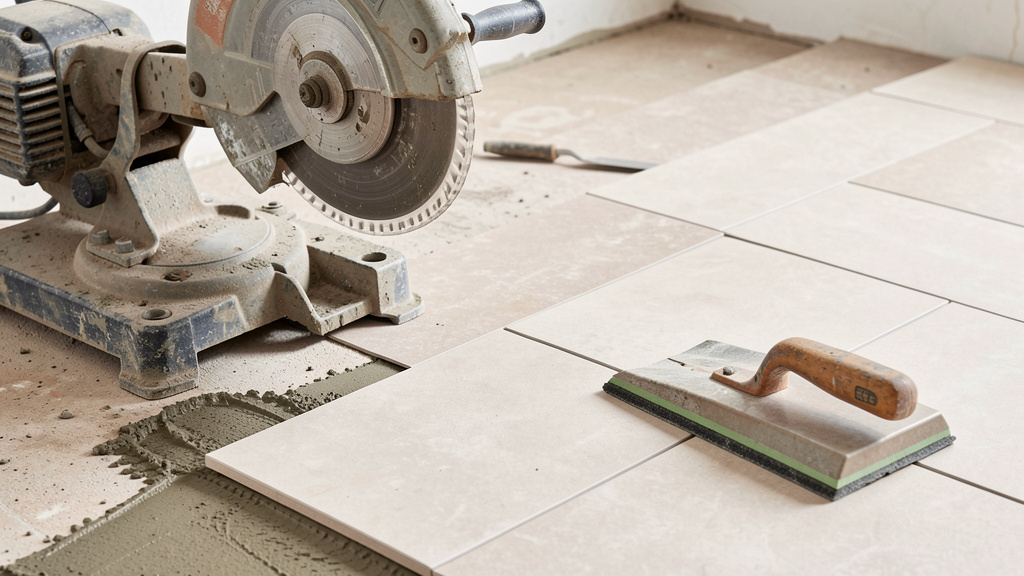
Transform Any Space Thoughtfully—Navigate Common Challenges and Achieve Professional-Quality Results Through Informed Practice
Tile holds enduring appeal—the capacity to refresh a kitchen backsplash, redefine a bathroom’s ambiance, or elevate an outdoor living area with texture and intention. Yet for many undertaking their first installation, uncertainty lingers: Will my cuts align cleanly? Will tiles remain securely bonded? How do I avoid grout haze? This guide meets those questions with clarity. Grounded in widely accepted industry practices and material science principles, it walks through every phase of tile work—planning, cutting, setting, and grouting—with attention to the subtle decision points and friction areas often overlooked. You’ll gain not only actionable steps but contextual understanding to adapt techniques to your space, materials, and constraints. Success in tile work emerges from preparation, patience, and process—not perfection on the first attempt.
Introduction: Reframing the Tile Installation Journey
Near the tile aisle of any home center, you might notice quiet deliberation. Shoppers trace fingers across samples, envision possibilities, then pause at the array of tools and materials—wet saws, trowels, bags labeled “thinset,” “mastic,” “grout.” This hesitation rarely reflects a lack of capability. More often, it stems from fragmented guidance: tutorials that skip substrate assessment, product labels assuming prior knowledge, or online debates offering conflicting advice (“Always use backer board!” “Mastic is fine for backsplashes!”). The result can be delayed projects, wasted materials, or diminished confidence.
This resource aims to replace fragmentation with coherence. Tile installation follows logical sequences shaped by material properties and environmental factors. Understanding why certain steps matter—why porcelain demands specific blades, why cure times cannot be rushed, why substrate integrity is non-negotiable—builds adaptable competence. Recommendations align with widely referenced industry resources such as the Tile Council of North America (TCNA) Handbook and ASTM material standards, providing a reliable foundation for residential applications. Whether installing a small mosaic accent or tiling an entire shower surround, this framework scales to your project’s scope. We begin where every successful installation truly starts: with thoughtful preparation.
The Three-Pillar Framework: Precision, Patience, Protection
Before handling tools or materials, internalize this guiding model. Every phase of tile work connects to three interdependent principles:
- Precision: Accuracy in measurement, layout, cutting, and material preparation. Small inconsistencies early—like a misaligned chalk line or uneven thinset ridges—compound across the surface.
- Patience: Honoring material cure times, avoiding premature adjustments, and allowing processes to complete undisturbed. Rushing setting or grouting risks hollow spots, lippage, or adhesive failure.
- Protection: Safeguarding yourself (eyes, lungs, hands), preserving tile integrity (preventing chips or scratches), preparing the substrate properly, and shielding adjacent surfaces from adhesive or grout.
These are not abstract ideals but practical checkpoints. Precision means dry-fitting tiles before mixing adhesive. Patience means stepping away after setting tiles, even when eager to proceed. Protection means wearing ANSI-approved safety glasses for every cut. When uncertainty arises, pause and ask: “Does my next action honor Precision, Patience, and Protection?” This simple reflection guides sound decisions. Now, let’s establish the essential groundwork.
The Essential Foundation: Planning and Preparation (Where Lasting Results Begin)
Thorough preparation prevents the majority of installation challenges. Investing time here creates efficiency and confidence later. Rushing this phase often leads to avoidable corrections.
Understanding Your Substrate: The Critical Base Layer
Tile is rigid; it cannot accommodate substrate movement. If the base shifts, cracks, or flexes, the tile installation will likely fail over time. Assess carefully:
- Concrete Slabs (Floors): Ideal when clean, structurally sound, and reasonably level (industry references often cite tolerance within 1/4 inch over 10 feet). Test for moisture: Tape a 2’x2′ plastic sheet securely to the slab overnight. If condensation appears underneath, moisture vapor emission may be excessive—requiring mitigation before tiling. Existing cracks should be repaired with appropriate epoxy or polyurethane injection systems per manufacturer guidance. Tiling directly over unrepaired cracks risks telegraphing damage upward.
- Plywood/OSB Subfloors (Floors): Must be structurally stable (minimal deflection or squeaking), minimum 5/8″ exterior-grade, and securely fastened to joists. Cement backer board (e.g., HardieBacker, Durock) is typically installed over the wood subfloor using thinset mortar and corrosion-resistant screws. This creates a stable, moisture-resistant surface. Omitting backer board on wood subfloors is a frequent contributor to long-term tile or grout failure.
- Drywall (Walls): Acceptable for dry-area applications only (e.g., kitchen backsplashes away from direct sink spray). For wet areas (showers, tub surrounds), cement backer board is standard practice, extending beyond the wet zone. All seams and fastener points should be treated with alkali-resistant mesh tape embedded in thinset. While greenboard (moisture-resistant drywall) offers some humidity resistance, it is generally not recommended as a tile substrate in consistently wet environments due to potential long-term swelling or deterioration.
- Existing Tile: Tiling over existing tile is feasible only if the original installation is fully bonded, clean, level, and in a dry location. The glossy surface must be abraded (e.g., with 60-grit sandpaper) to create texture for new adhesive to grip. Clean thoroughly with a TSP substitute to remove oils or residues. This approach adds height and weight; verify door clearances and structural suitability. It is typically less ideal for showers or high-traffic floors where long-term bond integrity is critical.
The Fundamental Principle: Tile reveals what lies beneath. A meticulously set tile on an unstable substrate will not endure; a thoughtfully prepared base supports even modest installations for years.
Calculating Materials Thoughtfully
Accurate estimation avoids project delays from material shortages or waste from over-purchasing.
- Measure Area: For rectangular spaces, multiply length by width. For irregular shapes, divide into manageable rectangles/squares and sum the areas.
- Apply Waste Factor: This accounts for cuts, breakage, and layout adjustments.
- Simple layouts (large tiles, straight walls): Add 10%
- Diagonal patterns, rooms with many obstacles (pipes, corners), or intricate designs: Add 15–20%
- Small tiles (mosaics under 6″x6″): Add 20–25% due to higher cut frequency
- Example: An 80 sq ft space with a standard layout → 80 × 1.15 = 92 sq ft to purchase.
- Plan for Future Repairs: Purchase and store at least 3–5 extra tiles (clearly labeled with project details). Tile lines are frequently discontinued; having matches simplifies future repairs.
- Adhesives and Grout: Consult manufacturer coverage charts on product packaging. Actual yield varies based on trowel size, substrate texture, and tile porosity. When uncertain, purchasing one additional bag is often more efficient than an unplanned mid-project trip. Note: Darker grout colors may appear to require slightly more material visually, though volume differences are typically minimal.
Tool and Material Selection: Matching Resources to Project Needs
Choose tools and materials based on your tile type, project scale, budget, and working environment—not assumptions.
Cutting Tools: Purpose and Practicality
| Tool | Best Suited For | Tile Compatibility | Key Considerations | Adaptive Tip |
|---|---|---|---|---|
| Manual Snap Cutter | Straight cuts on walls | Ceramic, thinner porcelain | Quiet, portable, minimal mess; requires practice for clean breaks | Ideal for small backsplash projects; practice scoring technique on scraps first |
| Electric Wet Saw | Straight, angled, curved cuts | All types, especially porcelain, stone, glass | Precision and versatility; requires water management and GFCI outlet | Renting ($30–$60/day) is cost-effective for projects over 30–50 sq ft |
| Angle Grinder + Diamond Blade | Cutouts in place, tight curves | Ceramic, porcelain, stone | Portable for retrofit situations; generates significant dust | Use only when unavoidable; pair with HEPA vacuum and P100 respirator; not ideal for primary cutting |
| Tile Nippers | Small adjustments, nibbling edges | Ceramic, mosaic | Inexpensive, precise for tiny removals | Keep in kit for fine-tuning cut tiles; expect some edge chipping |
| Hole Saw (Carbide/Diamond) | Faucet valves, pipe penetrations | Ceramic, porcelain | Clean circular cuts; requires drill stability | Practice on scrap tile; drill slowly from glazed side to minimize chipping |
Adhesive Selection: Context Matters
- Modified Thinset Mortar (Powder): Cement-based with polymer additives. Recommended for: Floors, wet areas (showers, tub surrounds), large-format tiles (>12″x12″), porcelain, stone, installations over cement backer board. Why it’s versatile: Allows minimal moisture vapor transmission, offers flexibility to accommodate slight substrate movement, and provides strong bond strength when mixed and applied correctly. “Modified” (polymer-enhanced) formulations are generally preferred for DIY applications over unmodified versions.
- Mastic (Pre-Mixed Organic Adhesive): Paste-like, ready-to-use. Consider only for: Small, dry-area wall projects (e.g., backsplashes under 30 sq ft) with lightweight ceramic tile on sound drywall. Limitations: Not breathable; can trap moisture in damp environments, potentially leading to mold growth or bond failure over time. Dries rigid and may crack under substrate movement. Avoid for floors, wet areas, large tiles, porcelain, or stone.
- Epoxy Mortar: Two-part chemical system. Typical use: Commercial settings requiring extreme chemical/water resistance (labs, pools). DIY note: Short working time, complex mixing, difficult cleanup, and higher cost make it generally unnecessary for standard residential projects. Quality modified thinset suffices for most homes.
Grout Selection: Function and Finish
- Sanded Grout: Contains fine silica sand. Use for: Joints 1/8 inch (3mm) or wider. Provides structural integrity in wider joints, reducing shrinkage risk. Essential for floors and most wall applications with standard joints. Exception: Avoid on highly polished natural stone (marble, limestone) or delicate glass tile where sand may cause micro-scratches; use unsanded instead.
- Unsanded Grout: Smooth consistency. Use for: Joints narrower than 1/8 inch (3mm), polished stone, glass tile. Relies on polymers for cohesion. Not recommended for floor applications or joints exceeding 1/8″ due to potential shrinkage.
- Epoxy Grout: Resin-based, pre-mixed. Consider for: High-stain-risk areas (shower floors, countertops) where maximum stain resistance is prioritized. Trade-offs: Higher cost, shorter working time, more challenging cleanup, potential for color shift over time. Not required if cementitious grout is properly sealed and maintained.
- Grout Additives: Many modern premixed grouts include polymers for enhanced flexibility and stain resistance. These often simplify application and improve performance. Avoid adding excess water to any grout mix—it weakens the final cured product.
The Dry Layout: Visualizing Success Before Commitment
This step builds confidence and prevents layout regrets. Complete this before mixing any adhesive:
- Identify Focal Points: In rooms, consider primary sightlines (e.g., doorway entry). In showers, the main wall facing the entrance often serves as the visual anchor. Avoid starting installations in corners where minor imperfections become magnified.
- Establish Reference Lines: Measure and mark the center point of your focal wall. Snap a vertical chalk line. Repeat on the perpendicular wall for a horizontal line. Verify the intersection is square using a framing square. This crosshair becomes your starting guide.
- Dry-Fit Tiles: Lay full tiles outward from the intersection along both lines, inserting spacers consistently. Observe the cut tiles required at room perimeters.
- Adjust for Visual Harmony: If cut tiles at edges are very narrow (e.g., less than 2–3 inches), shift the entire layout slightly. Aim for balanced cut widths on opposing walls (e.g., 4 inches on left, 5 inches on right appears more intentional than 1 inch vs. 8 inches). This adjustment is standard practice among experienced installers.
- Document and Mark: Once satisfied, lightly pencil the position of the second full tile row on the substrate. This becomes your true installation guide. Photograph the dry layout from multiple angles for reference during cutting and setting.
This 20–40 minute investment clarifies spatial relationships, reveals potential obstacles (outlets, pipes), and builds mental readiness. It transforms abstract measurements into a tangible plan.
Pillar One in Action: Confident Tile Cutting Techniques
Clean cuts stem from matching the right tool to the tile type, understanding material behavior, and practicing safe technique. Confidence grows with deliberate practice on scrap pieces.
Safety Protocols: Non-Negotiable Practices
- Eye Protection: ANSI Z87.1-rated safety glasses for every cutting task. Tile fragments can eject unpredictably.
- Respiratory Protection: N95 mask minimum for dry cutting methods (nippers, grinder). For wet saws, mist is reduced but a mask is still prudent during cleanup. Never cut without eye protection.
- Hearing Protection: Wet saws and grinders often exceed safe noise levels; use earplugs or muffs.
- Hand Protection: Cut-resistant gloves when handling cut tiles or using nippers. Remove gloves when operating rotating tools (wet saw, grinder) to prevent entanglement.
- Workspace Setup: Stable, well-lit surface. Wet saws require GFCI-protected power. Keep area clear of trip hazards. Have water, rags, and a dedicated scrap bucket nearby.
Cutting Methods by Tool and Scenario
Manual Snap Cutter (Score-and-Snap)
Best for straight cuts on ceramic or thinner porcelain wall tiles.
1. Mark Clearly: Use a pencil and straightedge on the glazed (top) surface.
2. Score Firmly: Align mark with the cutter wheel. Apply one smooth, consistent pressure stroke from end to end. Listen for a uniform “tick-tick” sound. Avoid sawing back and forth.
3. Snap Decisively: Position the breaker bar over the score line. Apply quick, even downward pressure with both hands. Hesitation often causes jagged breaks.
4. Deburr Edges: Smooth cut edges with a rubbing stone (carborundum block), using light strokes at a slight angle.
* Common Challenge: Jagged breaks. Likely causes: Weak score line, uneven snapping pressure, or cutter wheel needing replacement. Solution: Practice on scraps; ensure the cutter bed is clean and level.
* Adaptive Tip: For tiles wider than the cutter bed, score fully, then carefully snap over a straightedge clamped securely to your workbench.
Electric Wet Saw (Versatile Precision)
Ideal for straight cuts, angles, and most curves across all tile types.
1. Setup: Place on stable surface. Fill reservoir with water (add tile saw coolant per instructions to reduce slurry buildup). Confirm blade is tight and appropriate (continuous rim for glass/mosaic; segmented turbo for porcelain/stone).
2. Measure and Guide: Mark tile clearly. For repeated cuts, secure the saw’s fence guide. Use a scrap wood block clamped as a stop for consistent lengths.
3. Cutting Motion: Start saw. Slowly feed tile into the blade. Let the blade cut at its own pace—do not force. Support long tiles beyond the table to prevent binding or vibration.
4. Curves and Notches: For gentle curves (around pipes), make small perpendicular relief cuts first, then carefully remove the waste section. Finish tight curves with nippers.
5. Maintenance: Rinse tile immediately. Wipe table and blade after use. Change water regularly to maintain cutting efficiency.
* Common Challenge: Chipped edges. Likely causes: Dull blade, forcing the tile, insufficient water flow. Solution: Replace blade if cuts degrade; ensure water pump is clear; maintain steady, patient feed rate.
* Adaptive Tip: Place non-slip matting under the saw base to reduce vibration. Keep a spray bottle handy to mist the cut line on dense porcelain for cooler cutting.
Angle Grinder for Precision Cutouts
Reserve for situations where a wet saw cannot access the cut (e.g., modifying a tile already set near an obstacle).
1. Blade Selection: Use a continuous-rim diamond blade designed specifically for tile.
2. Mark Precisely: Outline the cutout clearly on the tile surface.
3. Shallow, Controlled Passes: Make multiple light passes, gradually deepening the cut. Forcing causes vibration and chipping.
4. Dust Management: Work outdoors or with strong ventilation. Use a shop vacuum with HEPA filter held close to the cut point. Wear a P100 respirator.
5. Final Smoothing: Always finish cut edges with a rubbing stone.
* Critical Note: Grinders carry kickback risk if the blade binds. Secure the tile firmly (using wood blocks in a vise). Keep hands clear of the blade path. This method requires heightened caution.
Special Scenarios: Holes, Curves, and Delicate Tiles
- Faucet/Pipe Openings: Use a carbide-tipped hole saw (ceramic) or diamond-grit hole saw (porcelain/stone). Drill slowly at low speed. Mist the area with water for cooling. Start drilling on the front (glazed) side to minimize chipping; complete the hole from the back if accessible. For small pipes, drill overlapping pilot holes and clean the shape with nippers.
- Intricate Curves (Mosaics): For mesh-backed sheets, cut the mesh backing with heavy-duty scissors where possible. For individual tile adjustments within a sheet, use nippers carefully. For complex shapes on solid tile, create a paper template, adhere it temporarily with spray adhesive, and follow the outline.
- Glass Tile: Highly susceptible to chipping. Use a wet saw with a continuous-rim diamond blade specifically rated for glass. Cut slowly with light, consistent pressure. Score-and-snap methods are generally unreliable for glass. Handle cut pieces with heavy-duty gloves—edges are extremely sharp.
Addressing Common Cutting Challenges
- Chipped Edges: Often due to blade condition, feed speed, or tile support. Solution: Verify blade sharpness; maintain steady, patient pressure; ensure full tile support during cutting.
- Tile Cracking During Cut: May indicate pre-existing stress in the tile, inadequate support, or aggressive technique. Solution: Inspect tiles for hairline cracks before cutting; support the entire tile securely; use wet saw for brittle materials.
- Inaccurate Cuts: Typically from slipping tile, misaligned guides, or parallax error when marking. Solution: Use non-slip matting; double-check fence alignment with a square; mark while viewing straight down on the tile.
- Excessive Dust/Slurry: Caused by low water flow (wet saw) or dry cutting without extraction. Solution: Clean pump filters; use coolant additive; employ dust control measures (vacuum, outdoor work).
Keep a dedicated container for tile scraps—they’re invaluable for testing grout colors, practicing cuts, or filling minor gaps. Precision in cutting establishes the foundation for seamless setting. Next, we translate those prepared pieces into a cohesive installation.
Pillar Two in Practice: Setting Tile with Intention
Setting tile merges technical execution with material awareness. Success depends on respecting adhesive chemistry, substrate conditions, and environmental factors. Patience during this phase prevents common issues like lippage, hollow spots, or bond failure.
Final Substrate Preparation
- Clean Thoroughly: Remove all dust, grease, or debris. Vacuum meticulously, then wipe with a damp sponge. Adhesives require a clean surface for optimal bonding.
- Dampen Porous Surfaces (If Recommended): For highly absorbent substrates like bare cement board, a light misting 10 minutes before thinset application can prevent premature moisture loss from the adhesive. Do not dampen non-porous surfaces (existing tile, waterproof membranes) unless product instructions specify.
- Verify Manufacturer Guidance: Some patching compounds or self-leveling underlayments require specific primers before thinset application. Always consult substrate and adhesive product literature.
Mixing Thinset Mortar: Chemistry in Practice
Thinset cures through a chemical reaction with water—not merely by drying. Proper mixing is essential.
- Review Product Instructions: Water ratios, pot life (working time), and cure times vary by brand and formulation. Manufacturer guidance supersedes general advice.
- Use Clean Water and Container: Impurities can interfere with curing. Use a dedicated, clean bucket.
- Mixing Sequence: Add measured water to the bucket first. Gradually incorporate thinset powder while mixing to minimize dust and lumps.
- Thorough Mixing: Use a low-speed drill (≤ 300 RPM) with a paddle mixer. Mix 2–3 minutes until smooth and uniform (peanut butter consistency). Scrape bucket sides and bottom repeatedly.
- Slake (Rest Period): Let the mixture rest undisturbed for 5–10 minutes. This allows water to fully hydrate the cement particles and activate polymers. Skipping this step can compromise bond development.
- Final Remix: Stir briefly (30 seconds) before use. Do not add extra water after slaking—this weakens the final cured strength.
- Respect Pot Life: Use mixed thinset within the timeframe specified on the bag (typically 1–2 hours). Discard material that begins to stiffen. Never “rejuvenate” stiff thinset with additional water.
The Fundamental Principle: Thinset cures through controlled hydration. Disturbing tiles prematurely, exposing the adhesive to rapid drying (sun, wind, heat), or adding excess water disrupts this process and risks long-term performance.
Selecting and Using the Notched Trowel
Trowel notch size directly influences adhesive coverage and tile alignment. Too little adhesive risks hollow spots; too much causes excessive squeeze-out and uneven setting.
| Typical Tile Size (Face) | Common Notch Recommendation | Substrate Consideration |
|---|---|---|
| Mosaic (<6″x6″) | 1/4″ x 1/4″ V-notch | Smooth, flat surfaces |
| 6″x6″ to 12″x12″ | 1/4″ x 3/8″ Square-notch | Standard walls and floors |
| 12″x12″ to 18″x18″ | 1/2″ x 1/2″ Square-notch | Slightly uneven surfaces |
| Large Format (>18″x18″) | 1/2″ x 1/2″ or 3/4″ x 3/4″ U-notch | Often requires back-buttering |
| Natural Stone | 1/2″ x 1/2″ Square-notch | Back-buttering strongly recommended |
- V-Notch: Creates ridges that collapse easily. Suited for small tiles, walls, smooth substrates.
- Square-Notch: Provides defined, consistent ridges. Standard for most floor and wall applications.
- U-Notch: Holds more mortar; ridges maintain shape better. Preferred for large-format tiles or uneven substrates.
Application Technique:
1. Spread Adhesive: Using the flat edge of the trowel, spread a manageable section (approx. 3’x3′) of thinset onto the substrate. Press firmly to ensure full contact (“burning in”).
2. Comb Ridges: Hold the trowel at a consistent 45-degree angle. Comb in one direction only to create uniform ridges. Avoid going back over ridges, which can trap air.
3. Work Within Open Time: Apply tiles while the ridges remain defined (typically 15–30 minutes, per product specs). If ridges skin over, scrape off and reapply fresh thinset.
Setting Tiles: Technique for Alignment and Bond
- Position Tile: Align precisely with your layout lines. Press down firmly with a slight twisting motion (“embedding”) to collapse ridges and eliminate air pockets. Target ≥95% adhesive coverage on the tile back for floors; ≥80% for walls (per industry references).
- Verify Coverage (Critical Check): After setting 2–3 tiles, carefully lift one to inspect the back. Adhesive should cover the entire surface without bare spots. Adjust trowel size or technique if coverage is insufficient. This simple check prevents future hollow spots.
- Insert Spacers Immediately: Place plastic spacers at all corners as each tile is set. Consistency ensures uniform joint width.
- Tile Leveling Systems (Consider for Large Tiles): For tiles over 12″x12″, systems using clips and wedges can help maintain flush alignment between adjacent tiles, reducing lippage risk. Clips are removed after thinset sets (typically 24 hours). Evaluate based on tile type, budget, and desired precision.
- Back-Buttering (Recommended for Large/Stone Tiles): For tiles larger than 15″x15″ or any natural stone, apply a skim coat of thinset to the back of the tile before setting. This compensates for minor substrate irregularities and ensures complete coverage.
- Work Methodically: Set full tiles first, working in small sections. Avoid walking on freshly set tiles. Use knee pads. Install cut tiles along perimeters last to maintain alignment integrity.
- Manage Squeeze-Out: Wipe excess thinset from tile faces immediately with a damp sponge before it hardens. Do not dig hardened squeeze-out from joints later—it can create voids.
Adapting to Specific Scenarios
- Vertical Walls: Begin at the bottom. Use spacers and temporary supports (e.g., painter’s tape anchoring tiles to adjacent set tiles) to prevent slippage before the adhesive gains initial grab. For heavy stone tiles, select a thinset formulated for vertical, non-sag applications.
- Floors: Start from your focal point layout lines. Work outward in quadrants. Avoid stepping on set tiles; use plywood “dancing boards” placed over unset areas if movement across the space is necessary. Check level frequently with a long straightedge.
- Showers and Wet Areas: Tile should be installed over a properly prepared waterproofing membrane (e.g., sheet membrane like Schluter Kerdi, or liquid-applied membrane per manufacturer instructions). Maintain consistent joint widths. Pay close attention to inside/outside corners—use pre-formed corner accessories or carefully mitered tiles for smooth transitions. Ensure weep holes in shower receptor systems remain unobstructed.
Honoring Cure Time: The Patience Imperative
Once tiles are set, allow the adhesive to cure undisturbed:
* Minimum 24 hours before grouting (confirm with product instructions; some rapid-set formulations allow earlier grouting, but 24 hours is a prudent baseline for DIY).
* Approximately 72 hours before light foot traffic on floors.
* Up to 7 days for full cure strength before heavy use or placing appliances.
During cure:
* Maintain Stable Conditions: Keep ambient temperature within the range specified by the adhesive manufacturer (commonly 50°F–95°F / 10°C–35°C). Extreme cold slows cure; excessive heat or direct sun causes rapid drying and weak bonds.
* Protect from Disturbance: Avoid placing objects on the surface, adjusting tiles, or removing spacers prematurely.
* Shield from Elements: In drafty areas or direct sunlight, loosely cover the installation with plastic sheeting to promote even curing (ensure no condensation pools directly on tiles).
This waiting period embodies the Pillar of Patience. Trusting the process safeguards the installation’s longevity. With tiles securely set, we turn to the finishing phase: grouting.
Pillar Three Realized: Grouting for Definition and Durability
Grout completes the installation, defining the pattern and contributing to system integrity. Thoughtful execution prevents haze, staining, or cracking—ensuring the grout enhances rather than detracts from the tile.
Pre-Grout Preparation
- Remove Spacers: After thinset has fully cured (24+ hours), carefully extract all plastic spacers using needle-nose pliers. Work gently to avoid chipping tile edges.
- Clean Joints Thoroughly: Vacuum debris from all joints. Any residual dust or thinset fragments prevents proper grout adhesion.
- Dampen Tiles (When Appropriate): Lightly mist the entire tiled surface with clean water 10 minutes before grouting. Tiles should feel damp, not wet. This prevents porous tiles (ceramic, stone) from drawing moisture too quickly from the grout, which can cause cracking or poor adhesion. Skip this step for non-porous tiles like glass or fully vitrified porcelain.
- Protect Adjacent Surfaces: Apply painter’s tape along edges where tile meets cabinets, countertops, or baseboards to prevent grout adhesion to unintended surfaces.
Mixing Grout: Consistency is Key
- Follow Product Instructions: Water ratios differ between sanded/unsanded types and brands.
- Mix Small Batches: Prepare only what can be used within 20–30 minutes to avoid waste.
- Achieve Proper Consistency: Mix powder into water (reverse of thinset) until smooth and lump-free. Target a thick cake batter or peanut butter texture—holds shape but spreads easily. Too wet weakens grout and encourages shrinkage cracks; too dry makes application difficult and grout crumbly.
- Slake and Remix: Let mixture rest 5–10 minutes, then remix briefly. Do not add water after slaking.
Application and Cleaning: Technique Matters
- Apply Generously: Using a rubber grout float (never metal on glazed tile), spread grout diagonally across tiles at a 45-degree angle. Press firmly to force grout deep into joints. Work in small sections (approx. 2’x2′).
- Remove Excess: Once joints are filled, hold the float at a near-90-degree angle and make long, sweeping passes with the tile joints to remove excess grout from faces. Change direction periodically to avoid pulling grout from joints.
- Initial Cleaning (15–30 minutes after application): Dampen a clean, white cotton cloth or synthetic sponge. Wipe tiles in circular motions, rinsing frequently in clean water. Goal: Remove bulk grout residue; tiles will still appear slightly cloudy. Do not over-wipe.
- Final Cleaning (1–3 hours later): When grout in joints is firm (a light thumb press leaves a slight impression but no deep dent), wipe again with a barely damp sponge using straight passes along joints. Change rinse water often. Buff dry immediately with a soft, clean cloth.
- Addressing Haze (Next Day): If a light film remains after 24 hours, use a dedicated grout haze remover per instructions, or a diluted white vinegar solution (1 part vinegar to 4 parts water) only if tile type permits (test in hidden area first). Never use vinegar on natural stone or unsealed grout. For stone, use a pH-neutral stone cleaner. Aggressive scrubbing too early damages grout; waiting too long makes haze harder to remove.
Curing, Sealing, and Long-Term Care
- Curing: In dry or warm conditions, lightly mist grout lines periodically during the first 24–48 hours to prevent rapid drying and micro-cracking. Avoid foot traffic for at least 72 hours. Covering loosely with plastic sheeting can help maintain moisture in arid environments.
- Sealing Cementitious Grout: Sanded and unsanded cement-based grouts benefit from sealing to enhance stain resistance.
- Wait: Allow full cure—typically 72 hours minimum, ideally 7 days (follow sealer instructions).
- Prepare: Ensure surface is clean, dry, and haze-free.
- Apply: Use a small brush or applicator bottle to apply sealer directly to grout lines. Wipe any sealer from tile surfaces immediately with a clean cloth.
- Test First: Apply to a small inconspicuous area. Some sealers slightly darken grout; confirm acceptability.
- Reapply Periodically: Test sealant effectiveness by sprinkling water on grout; if absorbed rather than beading, reseal. Frequency varies by product and usage (typically 1–3 years).
- Tile Sealing: Required only for unglazed tiles (quarry, some porcelain) or natural stone. Glazed ceramic and porcelain tiles do not require sealing—the glaze provides inherent protection.
- Grout Color Strategy:
- Match Tile: Creates a seamless, expansive look; hides minor joint variations.
- Contrast Tile: Emphasizes pattern and layout precision; requires careful installation.
- Neutral Mid-Tone: Versatile; complements most tiles and hides soil better than pure white.
- Pro Tip: Purchase grout samples. Apply to a test board with your actual tiles and spacers. View under your room’s lighting at different times of day—lighting dramatically influences perceived color.
Navigating Common Challenges: A Practical Troubleshooting Guide
Even careful projects encounter hurdles. Calm, informed responses turn challenges into learning opportunities.
Lippage (Uneven Tile Edges)
- Potential Causes: Substrate irregularities, inconsistent thinset application, tiles not fully embedded, inadequate spacers, disturbance during cure.
- Prevention Focus: Level substrate beforehand; use correct trowel size; back-butter large tiles; consider a tile leveling system; respect cure times.
- Minor Correction: After grouting and full cure, very carefully sand high edges using fine-grit sandpaper (220+) wrapped around a flat block. Test first in an inconspicuous spot—aggressive sanding can damage tile glaze.
- Significant Issue: If lippage affects stability or safety, carefully remove affected tiles, assess and repair the substrate, then reset with adjusted technique.
Hollow Spots (“Drummy” Sound)
- Diagnosis: Tap tiles gently with a coin. A hollow “drum” sound over a large area (vs. a solid “click”) may indicate poor adhesion. Small hollow spots near corners are sometimes acceptable if the tile is stable.
- Prevention Priority: The coverage check during setting (lifting a tile to verify adhesive contact) is the most reliable prevention.
- Response: For isolated spots, specialized epoxy injection through a small hole in the grout joint may be attempted. For widespread issues, tile removal and resetting are typically necessary. Prevention is far more efficient than correction.
Cracked Grout
- Common Triggers: Using unsanded grout in joints wider than 1/8″; grout mixed too wet; substrate movement; insufficient curing (rapid drying); lack of movement joints at perimeters or changes of plane.
- Repair Approach: Remove damaged grout to a depth of at least two-thirds the tile thickness using a grout saw or oscillating tool. Clean the joint thoroughly. Re-grout with the appropriate type, ensuring proper mixing and curing conditions. For recurring cracks at room edges, replace grout with a flexible sealant (100% silicone caulk) to accommodate building movement.
Grout Staining or Discoloration
- Contributing Factors: Inadequate sealing; cleaning with harsh or acidic cleaners; underlying moisture issues (especially in showers); efflorescence (mineral salts migrating to the surface).
- Response: For surface stains on sealed grout, use a dedicated grout cleaner. For deep-set stains or efflorescence (white, powdery residue), gentle scrubbing with water and a stiff brush may help; efflorescence often diminishes as the substrate dries. Address any suspected moisture intrusion at the source before resealing or regrouting.
Adhesive Concerns (Loose Tiles)
- Potential Origins: Incorrect adhesive for location/substrate; inadequate substrate preparation; thinset applied beyond pot life; temperature extremes during cure; moisture exposure before full cure.
- Action: Remove loose tile carefully. Clean old adhesive from tile back and substrate. Repair substrate if needed. Reset with fresh, appropriate thinset. If multiple tiles are affected, investigate underlying causes (substrate stability, moisture) before proceeding; consulting a qualified professional may be prudent.
Cutting an Already-Set Tile
- Scenario: Realizing a cutout is needed after a tile is adhered.
- Approach: Use an angle grinder with a diamond blade with extreme caution. Mask surrounding area thoroughly. Make shallow, precise cuts. Wear full PPE (respirator, goggles, gloves). Smooth edges with a rubbing stone. Prevention via thorough dry layout is always preferable.
Knowing When to Seek Professional Support
This guide empowers informed DIY effort. Recognize project boundaries where professional expertise adds significant value:
* Structural concerns (bouncy floors requiring subfloor reinforcement)
* Complex waterproofing assemblies (custom shower pans, steam rooms)
* Extensive substrate repair (major concrete cracks, water-damaged framing)
* Projects involving valuable, antique, or irreplaceable materials
* Situations exceeding personal physical capability, time constraints, or comfort level
Consulting a qualified tile installer for assessment or specific phases (e.g., substrate preparation, waterproofing) can enhance overall project success and longevity.
Your Questions, Answered
Q: Can I tile directly over vinyl flooring or existing ceramic tile?
A: Tiling over sound, well-bonded vinyl (non-cushioned, firmly adhered) or ceramic tile is sometimes feasible in dry areas with thorough preparation. Roughen the surface with 60-grit sandpaper to create texture, and clean meticulously. However, adding height may cause door clearance or transition issues. In wet areas or where substrate integrity is uncertain, removal and proper substrate preparation typically yield more reliable long-term results. When in doubt, consult product guidelines or a professional.
Q: How do I estimate grout quantity accurately?
A: While precise formulas exist, a practical approach suffices for most DIYers. For standard 1/8″ joints on 12″x12″ tile covering 100 sq ft, one 25-lb bag of sanded grout is often adequate. Manufacturer coverage charts on packaging provide project-specific estimates. Purchasing one extra bag is generally more efficient than running short mid-project, and leftover grout stores well in a sealed container for future repairs.
Q: Why does grout keep cracking near my doorway?
A: This frequently indicates missing movement accommodation. Rigid tile and grout cannot absorb building movement or traffic-induced flexing. At all perimeter edges (where tile meets walls, cabinets, or other flooring) and changes of plane, flexible sealant (100% silicone caulk) should replace grout. Carefully remove the cracked grout, clean the joint, insert backer rod if deep, and apply color-matched silicone caulk designed for movement.
Q: What’s the difference between rectified and non-rectified tile?
A: Rectified tiles are precision-cut after firing to have uniform, straight edges, allowing for narrower grout joints (as small as 1/16″) and a seamless appearance. Non-rectified tiles retain slight edge variations from the molding process and require wider joints (typically 1/8″ or more) to accommodate inconsistencies. Using narrow joints with non-rectified tile may highlight size variations. Check tile specifications to select appropriately for your desired aesthetic.
Q: Thinset is squeezing up into my grout joints. What should I do?
A: This “squeeze-out” occurs with excess adhesive or heavy tile pressure. Do not attempt to dig it out before grouting—it will crumble and leave voids. Wait until the thinset is fully cured (24+ hours). Then, carefully scrape it from the joints using a grout removal tool or oscillating tool with a grout blade. Vacuum thoroughly before grouting. Prevention: Use the correct trowel notch size, avoid over-pressing tiles, and wipe visible squeeze-out immediately during setting.
Q: Does white grout require special care?
A: Light-colored grout shows soil more readily than medium or dark shades, but proper maintenance keeps it looking fresh. Key practices: Seal thoroughly after full cure (7+ days); clean spills promptly; use pH-neutral cleaners (avoid vinegar on sealed surfaces, as it can degrade sealer over time); reseal as needed (test with water droplets); for routine cleaning, use a soft brush with mild detergent. Grout colorants (stains) offer a solution for permanently discolored grout, providing a uniform sealed finish.
Q: Can I use the same thinset for shower walls and the bathroom floor?
A: A high-quality modified thinset mortar is generally suitable for both vertical walls and floors in wet areas when applied over properly prepared cement backer board. For large-format tiles on walls, some installers prefer a “non-sag” or “vertical” thinset formula to minimize slippage before initial grab. Always verify the product label specifies suitability for your intended application. Mastic should never be used in shower assemblies.
Q: How do I replace a single cracked floor tile?
A: Proceed carefully to avoid damaging surrounding tiles. 1) Remove grout around the damaged tile using a grout saw or oscillating tool. 2) Drill several small holes (1/8″) through the tile center with a masonry bit to weaken it. 3) Use a cold chisel and hammer to gently break the tile into pieces, working from center outward (wear safety glasses). 4) Scrape old thinset from the substrate. 5) Clean the area thoroughly. 6) Apply fresh thinset, set the replacement tile (use saved “repair stock” for dye-lot match), insert spacers, and allow full cure. 7) Grout and seal to blend with the surrounding area.
Q: What’s the most reliable way to cut a hole for a shower valve?
A: Precision prevents damage. 1) Install the valve body before tiling, extending it slightly past the intended finished wall surface. 2) Place a tile over the valve and mark the outline precisely. 3) For ceramic: Use a carbide-tipped hole saw slightly larger than the valve body; drill slowly from the front (glazed side) with light pressure, misting with water for cooling. 4) For porcelain/stone: Use a diamond-grit hole saw; drill pilot holes around the circumference first, then connect them. 5) Smooth edges with a rubbing stone. Test fit before setting the tile. If the valve isn’t installed, create a precise template from the escutcheon plate.
Q: Are hollow-sounding tiles always a problem?
A: Not necessarily. Small hollow areas near tile corners are common and often not problematic if the tile is stable (no movement when pressed) and the majority of the tile is well-bonded. However, large hollow zones, especially on floors where tiles feel loose underfoot, warrant attention. Perform a systematic “coin tap test”: A consistent solid “click” is ideal; a distinct hollow “drum” over a significant area suggests inadequate coverage. If stability is questionable, further investigation or professional assessment is advisable.
Conclusion: Integrating Knowledge into Practice
You now possess a structured, principle-based approach to tile installation—one that emphasizes understanding over rote steps. Let’s reaffirm the core framework that supports lasting results:
The Three Pillars in Summary:
Precision guided your measurements, layout, and cuts—ensuring intentionality in placement. Patience governed your respect for material cure times and methodical progression—building unseen durability. Protection safeguarded your well-being, materials, and the installation’s integrity—honoring both craft and context.
This journey extends beyond tile. It cultivates a mindset valuable for any hands-on project: thorough preparation illuminates the path, understanding underlying principles enables adaptation, and respecting materials and processes yields resilient outcomes. Confidence grows not from avoiding mistakes, but from learning to navigate them thoughtfully.
The 24-Hour Inspection Rule: A Final Act of Care
Before considering the project complete, perform this deliberate step: Exactly 24 hours after grouting concludes, conduct a quiet, unhurried inspection. Walk the entire installation slowly. Run your hand gently over the surface. Examine joints and transitions. Look for:
* Hairline cracks in grout lines
* Subtle lippage needing minor attention
* Residual haze requiring a final buff
* Perimeter joints where flexible caulk should replace grout
Addressing these details now, while the installation is fresh and materials remain slightly workable, transforms competent work into craftsmanship. This ritual signifies a shift from task completion to thoughtful stewardship of your space.
The Enduring Perspective
Each tile you set becomes part of your home’s narrative. That kitchen backsplash will frame countless meals. That bathroom floor will greet you each morning. The care invested today weaves into the fabric of daily life—a quiet testament to your capability and intention. View challenges not as failures, but as insights refining your skill. Celebrate progress, honor the process, and trust that knowledge applied with patience creates beauty that endures.
You are equipped. Measure with care, cut with confidence, set with intention, and grout with pride. Your thoughtfully tiled space awaits.
Explore Our Complete System:
Choosing the Right Tile: Material Properties and Application Guide | Advanced Layout Strategies: Patterns, Borders, and Focal Points | Tile Maintenance Fundamentals: Cleaning, Sealing, and Longevity | Troubleshooting Deep Dive: Diagnosing and Resolving Installation Issues | Sustainable Tiling Practices: Material Selection and Waste Reduction | Shower Waterproofing Essentials: Membranes, Slopes, and Details | Tool Mastery: Selection, Use, and Care for Tile Projects