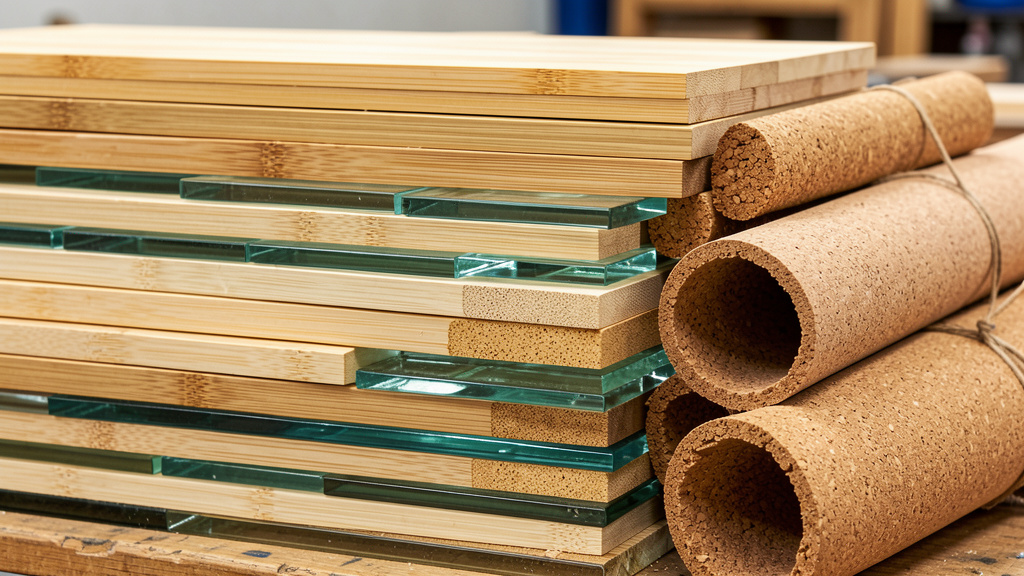
Move beyond marketing claims with a practical, lifecycle-based framework to select materials that align with ecological responsibility, durability, and your project’s real-world constraints—without sacrificing performance, beauty, or practicality.
Imagine standing in a hardware store aisle, holding two nearly identical tiles. One features earthy green labeling proclaiming “eco-friendly”; the other details recycled content and third-party verification. Your timeline tightens. Your budget feels constrained. Doubt surfaces: Which choice genuinely reduces environmental impact? Will it endure? Is this meaningful or merely messaging? This guide exists to replace uncertainty with clarity. Synthesizing established material science principles, internationally recognized sustainability frameworks, and documented installation practices, it offers a structured approach to evaluating any material—from reclaimed timber to bio-based surfaces—across its full lifecycle. You’ll gain tools to avoid common pitfalls, navigate trade-offs with confidence, and create spaces that reflect thoughtful stewardship for years to come.
Introduction: Beyond the Buzzword
“Sustainable” has become one of the most ambiguous terms in building and design. A brief search reveals contradictions: bamboo is celebrated as renewable yet scrutinized for monoculture impacts; recycled glass countertops impress visually but may rely on petroleum-based binders. This confusion stems from fragmented information and inconsistent labeling—not from your judgment. True sustainability isn’t defined by a single attribute. It requires examining a material’s entire journey: how it’s sourced, transformed, transported, used, and ultimately returned to the cycle. This guide anchors its methodology in widely adopted assessment standards such as ISO 14040 (Life Cycle Assessment), Cradle to Cradle Certified™ protocols, and frameworks informing LEED and BREEAM. These are not theoretical ideals; they represent consensus-based approaches used globally by environmental researchers, architects, and conscientious manufacturers. By applying this lens, you shift from uncertainty to informed discernment—transforming material selection into an intentional act of care.
The Lifecycle Lens Framework: See the Full Story
Most resources highlight isolated traits like “recycled content” or “rapidly renewable.” That approach overlooks critical connections. The Lifecycle Lens Framework examines five interdependent stages that collectively define a material’s impact. Overlooking any single phase creates blind spots—such as selecting locally quarried stone transported inefficiently, or installing low-VOC paint over substrates emitting harmful compounds. This framework transforms complexity into actionable insight. Apply these five filters to any material under consideration.
Stage 1: Extraction & Sourcing – Where It Begins
This phase evaluates ecological and social implications at the raw material’s origin. Key considerations include: Does harvesting support ecosystem health? Are labor practices transparent and equitable? Is the resource genuinely renewable or finite within a human timescale?
Why this stage matters: Extraction establishes the foundational impact. Clear-cutting ancient forests releases stored carbon, disrupts watersheds, and diminishes biodiversity for decades. Conversely, forests managed under rigorous certification systems can enhance carbon sequestration through regrowth while protecting habitats. Similarly, mining virgin metals demands substantial energy and generates waste, whereas recycled feedstocks dramatically reduce these burdens.
How to assess sourcing thoughtfully:
– Prioritize credible verification: Look for FSC (Forest Stewardship Council) or PEFC certification for wood products, confirming protections for ecosystems, indigenous rights, and regenerative practices. For stone, seek alignment with standards like NSF/ANSI 373 addressing quarry rehabilitation. Avoid undefined terms like “eco-sourced” without documentation.
– Seek origin transparency: Reputable suppliers disclose geographic origin and harvesting methods. Bamboo, for instance, requires verification of managed groves and low-impact processing. Without chain-of-custody certification, sourcing details may be unclear.
– Consider biodiversity and water stewardship: Cork harvesting supports Mediterranean oak ecosystems without felling trees. Materials like cotton insulation, while natural, can carry high water demands in conventional farming; organic or regenerative certifications often indicate improved water management.
Common considerations:
– Renewability requires context: Fast-growing materials (bamboo, palm) aren’t inherently sustainable if grown in monocultures that deplete soil or displace food systems. Pair “renewable” claims with verified certifications.
– Social dimensions matter: In regions with limited regulatory oversight, extraction can involve inequitable labor conditions. Certifications like Fair Trade Certified™ (increasingly available for building materials) or published brand ethics policies offer valuable signals.
– Water use varies widely: Agricultural fibers (hemp, cotton) differ significantly in water footprint based on farming practices. Certifications like GOTS often include water stewardship criteria.
The Fundamental Principle: A material’s sustainability begins with ethical and ecologically sound origins. Without transparency and responsibility at the source, subsequent “green” attributes lack meaningful foundation.
Stage 2: Manufacturing & Processing – The Transformation Cost
Raw materials become functional products through energy, water, chemical inputs, and labor. This phase frequently holds significant—but often invisible—environmental implications.
Why manufacturing context is essential: Transforming raw ore into metal consumes considerable energy. Recycled alternatives typically require far less. Similarly, kiln-fired ceramics generate emissions influenced by fuel source and efficiency, while air-dried earth materials leverage passive processes. Processing also introduces indoor air quality considerations: binders, resins, and finishes may emit volatile compounds over time.
Evaluating manufacturing responsibly:
– Energy source influences footprint: Production powered by renewable energy (solar, wind, hydro) carries a lower carbon burden than fossil-dependent facilities. Some manufacturers publish energy mix data—worth requesting when comparing options.
– Water and chemical stewardship: Textile-based materials (hemp insulation, natural fiber rugs) involve dyeing and finishing. Certifications like bluesign® verify responsible water use and restricted chemical lists.
– Ingredient transparency: Health Product Declarations (HPDs) disclose components above threshold levels. Avoid materials containing substances flagged by initiatives like the Living Building Challenge Red List (e.g., certain phthalates, PFAS, halogenated flame retardants) unless verified safe for intended use.
– Waste reduction innovation: Leading producers design closed-loop systems—reincorporating scrap into new batches or repurposing byproducts.
Practical evaluation pathways:
– Ideal path: Specify products with Environmental Product Declarations (EPDs)—third-party verified documents quantifying environmental impacts. Increasingly accessible for insulation, structural elements, and finishes.
– Practical path: Prioritize Cradle to Cradle Certified™ products (Silver level or higher), which assess material health, recyclability, renewable energy use, and water stewardship holistically.
– Immediate check: Perform a sensory review. Strong chemical odors upon unboxing may indicate higher VOC content. Opt for finishes certified by Green Seal GS-11 or SCS Indoor Advantage.
Illustrative comparison: Two composite decking options present different profiles. One emphasizes high recycled content but is manufactured in a region reliant on coal power. Another uses slightly less recycled content but is produced using onsite solar energy and closed-loop water systems. Over decades of use, the latter may yield a lower cumulative footprint—demonstrating why manufacturing context complements recycled content claims.
Stage 3: Transportation & Distribution – The Hidden Journey
Distance alone doesn’t determine transport impact. Mode, density, packaging, and consolidation critically shape this phase.
Transportation nuances:
– Mode significantly affects emissions: Ocean freight generally carries a lower emissions profile per ton-mile than trucking; air freight is typically highest. A lightweight material shipped efficiently by sea may have a lower transport footprint than a heavy local material hauled inefficiently.
– Material density matters: Heavy items (stone, concrete) amplify transport impacts. Lightweight alternatives (hempcrete blocks, bamboo panels) can reduce this burden where structurally appropriate.
– Packaging and consolidation: Excessive plastic wrapping adds waste. Suppliers using recycled cardboard, minimal packaging, or returnable crates demonstrate systems thinking. Consolidating orders into full truckloads reduces emissions per item.
Actionable strategies:
1. Coordinate purchases: Partner with neighbors for community buys to fill delivery vehicles efficiently.
2. Prioritize regional for dense materials: For gravel, sand, or locally milled timber, suppliers within a reasonable radius often reduce transport intensity. Resources like regional forestry coalitions or sustainable stone databases can help locate verified sources.
3. Inquire directly: Ask suppliers: “What is your typical shipping route to my area? Do you optimize logistics or partner with carbon-conscious carriers?” Transparency here is a positive signal.
Important distinction: True reclaimed materials should ideally be sourced regionally. If a supplier cannot document deconstruction location or transport chain, the material may be new wood artificially aged. Verification strengthens authenticity.
Stage 4: Installation & Use – Performance in Practice
A material’s sustainability is realized—or compromised—during installation and daily use. Toxic adhesives, high maintenance demands, or premature failure undermine earlier thoughtful choices.
Installation integrity:
– Compatible ancillary products: Installing formaldehyde-free panels with high-VOC adhesive negates benefits. Specify low-VOC, water-based adhesives (Green Seal GS-36) or cement-based setting materials where appropriate.
– Skill-appropriate selection: Complex materials requiring specialized tools increase error risk and waste. Reclaimed brick pathways demand masonry knowledge; misaligned joints lead to tripping hazards or early deterioration. Match material complexity to your capability—or budget for skilled assistance to prevent rework.
– Waste-conscious planning:
– Precise measurement: Use digital layout tools to calculate exact needs. Target a 5–10% waste factor for straightforward projects versus industry-standard higher allowances.
– Design for efficiency: Frame walls to align with standard sheet dimensions (e.g., 4’x8′) to minimize off-cuts.
– Pre-arrange reuse: Identify local Habitat for Humanity ReStores, Buy Nothing groups, or salvage networks before starting to redirect surplus.
Long-term use considerations:
– Durability as sustainability: A naturally rot-resistant cedar deck maintained simply may outlast pressure-treated alternatives requiring frequent chemical treatments and earlier replacement. Research real-world performance data from independent sources.
– Maintenance footprint: Factor in water, cleaning agents, energy, and frequency over decades. Stone pathways need minimal upkeep; some composites require regular cleaning with specific solutions.
– Indoor air quality continuity: Materials emit compounds over time. Solid wood, metal, glass, or certified low-emission composites (SCS Indoor Advantage Gold) support healthier indoor environments versus materials with undisclosed binders.
Adaptive implementation:
– Ideal: Collaborate with professionals experienced in sustainable installations (e.g., LEED AP, NAHB Green-certified) who integrate waste reduction and compatible product selection.
– Practical: Review manufacturer installation guides thoroughly before purchasing. Many brands provide detailed videos emphasizing eco-conscious techniques.
– Constraint-aware: If existing materials must be used (e.g., leftover paint), maximize ventilation during application and allow extended off-gassing time in unoccupied spaces.
Stage 5: End-of-Life & Circularity – Closing the Loop
What happens when a material’s service life ends? Landfill? Incineration? Or reintegration? Designing for future cycles is integral to sustainability.
Why end-of-life planning matters:
– Landfill implications: Conventional asphalt shingles contribute significantly to construction waste streams. Metal roofing, by contrast, is widely recyclable without quality loss.
– Recycling quality varies: “Recycled” plastic lumber often cannot be recycled again (downcycling). Aluminum, glass, and steel maintain integrity through infinite recycling loops (closed-loop).
– Biodegradability requires conditions: Untreated natural fibers decompose safely in appropriate settings. “Biodegradable” composites may require industrial composting facilities unavailable to most households and could leave residues.
Designing for future cycles:
– Prefer mono-materials: Products composed of a single material type (solid copper gutters, pure wool rugs) simplify recycling versus complex composites.
– Enable disassembly: Use mechanical fasteners (screws) over permanent adhesives where feasible. Specify modular systems (e.g., replaceable carpet tiles) allowing localized repair.
– Plan reuse pathways early: Before demolition, contact architectural salvage organizations. Document material locations and conditions to facilitate future deconstruction.
Material pathway comparison:
| Material | Typical End-of-Life Path | Circular Alternative | Impact Consideration |
|——————-|——————————-|————————————|——————————-|
| Pressure-Treated Lumber | Landfill (potential leaching concerns) | FSC-certified cedar (naturally compostable when untreated) | Reduces long-term waste burden |
| Vinyl Flooring | Incineration or landfill | Linoleum (linseed oil-based, biodegradable under right conditions) | Avoids persistent synthetic waste |
| Standard Drywall | Landfill (gypsum concerns) | Gypsum board with recycled content and take-back programs | Lowers embodied impact |
Critical note: Never compost materials treated with preservatives, paints, or adhesives. When uncertain, consult local waste authorities for disposal guidance specific to your community.
Deep Dive: Material Categories Decoded
Apply the Lifecycle Lens to common project categories. Each analysis highlights evaluation criteria, practical considerations, adaptive pathways, and verification signals—not brand endorsements.
Wood & Timber: Renewable Potential, Responsible Sourcing
Wood sequesters carbon, is biodegradable, and offers timeless appeal—but only with verified responsible origins.
Solid Hardwood Flooring
– Lifecycle considerations:
– Sourcing: Prioritize FSC 100% or PEFC-certified domestic hardwoods (oak, maple, cherry). Exercise caution with tropical species; if used, require FSC certification and evidence of community forestry partnerships.
– Manufacturing: Air-dried lumber typically has a lower energy footprint than kiln-dried. Some mills use biomass waste for heat—worth inquiring about.
– Use phase: Solid wood can be refinished multiple times over a century. Engineered products with thin veneers over composite cores may limit longevity and repairability.
– Adaptive pathways:
– Higher investment: FSC-certified solid hardwood with natural oil finish.
– Practical: “Seconds” or cutoffs from local mills for accent features.
– Resourceful: Verified reclaimed wood (confirm deconstruction origin; test for lead if pre-1978).
– Installation insight: Acclimate wood thoroughly onsite. Nail-down installation (versus glue-down) supports future sanding and reuse. Natural oil finishes allow easier spot repairs than film-forming polyurethanes.
– Verification signals: FSC 100% label (not “Mixed”), FloorScore® for emissions, MADE SAFE® for finish ingredients.
Engineered Wood Products (Plywood, OSB, MDF)
– Key insight: Many contain formaldehyde-based resins. Seek products labeled ULEF (Ultra-Low Emitting Formaldehyde) or NAF (No Added Formaldehyde) per CARB Phase 2.
– Thoughtful alternatives:
– Plywood: Specify panels using soy-based or pMDI binders.
– MDF substitute: Agricultural fiberboards (wheat, straw) with formaldehyde-free binders offer viable options for cabinetry interiors.
– Durability note: For furniture or cabinetry, solid wood frames with plywood sides often outperform all-MDF construction, which is vulnerable to moisture damage.
Outdoor Decking & Siding
– Naturally durable options: FSC-certified cedar or redwood offer rot resistance. Lifespan varies by climate and maintenance.
– Thermally modified wood: Heat-treated (chemical-free) to enhance stability and durability. Requires verification of sustainable wood source.
– Composite consideration: If wood isn’t feasible, recycled plastic lumber diverts waste but presents end-of-life challenges. Prioritize products using post-consumer content with third-party safety verification. Avoid dark colors in hot climates due to heat absorption.
Metals: Champions of Circularity
Metals excel in recyclability but vary in initial extraction impact.
Aluminum
– Circular strength: Recycling requires significantly less energy than primary production and maintains quality indefinitely.
– Smart specification: Request content with high post-consumer recycled percentage for siding, gutters, or trim.
– Installation note: Aluminum expands and contracts with temperature. Use slotted fastener holes and flexible sealants to accommodate movement.
Steel
– Recycling reality: Structural steel commonly contains substantial recycled content and is widely recyclable at end-of-life.
– Residential applications: Standing seam steel roofing offers longevity (50+ years), recyclability, and solar reflectivity. Light-gauge steel studs support resource efficiency in framing.
– Coating awareness: In corrosive environments (coastal, industrial), verify coating suitability with supplier guidance.
Copper
– Longevity: Develops a protective patina and lasts generations. Fully recyclable.
– Sourcing priority: Specify high recycled content content (common in plumbing/electrical grades in many regions).
– Creative reuse: Salvaged copper (pipes, flashing) can be cleaned and repurposed for accents. Patina development can be accelerated safely with vinegar-salt solutions for aesthetic effect.
Stone, Masonry & Earth: Permanence with Provenance
These materials offer exceptional durability but require scrutiny on extraction and transport.
Natural Stone (Granite, Slate, Limestone)
– Ethical sourcing: Prioritize stone verified through NSF/ANSI 373 or similar standards addressing quarry rehabilitation and worker safety.
– Regional advantage: Using stone quarried nearby reduces transport intensity and supports local economies. Pennsylvania bluestone for Northeast projects; Oklahoma flagstone for Midwest applications.
– Installation wisdom: For patios, set stone on compacted gravel/sand bases to create permeable surfaces. Where structurally appropriate, lime-based mortars offer lower embodied carbon and breathability versus Portland cement.
Concrete & Cement Alternatives
– Carbon context: Cement production contributes significantly to global emissions.
– Meaningful substitutions:
– Supplementary materials: Specify concrete mixes incorporating slag, fly ash (where acceptable locally), or calcined clay to reduce cement content.
– Innovative systems: Technologies like CarbonCure introduce captured CO₂ into concrete, where it mineralizes permanently.
– DIY consideration: Pre-mixed bags with recycled content or SCM blends are increasingly available. For non-structural applications, explore hempcrete (hemp hurd + lime) or papercrete (recycled paper + binder)—lightweight, insulating, and carbon-sequestering.
Adobe & Rammed Earth
– Low-impact potential: Uses locally sourced soil, clay, and straw. Near-zero transport emissions if materials are site-harvested.
– Climate suitability: Best suited to arid or semi-arid regions with low rainfall. Requires protective roof overhangs and proper sealing (e.g., linseed oil).
– Skill consideration: Not typically DIY-friendly for structural walls. Compressed Earth Blocks (CEBs) offer a more accessible option for garden walls or benches with proper soil testing.
Recycled & Composite Materials: Verification is Key
“Recycled content” requires context and verification.
Recycled Glass Surfaces
– Critical check: Many contain modest glass content bound with polyester resin. Seek products where glass is the primary component and binders are cement-based or verified low-impact.
– Verification path: Look for Cradle to Cradle certification or HPDs disclosing composition.
– Creative application: Crushed glass from community bottle banks can be embedded in concrete projects using low-VOC sealers—ideal for small DIY accents.
Reclaimed Materials Marketplace
– Sourcing channels: Habitat for Humanity ReStores, architectural salvage yards, online marketplaces with “salvage” filters.
– Verification protocol:
1. Ask: “Can you share the deconstruction location and history?”
2. Inspect for structural integrity, lead paint (use EPA-recognized test kits), or contaminants.
3. Clean thoroughly: Sand wood surfaces; wash metal with vinegar solutions; heat-treat small items to eliminate pests.
– Project idea: Reclaimed brick laid vertically (“soldier course”) on a sand base creates a durable, permeable pathway. Fill joints with polymeric sand to inhibit weeds.
Bio-Based & Emerging Materials: Promise with Prudence
Rapidly renewable resources offer innovation but require lifecycle scrutiny.
Bamboo
– Balanced perspective: Fast-growing and strong, yet processing methods and farming practices vary widely.
– Responsible selection:
– Certification essential: FSC Chain-of-Custody verification is non-negotiable.
– Processing: Prefer strand-woven products with CARB Phase 2 compliant binders. Avoid carbonized (steamed) bamboo if strength is critical—it reduces density.
– Application fit: Excellent for flooring, cabinetry panels. Not recommended for structural beams without engineering validation.
Cork
– Lifecycle strength: Harvested from cork oak bark every 9–12 years without harming the tree. Supports biodiverse Mediterranean forests and rural economies.
– Versatile uses: Flooring (naturally insulating, antimicrobial), wall tiles for acoustics, bulletin boards.
– DIY connection: Collect wine corks from local restaurants (with permission) to create trivets, bath mats, or decorative accents. Sanitize by boiling before crafting.
Hemp-Based Solutions
– Hempcrete: Hemp hurd bound with lime. Carbon-sequestering, breathable, and excellent for insulation. Note: Not structural—used as wall infill between timber frames. Requires moisture management expertise.
– Hemp insulation: Available as batts. Comparable installation to mineral wool but with renewable content and breathability. Wear gloves during handling.
– Availability: Growing steadily in North America and Europe. Check with regional green building suppliers.
Agricultural Byproducts & Mycelium
– Wheatboard/Strawboard: Made from crop residues with formaldehyde-free binders. Suitable for shelving, cabinet boxes.
– Mycelium applications: Emerging packaging and acoustic panel options grown from mushroom roots and agricultural waste. Home-compostable under right conditions.
– Experimental note: Mycelium growing kits offer educational DIY projects (e.g., small planters), though structural applications remain professional-grade.
Navigating Real-World Constraints: Adaptive Pathways
Sustainability intersects with budget, location, skill, and timeline. Honesty about constraints prevents frustration and waste.
Budget-Conscious Pathways
Reframing the narrative: Sustainable choices aren’t universally more expensive. Lifecycle value—factoring durability, maintenance, and health—often shifts the equation. Reclaimed materials may have low acquisition cost but higher labor needs. Calculate holistically: (Initial Cost + Estimated Maintenance + Disposal Consideration) ÷ Expected Lifespan.
- Smaller-scale projects (shelving, planters):
- Resourceful sourcing: Heat-treated (HT-stamped) pallet wood, discarded doors for tabletops, fallen branches for garden features.
- Revive, don’t replace: Refinish existing furniture with natural oils (tung, linseed) or beeswax.
-
Single-swap impact: Replace a vinyl shower curtain with a PEVA or fabric liner.
-
Medium projects (backsplash, deck refresh):
- Strategic allocation: Invest in high-impact elements (e.g., recycled-content tile for backsplash; thermally modified wood for deck surface).
- Phased approach: Install a permeable gravel base for a patio now; add reclaimed stone pavers later.
-
Community exchange: Barter skills (gardening help, tool sharing) for materials with neighbors.
-
Larger renovations (room update, new structure):
- Value-based prioritization: Allocate budget toward non-negotiables like low-VOC finishes or FSC-certified structural elements.
- Incentive research: Explore local utility rebates for water-efficient fixtures or energy-saving upgrades. Databases like DSIRE (U.S.) catalog available programs.
- Professional partnership: A contractor experienced with sustainable methods reduces waste and avoids costly errors.
Climate-Responsive Selection
Material performance varies by environment. Adapt choices to your region’s realities.
- Humid climates (Southeast U.S., Gulf Coast, tropics):
- Consider: Mold-resistant materials (tile, sealed concrete, marine-grade plywood). Prioritize ventilation during installation.
-
Caution: Solid wood flooring may swell; untreated bamboo is vulnerable. Verify species suitability with local experts.
-
Arid/sunny climates (Southwest U.S., Mediterranean):
- Consider: Light-colored stone, rammed earth, or metal with reflective coatings to minimize heat absorption. Thermal mass materials (adobe, stone) absorb daytime heat, releasing it slowly at night.
-
Caution: Dark composites may warp; vinyl siding degrades faster under intense UV.
-
Cold climates (Northern U.S., Canada, Scandinavia):
- Consider: Cork flooring (warm underfoot), structural insulated panels (SIPs) with recycled content, standing seam metal roofs (sheds snow). Maximize south-facing glazing with wood-framed windows for passive solar gain.
- Caution: Some bamboo flooring may crack in very dry, heated interiors. Maintain indoor humidity levels.
Skill-Aligned Project Selection
Matching projects to ability prevents waste and builds confidence.
- Beginner-friendly:
- Reclaimed wood picture frames (sand, assemble with non-toxic adhesive)
- Recycled glass bottle garden edging (embed necks-down in soil)
-
Hemp insulation batts in accessible attic spaces (wear mask; fits between joists)
-
Intermediate (with research):
- Installing FSC-certified hardwood flooring (requires acclimation, precise nailing technique)
- Building raised garden beds with thermally modified wood (naturally rot-resistant; no liner needed)
-
Applying lime wash to interior walls (breathable, low-VOC alternative to paint)
-
Advanced/professional:
- Hempcrete wall infill (requires moisture testing, curing knowledge)
- Structural use of reclaimed timber (needs engineering assessment)
- Integrated rainwater harvesting systems (permits, filtration expertise required)
Critical safety reminder: Building codes exist to protect occupants. Never substitute structural, electrical, or plumbing materials without consulting licensed professionals. Sustainability and safety are inseparable. Always verify local code requirements with your building department before finalizing material choices.
Your Questions, Answered
Q: Is bamboo flooring truly sustainable, or is it greenwashing?
A: Sustainability depends entirely on sourcing and processing. Bamboo is rapidly renewable, but without FSC Chain-of-Custody certification, farming practices and labor conditions may be unclear. Processing methods also vary—some use formaldehyde-heavy resins. Prioritize FSC-certified bamboo with CARB Phase 2 or FloorScore® certification for emissions. Strand-woven options often use less adhesive. Transparency from the supplier about origin and manufacturing is essential.
Q: What’s the most eco-friendly paint option for interiors?
A: Zero-VOC paints with plant- or mineral-based ingredients lead the category. Look for Green Seal GS-11 or SCS Indoor Advantage Gold certification, which verify low emissions and restricted hazardous ingredients. Avoid relying solely on “low-VOC” marketing claims without third-party validation. For primers, shellac-based options (like BIN®) offer effective stain blocking with lower VOC profiles than some alternatives. Always ensure adequate ventilation during application and drying.
Q: Can I use reclaimed wood indoors safely?
A: Yes, with careful preparation. First, inspect for structural damage or active pests. Then:
1. Test for lead: Use an EPA-recognized lead test kit on pre-1978 wood. If positive, encapsulate with a certified sealer or reserve for outdoor use.
2. Sanitize: Heat-treat small pieces (140°F for 24 hours) or work with a supplier who kiln-dries reclaimed stock.
3. Clean: Scrub with vinegar-water solution; avoid harsh chemical strippers.
Source from reputable salvage yards that document deconstruction history and preparation methods.
Q: Are recycled plastic products (like lumber) better than wood?
A: Context determines the answer. Recycled plastic lumber diverts waste and requires minimal maintenance—ideal for docks or playgrounds where moisture resistance is critical. However, it is energy-intensive to produce, challenging to recycle again, and may degrade in extreme heat. For most residential applications (decks, fences), FSC-certified wood or thermally modified wood often presents a more balanced lifecycle profile, especially when sourced regionally and maintained appropriately. Choose based on your specific environmental priorities and site conditions.
Q: How do I verify sustainability claims beyond marketing?
A: Follow a verification protocol:
1. Request documentation: Ask for EPDs, HPDs, or certification certificates—not just logo images.
2. Validate certifiers: FSC, Cradle to Cradle, Green Seal, and SCS are rigorous, accredited programs. Be cautious of self-created “eco” labels.
3. Research the company: Do they publish sustainability reports? Are manufacturing locations and practices transparent?
4. Use independent tools: Databases like the Pharos Project (material health), EC3 Calculator (embodied carbon), or Declare Labels (ingredient transparency) provide objective data.
Transparency is a hallmark of credible sustainability efforts.
Q: What’s the greenest option for kitchen countertops?
A: There is no single “best” choice—it depends on your priorities:
– Lowest embodied carbon: Verified reclaimed wood (requires diligent sealing; best away from sinks).
– Durability and recyclability: Stainless steel with high recycled content (100% recyclable; develops a patina).
– Indoor air quality: Paper-based composites (recycled paper + food-safe resin) with non-porous sealing.
– Innovation: Terrazzo using 100% recycled aggregates in a low-carbon cement matrix.
Avoid quartz products with high petroleum-based resin content unless verified low-VOC. Consider longevity and repairability alongside initial impact.
Q: Is “local” always more sustainable than “imported”?
A: Not automatically. Evaluate the full picture:
– Heavy materials (stone, concrete): Local sourcing usually reduces transport emissions significantly.
– Lightweight materials (bamboo panels shipped by sea): May have a lower transport footprint than heavy alternatives trucked long distances locally.
– Durability factor: A longer-lasting imported material may yield lower lifetime impact than a local option requiring frequent replacement.
When possible, choose regional materials produced with renewable energy. Ask suppliers about logistics—they may offer insights you haven’t considered.
Q: How should I dispose of leftover eco-materials responsibly?
A: Plan end-of-project disposal during the planning phase:
– Wood: Donate usable pieces; chip untreated scraps for mulch; use small off-cuts as kindling.
– Metal: Recycle at scrap yards (often provides payment).
– Paint: Solidify latex paint with absorbents like kitty litter; use PaintCare drop-offs (U.S.) or municipal hazardous waste programs.
– Tile/Stone: Repurpose broken pieces for garden drainage, mosaic art, or pathway base layers.
Search Earth911 or your municipal website for local recycling options by material type. Never landfill reusable resources.
Q: Are natural fiber rugs (jute, sisal) truly eco-friendly?
A: Generally yes, with verification. Jute and sisal are fast-growing, require minimal pesticides, and biodegrade. However, conventional farming may use synthetic dyes or lack labor safeguards. Prioritize rugs with:
– GOTS (Global Organic Textile Standard) certification for fiber origin
– Natural dyes (indigo, madder root)
– Fair Trade or similar certification addressing worker welfare
Avoid rubber or synthetic backings; choose cotton, jute, or non-slip pads made from natural latex.
Q: What’s one small change with meaningful impact?
A: Install WaterSense-certified faucets or showerheads. This simple swap conserves significant water and reduces energy used for water heating—addressing hidden resource flows often overlooked. It’s affordable, immediately effective, and frequently eligible for local rebates. Pair it with a rain barrel for garden irrigation to extend the impact.
Conclusion and Your Next Step
Sustainable material selection is a practice of progress, not perfection. You now hold a clear framework to evaluate choices with confidence: trace the journey from origin to end-of-life, prioritize verified information over vague claims, and align decisions with your project’s unique constraints and values. Remember these three anchors:
1. Source with transparency (seek certifications, origin details),
2. Design for longevity and adaptability (durability and disassembly matter),
3. Honor the full cycle (consider future reuse, recycling, or safe return).
The 24-Hour Rule
Within the next day, take one small, concrete step:
– If planning a project: Search for “environmental product declaration [your material]” or “FSC certified supplier near me.” Bookmark one credible resource.
– If no project is active: Walk through one room. Note one item you’d replace thoughtfully next time (e.g., “When this curtain wears out, I’ll choose a natural fiber option”). Jot it down.
This micro-action builds momentum. Sustainability grows through consistent, conscious choices—not overnight transformation.
The Bigger Picture
Every material decision sends a ripple. Choosing verified wood supports forest stewardship. Selecting low-emission finishes protects indoor air quality. Opting for permeable surfaces reduces stormwater strain. You are not merely selecting a product—you are participating in shaping systems. The most sustainable material is the one chosen with awareness, used with care, and honored through its entire story. Start where you are. Build with intention.
Explore Our Complete Sustainable Living System:
The Zero-Waste Workshop: Tools, Storage & Habits That Last | Rainwater Harvesting for Gardens: From Barrel to Irrigation | Non-Toxic Home Cleaning: DIY Recipes That Work | The Thrifty Upcycler’s Handbook: 50 Projects from Discards | Natural Pest Control for Gardens: Safe Solutions That Stick | Energy Independence at Home: Solar, Insulation & Smart Habits | Mindful Consumption: Building a Home That Reflects Your Values