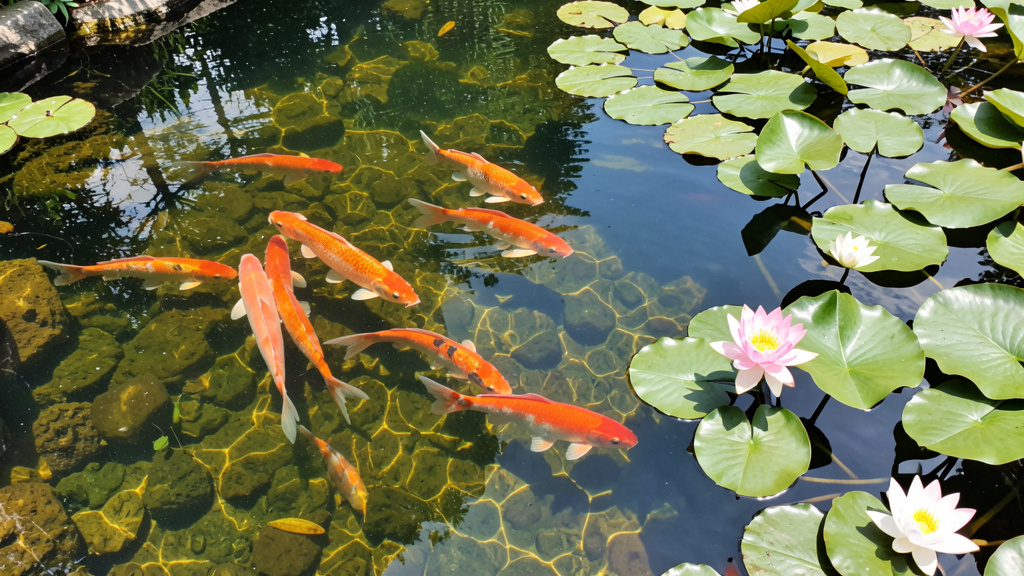
Cultivating Balance, Beauty, and Long-Term Well-Being in Your Aquatic Ecosystem
Creating a thriving pond ecosystem for koi and goldfish involves understanding the interconnected biological, environmental, and seasonal factors that shape aquatic life. This guide offers a structured yet adaptable approach grounded in established aquatic science, seasonal awareness, and practical stewardship. Whether you’re establishing your first water garden or refining an existing habitat, you’ll find clear pathways to support fish health, water clarity, and ecological harmony—season after season, year after year.
Introduction
Beneath the surface of a well-tended pond lies a dynamic, living system where water chemistry, biological processes, fish behavior, and environmental rhythms continuously interact. Koi (Cyprinus carpio) carry centuries of cultural significance across East Asia, while goldfish (Carassius auratus) trace their domestication to ancient Chinese aquaculture traditions. Today’s pond enthusiasts honor this legacy through informed care. Yet even well-intentioned efforts can encounter challenges—cloudy water, behavioral changes in fish, seasonal fluctuations—often stemming not from oversight, but from gaps in understanding how pond systems function as wholes. Drawing from widely accepted principles in aquatic biology, seasonal management practices shared by pond communities globally, and veterinary-informed perspectives on cyprinid health, this guide clarifies the why behind effective care. You’ll gain tools to interpret subtle cues, adapt to changing conditions, and nurture a resilient ecosystem where fish express natural behaviors and vibrant health. This journey is less about perfection and more about progressive understanding—a partnership with nature that deepens with time.
The Pond Health Pyramid: A Layered Framework for Sustainable Care
Visualize your pond ecosystem as a pyramid. Each layer supports the one above it. When foundational elements are stable, higher-level concerns—like feeding or aesthetics—become manageable. When lower layers falter, symptoms often appear at the top. This framework organizes care into four interdependent tiers. Progressing through them sequentially builds resilience. Skipping or neglecting any layer increases vulnerability to common challenges.
The Guiding Principle: Water quality forms the essential foundation. Nutrition, habitat design, and observation gain meaning only when this base is secure. No supplement or intervention compensates for persistent instability in core water parameters.
Step 1: Foundation – Understanding Water Quality Dynamics
Water is the fish’s entire environment—respiratory medium, waste conduit, and physiological regulator. Mastery begins not with memorizing numbers, but with recognizing relationships between temperature, biology, and chemistry.
The Nitrogen Cycle: Nature’s Continuous Recycling Process
Fish metabolize food and release ammonia—a compound stressful even at low concentrations. In a balanced system, beneficial bacteria facilitate transformation:
– Nitrosomonas-type bacteria convert ammonia → nitrite
– Nitrobacter-type bacteria convert nitrite → nitrate
Nitrate, while significantly less toxic, accumulates gradually and can encourage algae if unmanaged. This biological process, often called “cycling,” establishes the pond’s capacity to process waste.
Why this matters: In newly established ponds, insufficient bacterial colonies can lead to parameter spikes. Symptoms like surface gasping or lethargy may appear suddenly. Recognizing this process helps prevent reactive decisions. Cycling is not a one-time event but an ongoing biological function requiring support.
Supporting the cycle responsibly:
1. Before introducing fish: Allow the system to develop bacterial colonies. Introduce a controlled ammonia source (e.g., pure ammonium chloride) if starting sterile. Monitor with a liquid test kit—digital strips often lack precision for critical thresholds.
2. Observe the progression: Ammonia rises, then declines as nitrite appears; nitrite peaks and falls as nitrate becomes detectable. This typically unfolds over several weeks, influenced by temperature and surface area.
3. Gentle acceleration: Introduce mature filter media from an established, disease-free pond (never wild sources). If using commercial bacterial supplements, select products formulated for pond temperatures—many aquarium variants underperform below 60°F (15°C).
4. Preserving bacterial colonies: Clean mechanical media in removed pond water, not chlorinated tap water. Replace bio-media incrementally. Sudden, thorough cleaning can disrupt the colony.
Common considerations:
– Stocking pace: Adding multiple fish at once to a new system can overwhelm processing capacity. Gradual introduction allows bacterial populations to adjust.
– Temperature awareness: Bacterial activity slows noticeably below 50°F (10°C). Adjust feeding accordingly; digestion and waste production decrease as water cools.
– Seasonal shifts: Spring often requires re-establishing bacterial activity after winter dormancy. Light supplementation of pond-safe bacteria may support this transition.
Water Parameters: Contextual Guidelines
| Parameter | Typical Target Range | Notes | Monitoring Frequency |
|———–|———————-|——-|———————-|
| Ammonia | Undetectable | Even low levels cause stress | Weekly (daily if new or unstable) |
| Nitrite | Undetectable | Interferes with oxygen uptake | Weekly |
| Nitrate | < 40–60 ppm | Accumulates gradually; influences plant/algae growth | Bi-weekly |
| pH | 7.0–8.5 | Stability often matters more than exact value | Weekly |
| KH (Carbonate Hardness) | 80–150 ppm | Buffers against rapid pH shifts | Monthly |
| GH (General Hardness) | 100–250 ppm | Supports osmoregulation | Monthly |
| Dissolved Oxygen | > 5 ppm | Critical in warm weather | Daily during heatwaves |
pH Stability Insight: A pond holding steady at pH 7.8 is generally healthier than one fluctuating between 7.2 and 8.4 within hours. KH acts as a buffer; low KH increases vulnerability to “pH crash,” especially after heavy rain or organic decay. In soft-water regions (e.g., Pacific Northwest, parts of the UK), proactive buffering with crushed coral in the filter or measured baking soda additions may be beneficial. In hard-water areas, partial water changes can help manage mineral buildup on equipment.
Illustrative scenario: During a hot summer afternoon, a pond owner notices fish gathering near the waterfall. Testing reveals dissolved oxygen at 4 ppm. Adding a secondary air pump with diffuser stones increases circulation and oxygenation. Preventive insight: For ponds over 500 gallons, redundant aeration—especially when temperatures exceed 75°F (24°C)—provides critical backup. Warm water holds less oxygen; fish metabolism increases, raising demand.
Water Change Practices: Purposeful Maintenance
Partial water changes refresh minerals, dilute accumulated compounds, and support clarity. Effectiveness depends on method:
– Volume: 10–20% weekly suits moderately stocked ponds; adjust upward during warm months or higher bioload.
– Temperature alignment: Fill containers ahead of time to match pond temperature. Sudden changes >5°F (3°C) can stress fish.
– Dechlorination: Municipal water often contains chlorine or chloramine. Use a pond-safe dechlorinator that neutralizes both. Add to replacement water before introducing it to the pond.
– Timing consideration: Early morning changes can be beneficial, as oxygen levels are naturally lower at this time. Fresh, oxygenated water provides immediate support.
Adaptable approaches:
– For larger ponds, a slow-drip auto-fill system with integrated dechlorination offers convenience.
– During sudden parameter shifts (e.g., ammonia detection), a controlled siphon removal of bottom debris while adding treated water can provide rapid dilution.
– Always prioritize matching temperature and treating water—speed should never compromise safety.
Step 2: Nourishment – Adaptive Feeding Strategies
Feeding influences water quality, fish vitality, and long-term health. Koi commonly live 20–30+ years under optimal conditions; goldfish 10–20+ years. Nutrition plays a meaningful role in this trajectory, alongside genetics and environment.
Reading Food Labels Thoughtfully
Quality varies significantly. Look for:
– Clear protein sources: Menhaden fish meal, krill, or spirulina listed early. Vague terms like “fish meal” or heavy reliance on plant fillers (corn, wheat, soy) may indicate lower digestibility.
– Seasonally appropriate formulations:
– Cool water (50–68°F / 10–20°C): 30–36% protein, wheat-germ based for easier digestion
– Warm water (68–77°F / 20–25°C): 38–45% protein to support activity and growth
– Cold water (<50°F / 10°C): Cease feeding when consistently below 40°F (4°C); metabolism slows significantly
– Supportive additives: Stabilized vitamin C (ascorbyl phosphate), beta-glucans for immune support, natural carotenoids (astaxanthin, spirulina) for color expression
– Storage matters: Light, heat, and air degrade nutrients. Store food in airtight containers in a cool, dark place. Purchase quantities you’ll use within 3–6 months.
Why this matters: Poorly digested food increases waste load, straining filtration and potentially triggering algae. High-quality food often produces less waste per nutrient delivered, supporting clearer water and reducing long-term maintenance.
Species-informed considerations:
– Koi: Benefit from sinking or slow-sinking pellets that encourage natural foraging. Higher protein supports growth and color development.
– Goldfish (especially fancy varieties): Prone to buoyancy issues. Micro-pellets that sink slowly reduce air ingestion. Occasional blanched, deshelled peas may support digestion. Avoid floating foods that encourage gulping air.
Feeding with awareness:
1. Portion control: Offer only what fish consume within 3–5 minutes. Remove uneaten food.
2. Consistent location: Feeding near the same shallow area helps you observe appetite changes—a valuable early indicator of concern.
3. Seasonal rhythm:
– 60–75°F (15–24°C): Feed once or twice daily
– 50–60°F (10–15°C): Once daily with cool-water formula
– 40–50°F (4–10°C): Every other day, sparingly
– Below 40°F (4°C): Discontinue feeding
4. Environmental awareness: Skip feeding before heavy rain (runoff may alter chemistry) or during extreme heat (low oxygen reduces digestive efficiency).
5. Natural supplements: Occasional blanched zucchini, shelled peas, or lettuce (anchored) offer variety. Avoid bread, crackers, or processed human foods.
Illustrative insight: A pond keeper noticed diminished color vibrancy despite using color-enhancing food. Investigation revealed the food had been stored in a warm garage for many months. Switching to a freshly purchased, properly stored batch gradually restored appearance over subsequent weeks. Takeaway: Food quality degrades with time and storage conditions—freshness matters.
Step 3: Environment – Designing a Resilient Habitat
A thoughtfully designed pond works with natural processes, reducing maintenance burdens and supporting fish well-being through all seasons.
Depth and Layout Considerations
– Minimum depth guidance:
– Goldfish: 24 inches (60 cm) minimum; 36+ inches (90+ cm) preferred in climates with freezing winters
– Koi: 36 inches (90 cm) minimum; 48+ inches (120+ cm) strongly recommended for thermal stability, predator evasion, and winter survival
– Why depth matters: Shallow ponds (<18 inches) experience rapid temperature shifts, risk freezing solid, and offer little refuge from predators. Deeper zones create thermal stratification—cooler water in summer, slightly warmer microclimates near the bottom in winter.
– Surface area: Wider surface area supports better gas exchange than a narrow, deep configuration of equal volume.
– Edge design: Gently sloped edges (around 30 degrees) reduce erosion, aid wildlife escape, and create planting shelves. A subtle bottom slope toward a cleaning point simplifies debris management.
Filtration: Understanding Roles
– Mechanical filtration: Captures leaves, debris, and suspended particles (e.g., skimmer baskets, filter brushes). Essential for clarity. Clean regularly during high-debris seasons.
– Biological filtration: Provides surface area for beneficial bacteria (e.g., lava rock, bio-balls in a biofall). Essential for processing waste. Clean gently in pond water only when flow is visibly restricted.
– Integrated approach: Many systems combine both:
1. Skimmer removes surface debris
2. Pump moves water through biological media
3. Waterfall or stream returns oxygenated water
– Flow rate guideline: Aim for the pump to circulate the pond’s total volume at least once per hour. Undersized pumps create stagnant zones where debris accumulates.
Adaptable solutions:
– Without a skimmer: Use seasonal pond netting during leaf fall; employ a pond vacuum weekly.
– Limited biofiltration: Add porous media (lava rock baskets) near water flow paths.
– Algae management: Floating plants (water lettuce, hyacinth—contained to prevent spread) provide shade. Barley straw bundles release compounds that may suppress algae as they decompose.
Aquatic Plants: Functional Partners
Plants contribute oxygen, absorb nutrients, provide shade, and offer refuge:
– Submerged oxygenators: Hornwort, anacharis. Plant densely (approx. 1 bunch per sq. ft. of surface area).
– Floating plants: Water lettuce, duckweed (use floating rings to contain aggressive spreaders).
– Marginal plants: Iris, cattails. Stabilize edges, filter runoff, attract beneficial insects.
– Water lilies: Provide critical shade. Plant in weighted aquatic pots with clay-based soil (never garden soil). Cover soil with pea gravel to prevent cloudiness.
Planting notes:
– Use aquatic-specific fertilizer tablets pushed deep into planting media.
– Trim decaying foliage regularly to prevent organic buildup.
– Regional adaptation: In cold zones (USDA 3–6), select hardy varieties; bring tropicals indoors before frost. In hot zones (8–11), prioritize shade coverage (50–70% surface) and heat-tolerant species like pickerelweed.
Predator Awareness: Layered Deterrence
Complete exclusion is rarely possible, but layered strategies reduce risk:
– Physical barriers: Pond netting suspended slightly above the surface during high-risk seasons (spring/fall). Rock ledges >12 inches wide discourage wading predators.
– Visual tactics: Move decoys (herons, owls) frequently—predators habituate to static objects. Reflective tape or pinwheels create movement and light flashes.
– Habitat design: Include deep zones (>36 inches) and submerged hiding spots (stacked slate, PVC pipes). Dense surface plants break sight lines from above.
– Motion-activated devices: Sprinklers or lights can startle nocturnal visitors. Verify local regulations regarding devices.
Illustrative approach: After experiencing raccoon visits, a pond keeper installed a low-profile perimeter barrier combined with strategic rock placement at entry points. Adding dense marginal plantings and deep-water refuges gave fish secure zones. Losses ceased without resorting to extreme measures. Key insight: Combining habitat design with gentle deterrents often yields sustainable results.
Step 4: Vigilance – Cultivating Observational Awareness
Skilled pond stewardship grows through consistent, mindful observation. Fish communicate through behavior—learning their language allows timely, compassionate responses.
The Daily Observation Pause
Spend 3–5 minutes each morning (before feeding) noting:
1. Surface activity: Any gasping? (May indicate low oxygen or gill irritation)
2. Swimming patterns: Darting, flashing against rocks? (Possible parasite irritation) Lethargy or bottom-sitting? (Warrants closer monitoring)
3. Appetite engagement: Do all fish approach the feeding zone? Any isolating themselves?
4. Physical appearance: Check for spots, frayed fins, swelling, or unusual color changes.
5. Water appearance: Sudden cloudiness? Surface film? Algae shifts?
Why this practice matters: Early detection transforms manageable situations. A single instance of flashing may need monitoring; persistent flashing suggests investigation. Over time, you develop intuition for your pond’s unique baseline.
Simple Record Keeping
Tracking key details builds valuable history:
| Date | Water Temp | Notable Observations | Actions Taken |
|——|————|———————-|—————|
| Jun 5 | 72°F | All fish active at feeding | 15% water change completed |
| Jun 12 | 78°F | One koi flashing near edge | Checked water params; increased aeration |
Patterns emerge: Gradual nitrate rise may signal filter maintenance needs. pH drift downward could indicate buffering depletion. Records provide context during troubleshooting. Digital apps exist, but a simple notebook works equally well. Technology aids—but does not replace—human observation.
Seasonal Transitions: Working With Nature’s Rhythm
Fish physiology aligns with water temperature. Adjust care proactively:
– Spring (40–60°F / 4–15°C):
– Begin feeding sparingly with cool-water formula once temps consistently exceed 50°F
– Remove winter debris; inspect equipment
– Test water weekly—bacterial activity rebuilds gradually
– Summer (>70°F / 21°C):
– Monitor oxygen levels closely during heatwaves; ensure robust aeration
– Feed smaller portions more frequently if fish are active
– Trim vigorous plant growth; remove decaying matter
– Fall (60–40°F / 15–4°C):
– Transition to wheat-germ food as temps drop below 60°F
– Install netting before leaf fall begins
– Perform a larger water change before winter dormancy
– Winter (<40°F / 4°C):
– Cease feeding entirely below 40°F
– Maintain an ice-free opening using a pond de-icer or floating ball (never strike ice—shockwaves harm fish)
– In freezing climates, ensure depth exceeds local frost line to preserve liquid water below
Regional note: In mild-winter regions (USDA Zone 8+), fish may remain active year-round—adjust feeding based on observed appetite and temperature. In harsh-freeze zones, depth and de-icer reliability are critical for survival. Always prioritize local climate patterns over calendar dates.
Understanding Species Nuances: Koi and Goldfish
While often kept together, koi and goldfish have distinct traits. Recognizing these supports tailored care and harmonious cohabitation.
Key Biological and Behavioral Differences
| Characteristic | Koi (Cyprinus carpio) | Goldfish (Carassius auratus) |
|---|---|---|
| Typical Adult Size | 24–36+ inches (60–90+ cm) | Commons/Comets: 10–14″; Fancies: 6–10″ |
| Pond Size Need | Larger volume and depth essential | More adaptable to moderate-sized ponds |
| Cold Tolerance | Very high; thrive under ice with proper depth | Commons: High; Fancies: Moderate (more sensitive) |
| Behavior | Active foragers; may uproot plants | Generally calmer; fancies less agile |
| Lifespan Potential | 20–30+ years (documented exceptional cases) | Commons: 10–15+ years; Fancies: 5–10+ years |
| Special Considerations | Require robust filtration; watch for KHV exposure | Fancies prone to swim bladder issues; need calm water |
Cohabitation Guidance
Mixed ponds can succeed with planning:
– Pond scale: Minimum 1,000+ gallons recommended for mixed groups. Koi grow rapidly and may outcompete slower goldfish at feeding time.
– Goldfish selection: Streamlined varieties (Commons, Comets, Shubunkins) coexist more readily with koi. Fancy varieties (Orandas, Ryukins) are better suited to goldfish-only ponds due to swimming limitations and feeding challenges.
– Feeding strategy: Offer sinking pellets for koi; provide micro-pellets in a separate, calmer zone for goldfish. Feed goldfish first to ensure intake.
– Spawning note: Both species spawn prolifically in spring. Dense plant cover (hornwort) offers refuge for fry if natural reproduction occurs. Adults may consume eggs or fry.
Color Development: Patience and Perspective
Color expression evolves through genetics, diet, light, and health:
– Sunlight: Moderate exposure (4–6 hours daily) often enhances reds and blacks. However, excessive sun may fade colors or increase stress. Aim for 30–50% surface shade via plants or positioning.
– Dietary support: Natural carotenoids (astaxanthin in krill, spirulina) may gradually enrich reds, oranges, and metallic sheens. Consistency over months matters more than quick fixes.
– Health connection: Vibrant color often reflects overall well-being. Chronic stress—from poor water, predators, or aggression—can cause colors to appear muted. Focus first on foundational health.
Special Notes for Fancy Goldfish Keepers
If housing Orandas, Ranchus, or similar varieties:
– Water movement: Provide calm zones away from strong pump currents.
– Substrate: Use smooth, rounded gravel to protect delicate eyes and fins.
– Winter care: In zones below USDA 7, consider overwintering fancies indoors in a properly sized aquarium. Their physiology is less cold-hardy than commons or koi.
– Digestive support: Soak pellets briefly before feeding; offer shelled peas occasionally to support digestion and buoyancy.
Seasonal Care Calendar: A Flexible Monthly Guide
Adapt this framework to your local climate, frost dates, and pond observations. Flexibility matters more than rigid adherence.
January (Deep Winter)
- Focus: Ice management, equipment check
- Actions: Ensure de-icer maintains open water area; verify pump/aeration function; do not feed below 40°F
- Watch for: Complete ice cover after snowfall (blocks gas exchange)
- Tip: A floating ball placed before freeze creates a natural air pocket as ice forms around it
February (Late Winter)
- Focus: Preparation, observation
- Actions: Continue ice monitoring; inspect stored nets/vacuums; review logbook for spring planning
- Watch for: Thaw-refreeze cycles causing water level shifts
- Tip: Order aquatic plants early; popular hardy varieties sell quickly
March (Early Spring)
- Focus: Gentle reactivation
- Actions: Begin feeding only when water consistently exceeds 50°F (wheat-germ formula, small amounts); remove winter debris; test water parameters
- Watch for: Early spawning behavior (males chasing females)
- Tip: Light bacterial supplement may support spring bacterial regrowth
April (Spring Awakening)
- Focus: System refresh
- Actions: Switch to balanced-protein food; perform 20–25% water change; clean mechanical filter media in pond water; divide overgrown plants
- Watch for: Post-winter parasites (anchor worm, fish lice)
- Tip: Add spawning mops (nylon yarn bundles) in shallow zones if collecting eggs
May (Pre-Summer)
- Focus: Predator readiness, shade planning
- Actions: Install netting before peak heron season; add floating plants for upcoming summer shade; verify aeration system
- Watch for: Accelerating algae growth with increasing sun
- Tip: Introduce algae-grazing snails in contained mesh bags to prevent overpopulation
June (Early Summer)
- Focus: Oxygen vigilance
- Actions: Feed high-protein food if temps allow; monitor afternoon oxygen levels; trim aggressive plant growth
- Watch for: Surface gasping on hot afternoons
- Tip: Place thermometer in shaded, deeper water—not surface—for accurate reading
July (Peak Summer)
- Focus: Heat management
- Actions: Feed smaller portions 2x daily if fish are active; run aerators continuously; ensure 60%+ surface shade
- Watch for: Lethargy or loss of appetite during extreme heat
- Tip: During heatwaves (>90°F air temp), floating sealed ice bags gradually cools water—avoid sudden temperature drops
August (Late Summer)
- Focus: Debris control, system check
- Actions: Remove decaying plant matter; inspect pump impeller and hoses for wear; begin reducing feeding if temps trend downward
- Watch for: Cyanobacteria (blue-green slime) indicating nutrient imbalance
- Tip: Barley straw extract applied weekly may help suppress algae naturally
September (Early Fall)
- Focus: Transition preparation
- Actions: Switch to wheat-germ food as temps fall below 70°F; install netting before leaves drop; perform 25–30% water change
- Watch for: Increased organic debris accumulation
- Tip: Use a long-handled leaf rake—avoid entering pond to protect liner and fish
October (Mid-Fall)
- Focus: Winterization steps
- Actions: Feed once daily with cool-water formula; remove netting debris daily; lower hardy plants to deepest zone; consider shutting down waterfall if freezing nights begin
- Watch for: Final spawning activity
- Tip: Store UV clarifiers and sensitive pumps indoors before hard freeze
November (Late Fall)
- Focus: Final preparations
- Actions: Feed sparingly only if >45°F; remove all decaying vegetation; position de-icer near edge (preserves deeper cold zone); disconnect non-essential equipment
- Watch for: Water temperature approaching 40°F
- Tip: Place de-icer where wind won’t blow debris into the opening
December (Early Winter)
- Focus: Dormancy monitoring
- Actions: Cease feeding below 40°F; ensure ice vent remains clear; monitor equipment during storms
- Watch for: Snow cover sealing ice surface
- Tip: Keep a battery-powered air pump accessible for winter power outages
Navigating Common Challenges: A Diagnostic Approach
Challenges are part of pond keeping. A calm, methodical response yields better outcomes than reactive fixes. Always test water parameters before intervening.
Cloudy Water: Identifying the Source
Cloudiness has distinct causes requiring different responses:
| Appearance | Likely Cause | Thoughtful Response |
|---|---|---|
| Milky white | Bacterial bloom (common in new ponds) | Wait patiently; avoid water changes that remove developing bacteria; ensure adequate surface agitation |
| Pea-soup green | Suspended algae (nutrients + sunlight) | Add floating plants for shade; verify feeding amounts; consider UV clarifier; perform partial water change |
| Brown/tan haze | Stirred sediment or inadequate filtration | Add fine filter media to skimmer; use pond vacuum gently on bottom; check pump flow rate |
| Yellow tint | Tannins from leaves or decaying matter | Remove debris source; add activated carbon to filter media; perform water change |
Critical insight: Never apply algaecide to milky water in a new pond. If ammonia is rising, it’s likely a bacterial bloom—algaecide would harm developing colonies. Test first. Patience often resolves natural cycles.
Fish at Surface: Oxygen Assessment Protocol
Surface gasping warrants prompt, calm action:
1. Immediate support: Turn on all water features; add battery-powered air pump if available; gently splash surface to increase gas exchange.
2. Reduce demand: Temporarily stop feeding; remove visible decaying matter.
3. Check conditions: Is it a hot, still afternoon? Did algae recently die off? (Decomposition consumes oxygen.)
4. Test if possible: Dissolved oxygen below 5 ppm requires intervention.
5. Long-term: Install redundant aeration for ponds over 500 gallons. Place diffusers at opposite ends for full circulation.
Prevention focus: In warm months, ensure surface agitation is visible across the entire pond. Oxygen demand peaks when water is warmest and fish are most active.
Unexpected Fish Behavior or Loss: A Calm Diagnostic Path
When concerns arise:
1. Test water first: Ammonia, nitrite, pH. Most issues trace to water quality shifts.
2. Review recent changes: New fish? Heavy rain? Equipment change? Chemical application nearby?
3. Observe closely: Note specific behaviors (flashing, clamped fins, isolation).
4. Isolate if needed: For individual fish showing clear distress, a quarantine container (pond water, air stone, hiding spot) allows focused observation.
5. Consult resources: Local pond societies, aquatic veterinarians, or experienced keepers offer valuable perspective.
Important reminder: Never medicate a pond with unstable water parameters. Correct water quality first—medication adds stress. A fish in clean, stable water has significantly better recovery potential.
Sustainable Algae Management
Algae signal imbalance, not failure. Target root causes:
– String/hair algae: Often indicates excess phosphate. Add fast-growing floaters to compete; manually remove strands weekly; check fertilizer runoff from nearby gardens.
– Green water: Sunlight + nutrients. Increase plant coverage; verify feeding amounts; ensure UV clarifier (if used) is correctly sized and quartz sleeve is clean.
– Slime on rocks: Improve water flow in stagnant zones; add contained snails; gently scrub during water changes.
Eco-conscious note: Some algae is normal and beneficial. Aim for balance, not sterility. Avoid copper-based treatments if shrimp or sensitive plants are present.
Introducing New Fish: A Thoughtful Quarantine Practice
Quarantine significantly reduces disease transmission risk:
1. Setup separate container: 20+ gallons with pond water (not main pond water), air stone, hiding spot, and heater if needed for species.
2. Acclimate slowly: Float bag 15–20 minutes; gradually mix quarantine water over 30 minutes.
3. Observe closely: Monitor for 2–4 weeks for changes in behavior, appetite, or appearance.
4. Water testing: Test quarantine water regularly—small volumes fluctuate quickly. Perform small, temperature-matched water changes as needed.
5. Release only after: Full observation period with stable parameters and no concerning signs.
Why this matters: Diseases like Koi Herpes Virus (KHV) spread rapidly and have no reliable cure. Quarantine is a compassionate, responsible practice that protects your entire ecosystem.
Your Questions, Answered
Q: How many fish can my pond support?
A: Move beyond “inches per gallon.” Consider surface area and filtration capacity:
– Goldfish: Approximately 1 fish per 10–15 sq. ft. of surface area
– Koi: Approximately 1 fish per 25–30 sq. ft. of surface area
Example: An 8’x10′ pond (80 sq. ft.) may support 5–8 goldfish or 2–3 koi long-term. Start conservatively—you can always add later. Overstocking is a leading contributor to chronic water quality challenges. Local pond societies often provide region-specific stocking guidance.
Q: My fish aren’t eating. Should I be concerned?
A: Context is key. First, check water temperature:
– Below 50°F (10°C): Normal—metabolism slows significantly. Discontinue feeding.
– Above 60°F (15°C) with no appetite: Test water parameters immediately. Ammonia or nitrite spikes suppress appetite. Observe for other signs (lethargy, isolation). If water is stable and weather is calm, monitor for 24 hours. Persistent refusal with normal conditions warrants closer observation or consultation.
Q: Is salt safe for pond use?
A: Non-iodized pond salt (sodium chloride) can be a supportive tool when used carefully:
– Low concentration (0.1%): May reduce mild stress; generally safe for most plants
– Therapeutic concentration (0.3%): Used short-term for parasite support; remove salt-sensitive plants (water hyacinth, lettuce) during treatment
– Critical precautions: Never use table salt (iodine/additives); dissolve completely in bucket of pond water before adding; perform water change after 7–10 days; salt does not evaporate—only water changes reduce it. Consult species-specific guidelines before use.
Q: How often should I test water?
A: Frequency depends on pond maturity and season:
– New pond (<6 months): Test ammonia/nitrite every 2–3 days until stable
– Established pond, spring/fall: Test key parameters weekly
– Established pond, summer: Test weekly; check oxygen on hot days
– After changes: Test 24 hours after adding fish, major cleaning, or heavy rain
Liquid test kits generally offer more reliable results for critical parameters than strips. Consistent monitoring builds valuable baseline knowledge.
Q: Can koi live in a preformed pond?
A: Preformed ponds (typically <24″ deep) are generally unsuitable for koi long-term due to depth limitations affecting winter survival, predator evasion, and growth. They may suit small goldfish (especially fancy varieties) in moderate climates if volume exceeds 200 gallons. For koi, a custom-lined pond (EPDM) with 36″+ depth provides necessary space and thermal stability. Consider the fish’s full adult size and local climate when planning.
Q: Why do my fish hide constantly?
A: Initial hiding (1–2 weeks) is normal acclimation. Persistent hiding may indicate:
– Predator presence (add visual barriers, deterrents)
– Water quality stress (test parameters)
– Aggression from tankmates (observe interactions)
– Insufficient cover (add plants, rocks, or PVC hides)
– Recent disturbances (allow time to rebuild trust)
Feed consistently at the same time/location. Sit quietly nearby during feeding—fish often learn your presence signals safety.
Q: UV clarifier vs. sterilizer—what’s the difference?
A: Both use UV light but differ in intensity and purpose:
– Clarifier: Lower intensity; clumps suspended algae for mechanical removal. Effective for green water; safe for most ponds.
– Sterilizer: Higher intensity; targets pathogens and parasites. Requires precise sizing and flow rate; may affect beneficial plankton.
For typical backyard ponds, a properly sized clarifier is often sufficient. Sterilizers are typically considered for high-value collections under professional guidance.
Q: How do I catch a fish safely?
A: Minimize stress and injury:
1. Prepare quarantine container with aerated pond water first.
2. Use two soft-mesh nets: one to gently guide, one to scoop.
3. Corner fish gently against the wall in shallow water.
4. Scoop upward from beneath—never downward.
5. Keep fish submerged during transfer.
6. Limit handling time (<60 seconds).
Wet hands before contact; support the body horizontally. For large koi, a soft-mesh landing net designed for carp reduces injury risk.
Q: Are pond dyes safe?
A: High-quality, fish-safe dyes (blue or black) are generally non-toxic when used as directed. Benefits include reduced sunlight penetration (algae control) and enhanced fish visibility.
– Use only products explicitly labeled safe for fish, plants, and wildlife.
– Avoid agricultural or industrial dyes.
– Follow dosage instructions precisely; reapply after heavy rain or water changes.
Dyes are a supplementary tool—not a replacement for balanced filtration, plants, and feeding practices.
Q: Water is clear, but fish seem stressed. What now?
A: Clarity ≠ health. Test immediately for:
– Ammonia/nitrite (toxic even when invisible)
– pH/KH stability (sudden shifts cause osmotic stress)
– Dissolved oxygen (critical on warm, still days)
– Chlorine/chloramine (if recent untreated water change)
Also consider: predator visits (look for disturbed gravel), chemical drift from nearby treatments, or electrical leakage from equipment (use multimeter to check). Clear water provides false confidence—regular testing remains essential.
Conclusion: A Journey of Growing Connection
You now hold a flexible framework for nurturing a pond where koi and goldfish express natural vitality across seasons. Remember the Pyramid: stable water chemistry enables thoughtful nutrition; habitat design supports biological balance; and consistent observation deepens your understanding. Mastery isn’t about perfection—it’s about responsive, compassionate stewardship that evolves with experience. Each water test, each seasonal adjustment, each quiet moment of observation builds intuition. Challenges become learning opportunities. Successes, however small, reinforce your connection to this living system.
The 24-Hour Invitation: Begin With Presence
Within the next day, take five uninterrupted minutes at dawn:
Simply observe. Do not feed. Do not test. Watch the water’s surface, note fish movements, listen to the surroundings. Jot down one observation—a dragonfly skimming the surface, the way light hits the water, a fish exploring a new plant. This practice anchors care in awareness, not anxiety. It transforms knowledge into relationship. Tomorrow, you’ll notice a little more. In a year, you’ll read your pond’s subtle language with quiet confidence.
The Deeper Reward: More Than a Pond
A thoughtfully tended pond becomes a living focal point—a place where dragonflies rest on lily pads, where children marvel at darting goldfish, where you find moments of peace after a busy day. It teaches patience, ecological interdependence, and the quiet joy of nurturing life. With attentive care, the fish you welcome today may bring wonder to your landscape for many years. This is the heart of pond keeping: not just maintaining water and fish, but cultivating a small, resilient piece of nature that reflects care, curiosity, and connection. Start where you are. Use what you have. Move forward with gentle intention. Your pond’s story is just beginning.
Explore Our Complete Pond Care System:
Building Your First Backyard Pond: A Step-by-Step Installation Guide | Advanced Water Chemistry Decoded: Beyond Basic Test Kits | Seasonal Disease Prevention: Protecting Your Fish Year-Round | Aquatic Plant Mastery: Designing a Self-Cleaning Ecosystem | Koi Color Enhancement: Science-Backed Nutrition Strategies | Winter Pond Survival: Regional Guides for Every Climate Zone | Quarantine Tank Setup: Protecting Your Entire Collection