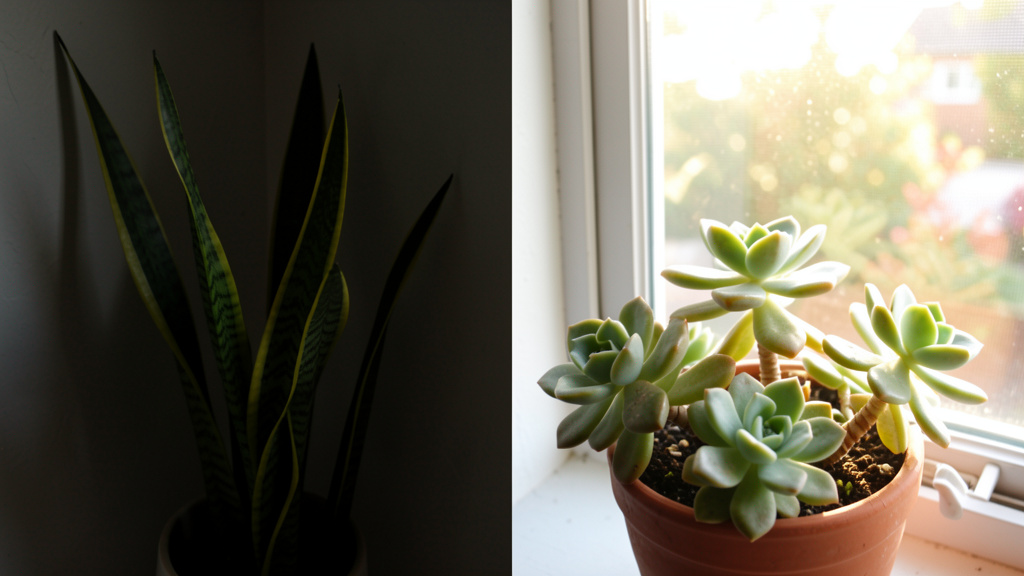
A Science-Backed Framework to Help You Match Plants to Your Home’s Light Conditions
Understanding indoor plant light requirements forms the foundation of sustainable plant care. This guide translates commonly used terms like “low,” “medium,” and “bright” light into observable, actionable criteria you can apply in your own space. Learn how to assess your home’s light conditions thoughtfully, select appropriate plants, and adjust care practices with seasonal awareness—grounded in established horticultural principles and widely accepted light classification frameworks used by botanical institutions and greenhouse professionals.
Introduction
Light serves as the primary energy source driving photosynthesis—the biological process fueling growth, resilience, and vitality in plants. Yet within indoor gardening resources, light terminology often remains ambiguous. Phrases such as “bright indirect light” or “tolerates low light” appear frequently on care tags and guides without clarifying what these conditions truly look like in a lived-in home. How far from a window constitutes “bright”? Does “low light” describe a dim hallway or a north-facing windowsill? Without contextual clarity, even attentive plant caregivers may unintentionally place light-sensitive species in unsuitable locations.
This resource bridges that gap. Drawing upon widely recognized light assessment methods referenced in horticultural literature and institutional practice, we translate abstract terms into tangible, observable conditions. You will learn to interpret light through window orientation, shadow observation, seasonal patterns, and accessible tools—while understanding why certain plants align with specific light environments based on their native habitats. A snake plant’s resilience in lower-light offices reflects adaptations to shaded forest floors in West Africa. A fiddle leaf fig’s preference for brighter conditions echoes its natural role reaching for filtered canopy gaps in tropical ecosystems. By aligning care with these biological contexts, you shift from reactive correction toward intentional, responsive cultivation.
This guide is designed as a lasting reference—whether you’re welcoming your first pothos or expanding a diverse collection. Revisit it seasonally, when introducing new plants, or during home rearrangements. Developing light literacy remains one of the most impactful skills for nurturing thriving indoor greenery. Let’s begin.
The Light Triad: Intensity, Duration, and Quality
Before exploring “low,” “medium,” and “bright” classifications, recognize that light functions as an interconnected system. Optimizing one element while overlooking others may lead to inconsistent results. Consider this analogy: watering is like filling a bucket. Light intensity represents the flow rate of the hose. Duration reflects how long the water runs. Quality relates to the clarity and composition of the water. A slow trickle over many hours may eventually fill the bucket but inefficiently. A powerful blast for seconds may cause overflow. Murky water compromises health regardless of volume. All three elements require thoughtful balance.
Intensity: Understanding Photon Availability
Light intensity refers to the density of usable photons reaching leaf surfaces. Outdoors, this spans from minimal levels under dense cloud cover to over 10,000 foot-candles (fc) in unfiltered midday sun. Indoors, we operate within a narrower range. Intensity directly influences photosynthetic activity—up to a species-specific threshold. Beyond this point, additional light offers diminishing returns and may contribute to stress. Below a critical minimum, energy reserves deplete over time.
Why intensity alignment matters:
Plants like the ZZ plant (Zamioculcas zamiifolia) evolved in shaded woodland habitats. Its thick, waxy leaves and water-storing rhizomes maximize efficiency under lower photon availability. Placing it in intense direct sun (e.g., 2,500+ fc on a south windowsill) may overwhelm its physiological capacity, potentially leading to leaf discoloration or scorch. Conversely, positioning a sun-adapted species like a desert cactus in very low light (<100 fc) may result in weak, elongated growth as it stretches toward minimal light sources. Matching intensity to a plant’s evolutionary context supports long-term vitality.
Practical intensity assessment:
While professional growers use quantum sensors (measuring PPFD in μmol/m²/s), home caregivers can apply accessible benchmarks:
– Foot-candles (fc): Lumens per square foot. Commonly referenced in U.S. horticultural resources.
– Lux: Lumens per square meter (1 fc ≈ 10.76 lux). Used globally.
– Shadow observation: A zero-cost field method detailed later.
Important nuance: Light intensity diminishes noticeably with distance from the source. Due to light dispersion principles, moving a plant just a few feet farther from a window can significantly reduce available light. A location measuring approximately 500 fc at 1 foot from glass may register closer to 125 fc at 2 feet. This explains why a plant thriving directly on a sill may struggle just a short distance inward.
Duration: The Role of Daily Light Exposure
Duration—the hours of usable light received daily—contributes to the cumulative light dose plants experience. In technical terms, this is described as Daily Light Integral (DLI). Many common houseplants thrive within a DLI range of 4–12 mol/m²/day. Duration interacts dynamically with intensity: moderate light sustained over longer periods may deliver sufficient cumulative exposure, whereas very bright light for only a few hours might fall short. Consistency also matters; abrupt reductions in daily exposure (e.g., relocating from a sunroom to a dim interior room) can trigger stress responses like temporary leaf drop.
Seasonal awareness:
In temperate regions above 40° latitude, a south-facing windowsill may receive only 3–4 hours of direct sun in deep winter versus 8+ hours during summer months. The same location delivers vastly different cumulative light across seasons. A bird of paradise (Strelitzia nicolai) showing robust growth in summer may slow considerably in winter—not solely due to temperature, but reduced light duration and angle. Proactive caregivers often adjust plant placement seasonally or consider supplemental lighting during shorter-day months.
Quality: The Influence of Light Spectrum
Light quality refers to the distribution of wavelengths (colors) within the visible spectrum (400–700 nm). Chlorophyll primarily absorbs blue (430–450 nm) and red (640–680 nm) wavelengths. Green light is largely reflected—giving plants their characteristic color. Other pigments utilize broader spectra: blue light supports compact growth and stomatal function; red light influences flowering responses and stem development.
Window considerations:
Standard clear glass filters certain wavelengths, including most UV-B radiation and some blue light. Energy-efficient low-e glass may reduce total visible light transmission by 25–40% and subtly shift spectral balance. Consequently, light received on a windowsill differs spectrally from unfiltered outdoor light—even at similar intensity readings. Full-spectrum LED grow lights are designed to provide balanced wavelengths supportive of plant processes, whereas standard household bulbs prioritize human visual comfort over photosynthetic needs.
A Foundational Insight: Sustainable plant health typically depends on harmonizing all three elements of the light triad. A peace lily (Spathiphyllum) in a consistently shaded location (lower intensity) may maintain foliage with adequate daily exposure duration but rarely flower without supplementary spectrum support. Evaluate intensity, duration, and quality as interconnected factors.
How to Assess Light in Your Home: A Practical Field Protocol
You do not require specialized equipment to begin understanding your space. This protocol combines architectural observation, simple tests, and mindful tracking. Complete it on a clear day for baseline insight, then refine awareness seasonally.
Step 1: Map Window Orientation (Your Spatial Light Guide)
Window direction offers the strongest initial indicator of light potential. Use this widely referenced framework (Southern Hemisphere readers: reverse north/south references; east/west patterns remain consistent):
| Window Direction | Typical Light Character | Approximate Intensity Range | Generally Suitable For |
|---|---|---|---|
| North | Consistent, indirect light all day; no direct sun | 50–250 fc | Plants adapted to lower light (ZZ plant, snake plant) |
| East | Gentle direct sun 2–4 hours (morning), bright indirect remainder | Direct patch: 500–1,500 fc Indirect zone: 200–800 fc |
Medium-light plants (pothos, philodendron, African violet) |
| West | Stronger direct sun 3–5 hours (afternoon), often warmer | Direct patch: 1,000–3,000+ fc Indirect zone: 300–1,200 fc |
Plants tolerant of brighter, warmer conditions (rubber plant, croton, many succulents) |
| South | Longest duration of direct sun; highest intensity potential | Direct patch: 1,500–5,000+ fc Indirect zone: 500–2,000 fc |
Sun-loving species (fiddle leaf fig with diffusion, citrus, cacti) |
Key modifiers to note immediately:
– Obstructions: Nearby buildings, mature trees, or awnings can reduce intensity significantly. A south window shaded by dense foliage may function more like a north exposure.
– Window treatments: Sheer curtains diffuse direct sun into bright indirect light (reducing intensity 30–60%). Heavy drapes block most usable light.
– Interior layout: Hallways, interior rooms without exterior walls, or deep room placements rely on reflected light—often below 50 fc.
– Regional context: Higher elevations generally increase light intensity; higher latitudes reduce winter daylight duration and sun angle.
Action: Sketch a simple floor plan of your living space. Label window directions. Note consistent obstructions and typical coverings. This becomes your personalized light reference map.
Step 2: Perform the Shadow Observation Test (Instant Spatial Insight)
This field-tested method requires only your hand and a light-colored surface (paper, wall, floor). Conduct it on a clear day between 10 AM and 2 PM when ambient light is strongest.
- Stand precisely where you intend to place a plant.
- Hold your hand 12 inches above the surface, palm down, between the window and surface.
- Observe the shadow’s characteristics:
| Shadow Appearance | Interpretation | Estimated Foot-Candles | Typical Plant Suitability |
|---|---|---|---|
| Sharp edges; deep, well-defined core | Direct sunlight | 1,000–5,000+ fc | Cacti, succulents, citrus (with acclimation) |
| Clear shape with softened edges; grayish core | Bright indirect light | 500–1,500 fc | Fiddle leaf fig (with diffusion), monstera, rubber plant |
| Faint but visible outline; light gray | Medium light | 250–750 fc | Pothos, philodendron, spider plant, peace lily |
| No distinct shadow visible | Lower light conditions | < 250 fc | ZZ plant, snake plant, cast iron plant |
Why this works: Shadow definition correlates with light directionality. Direct sun creates crisp shadows; diffused or reflected light softens edges. This test replaces subjective terms like “bright” with spatially precise, observable data.
Refinement tip: Repeat at 8 AM, 12 PM, and 4 PM. Note changes. A west windowsill may show sharp shadows at 4 PM (intense afternoon sun) but soft shadows at 10 AM—revealing critical duration insights for placement decisions.
Step 3: Maintain a Simple Light Journal (Capturing Change Over Time)
Light conditions shift with weather, seasons, and daily routines. For one week, spend 60 seconds each evening noting:
– Date, time, and weather (clear, cloudy, rainy)
– Shadow observation result at the plant location
– Brief notes: “Direct sun reached plant spot at 3 PM,” “Heavy clouds after noon,” “Neighbor’s tree shaded area 2–4 PM”
After seven days, patterns emerge:
– “My east windowsill receives direct morning sun only until ~11 AM on clear days; cloudy days provide consistent medium light.”
– “The spot 3 feet from my south window stays in bright indirect light except 1–3 PM when direct sun arrives.”
This journal transforms uncertainty into evidence-based awareness. Keep it digitally or in a small notebook near your plants. Review before seasonal transitions.
Step 4: Optional Verification with Light Meters
For deeper confidence—especially with light-sensitive species or persistent challenges—quantitative tools offer supplementary insight.
Smartphone apps (e.g., LUX Light Meter):
– How to use: Open app, place phone sensor at intended leaf height facing the window. Take 2–3 readings over 60 seconds; average them.
– Limitations: Phone sensors prioritize human-visible light (green/yellow spectrum) and may underreport blue/red wavelengths critical for plants. Accuracy varies by device.
– Best practice: Use comparatively. “Spot A reads roughly 3x higher than Spot B” is reliable; absolute lux values may have ±25–30% variance. Convert lux to fc (÷10.76) for horticultural context.
Dedicated foot-candle meters (e.g., Dr. Meter LX1330B):
– Advantage: Calibrated for visible light spectrum; consistent accuracy (±5–10%).
– Protocol: Measure at plant height. Take readings at 9 AM, 12 PM, 3 PM. Note averages.
– Consideration: Under $30. Valuable if caring for numerous plants or species with specific light needs (e.g., certain orchids, gesneriads).
PPFD meters (quantum sensors):
– For dedicated enthusiasts: Measures photosynthetically active photons (μmol/m²/s). Essential for serious grow-light setups.
– Houseplant correlation (approximate):
– Lower light: 10–50 μmol/m²/s
– Medium light: 50–200 μmol/m²/s
– Bright light: 200–600+ μmol/m²/s
– Note: Often unnecessary for general houseplant care. Shadow observation + window mapping suffices for most scenarios.
Low Light Conditions: Clarifying Realistic Expectations
“Low light” is frequently misunderstood in plant care resources. Marketing may state “Thrives in Low Light!” without clarifying critical context. In horticultural practice, true low light refers to measurable conditions (typically 50–250 fc) found in north rooms, hallways with distant windows, or spaces shielded by obstructions. No plant sustains long-term health in complete darkness—photosynthesis requires some photon input. This section clarifies achievable outcomes, suitable species, and nuanced care adjustments.
What Low Light Means Biologically
Plants adapted to lower-light environments often originate from forest understories, shaded ravines, or dense thickets where canopy cover filters 90–95% of direct sun. Evolutionary adaptations include:
– Efficient photosynthetic pathways: Snake plants (Dracaena trifasciata) utilize Crassulacean Acid Metabolism (CAM), opening stomata at night to conserve moisture while capturing CO₂—supporting slow, steady energy production in dim conditions.
– Leaf morphology: Cast iron plant (Aspidistra elatior) develops broad, thin leaves to maximize photon capture surface area.
– Energy reserves: ZZ plants store water and nutrients in rhizomes, enabling resilience during periods of limited light.
– Reduced metabolic rate: Growth naturally slows; flowering is uncommon indoors without supplemental light.
Critical boundary awareness: Below approximately 50 fc, even well-adapted species face long-term challenges. A windowless bathroom illuminated only briefly by artificial light during use may provide <25 fc—insufficient for sustained vitality. Periodic rotation to brighter areas or targeted supplemental lighting becomes necessary for plant longevity.
Thoughtfully Curated Low-Light Plant Guide (With Realistic Outcomes)
| Plant | Scientific Name | Minimum Viable Light | Growth Expectation in Low Light | Key Care Consideration |
|---|---|---|---|---|
| Snake Plant | Dracaena trifasciata | ~75 fc | Very slow vertical growth; maintains structural form | Water only when soil is thoroughly dry (every 3–6 weeks). Overwatering is a common risk. |
| ZZ Plant | Zamioculcas zamiifolia | ~100 fc | Extremely slow; new leaflets may emerge annually | Rhizomes are susceptible to rot in persistently damp soil. Use well-draining mix. Wipe leaves periodically to maintain light absorption. |
| Pothos | Epipremnum aureum | ~100 fc | Moderate vine extension; leaves smaller than in brighter light | May become leggy over time. Prune tips to encourage bushier growth. Variegated types need slightly more light to maintain patterns. |
| Peace Lily | Spathiphyllum spp. | ~150 fc | Foliage typically persists; flowering unlikely below 200 fc | Droops noticeably when needing water—a helpful cue. Sensitive to chlorine; filtered water preferred. |
| Cast Iron Plant | Aspidistra elatior | ~75 fc | Minimal visible growth; exceptional resilience | Tolerates dust, temperature fluctuations, and irregular care. Ideal for challenging spaces. |
| Chinese Evergreen | Aglaonema spp. | ~100 fc | Slow but steady growth; color retention varies by cultivar | Prefers moderate humidity. Avoid prolonged exposure to cold drafts (<60°F/15°C). |
| Parlor Palm | Chamaedorea elegans | ~150 fc | Very slow frond production; remains compact | Occasional leaf misting appreciated. Sensitive to fluoride in some tap waters. |
| Heartleaf Philodendron | Philodendron hederaceum | ~100 fc | Reliable trailing growth; smaller leaves than in brighter settings | Generally more adaptable than Monstera. Excellent entry point for lower-light spaces. |
Important distinctions:
– “Tolerates” vs. “Prefers”: Pothos survives lower light but thrives with more light (larger leaves, faster growth). Position it in the brightest viable spot within the low-light zone (e.g., 3–4 feet from an east window).
– Variegation considerations: Plants with white, yellow, or pink patterning (e.g., Aglaonema ‘Silver Bay’) contain less chlorophyll. They typically require 20–30% more light than solid-green counterparts to maintain coloration and avoid reverting.
– Plant maturity matters: Smaller, younger specimens may adapt more readily to lower light than large, mature plants requiring greater energy for maintenance.
Low-Light Care Adjustments: Aligning All Practices
Light levels influence every aspect of plant care. In lower-light environments:
– Watering frequency decreases significantly: Reduced photosynthesis lowers transpiration. Soil stays moist longer.
Protocol: Insert finger 1.5–2 inches deep. Water only when soil feels dry at that depth. Intervals may extend to 2–6 weeks depending on pot size, soil mix, and ambient conditions. Always use pots with drainage holes. Terracotta pots promote soil drying better than plastic.
Common pitfall: Watering on a fixed calendar schedule. Overwatering is the leading cause of decline in low-light plants.
-
Fertilizing requires restraint: Minimal growth means minimal nutrient demand. Excess fertilizer salts can accumulate in unused soil, potentially harming roots.
Protocol: Apply balanced fertilizer (e.g., 5-5-5) at ¼ strength once every 3–4 months during active growing seasons (spring/summer). Avoid fertilizing October through February.
Sign of excess: Brown leaf tips, white crust on soil surface. -
Humidity needs are often reduced: Slower transpiration decreases moisture loss. Most low-light adapted species (snake plant, ZZ) tolerate average home humidity (30–50%). Exceptions: Peace lily and parlor palm may appreciate slightly higher humidity.
-
Leaf cleaning is essential: Dust accumulation blocks precious photons. Research suggests even a thin dust layer can reduce light transmission by up to 30%.
Protocol: Gently wipe leaves monthly with a damp microfiber cloth. Support leaves to avoid tearing. For fuzzy-leaved plants (e.g., some Saintpaulia), use a soft brush. -
Rotation supports balanced form: Plants naturally lean toward light sources (phototropism).
Protocol: Rotate the pot a quarter-turn weekly during watering. Promotes even growth and prevents lopsided development.
Addressing Common Low-Light Scenarios
Scenario: “My ZZ plant’s leaves are yellowing and dropping.”
– Likely cause: Overwatering (most frequent issue). Low light slows water uptake; soil remained saturated, potentially leading to root issues.
– Action: Pause watering. Gently inspect roots. Trim any soft, dark sections. Repot in fresh, fast-draining mix (e.g., 2 parts potting soil : 1 part perlite). Place in the brightest available low-light spot. Wait 2–3 weeks before next watering.
– Prevention: Always verify soil moisture depth before watering. Consider a moisture meter for peace of mind.
Scenario: “Pothos vines are long with large gaps between tiny leaves.”
– Cause: Etiolation—stretching toward limited light. Energy prioritizes stem extension over leaf production.
– Action: Prune leggy stems back to 2–3 leaf nodes. Relocate closer to a viable light source (e.g., from 6 ft to 3 ft from window). New growth should be more compact. Propagate pruned tips in water if desired.
– Prevention: Position low-light plants as close to usable light as space allows. Accept slower growth as normal in these conditions.
Scenario: “Peace lily hasn’t flowered in two years.”
– Cause: Insufficient light intensity/duration. Flowering demands higher energy input than foliage maintenance alone.
– Action: Relocate to a spot with faint but visible shadow (medium light, ~250 fc)—e.g., 2–3 ft from an east window. Maintain consistent watering. Light fertilization monthly during spring/summer may support flowering.
– Perspective: Many indoor peace lilies focus energy on lush foliage rather than blooms. Celebrating healthy leaves is a valid success metric.
Medium Light Conditions: The Balanced Zone for Diverse Houseplants
Medium light (approximately 250–1,000 fc) represents a versatile range supporting the majority of popular houseplants. This encompasses bright indirect light—sunlight softened by sheer curtains, reflected off light walls, or filtered through outdoor foliage. It also includes locations 2–5 feet from east/west windows or 4–8 feet from south windows with diffusion. Here, many plants achieve balanced growth: consistent foliage development, reasonable growth rates, and for some species, reliable flowering. Understanding nuances within this spectrum helps avoid common placement errors.
Understanding the Medium-Light Spectrum
Medium light functions as a gradient:
– Lower medium (250–500 fc): Faint shadow visible. Suitable for plants transitioning from lower light or sensitive species (e.g., African violets). Found 4–6 ft from east window, or rooms with multiple north windows.
– Upper medium (500–1,000 fc): Soft but distinct shadow. Often ideal for tropical foliage plants. Found 2–4 ft from east window, 3–6 ft from west window, or behind sheer curtain on south window.
Why this range supports broad success:
Many common indoor plants (Epipremnum, Philodendron, Spathiphyllum, Chlorophytum) originate from tropical forest understories where dappled sunlight filters through canopy gaps. They evolved to utilize these intermittent bright patches without enduring harsh, unfiltered sun. Medium light provides sufficient photons for active growth while minimizing photodamage risks. It also aligns well with typical residential layouts—spaces near windows but not directly on hot sills.
Medium-Light Plant Guide (With Placement Nuance)
| Plant | Scientific Name | Ideal Placement Within Medium Range | Growth Characteristics | Special Consideration |
|---|---|---|---|---|
| Pothos | Epipremnum aureum | 3 ft from east window; bright indirect | Vigorous vine; heart-shaped leaves | Prune to manage length; train on moss pole for larger leaves |
| Heartleaf Philodendron | Philodendron hederaceum | 2–4 ft from north window with reflected light | Glossy trailing vines | More tolerant of cooler temps than pothos; avoid direct sun |
| Monstera Deliciosa | Monstera deliciosa | 4 ft from south window with sheer curtain | Large, split leaves; climbing habit | Requires support (moss pole) to develop mature leaf forms |
| Spider Plant | Chlorophytum comosum | 2 ft from east window; tolerates gentle morning sun | Arching leaves; produces plantlets (“pups”) | Brown tips often linked to fluoride/chlorine; filtered water helps |
| Rubber Plant | Ficus elastica | 3–5 ft from west window (avoid harsh afternoon rays) | Upright growth; glossy oval leaves | Wipe leaves regularly; sensitive to sudden relocation |
| African Violet | Saintpaulia ionantha | North window or 3 ft from east window; no direct sun | Compact rosette; purple/white flowers | Water from below; avoid wetting fuzzy leaves |
| Peperomia | Peperomia spp. | 4 ft from east window; lower medium light | Thick leaves; compact, varied forms | “Radiator plant”—adapts well to average home temperatures |
| Calathea | Calathea spp. | 3–4 ft from north window; consistent indirect light | Patterned leaves; nyctinastic movement (folds at night) | Prefers higher humidity; distilled or filtered water reduces leaf issues |
Placement precision matters:
– A Monstera deliciosa placed directly on a south windowsill (2,000+ fc) may develop bleached or scorched leaves. Moving it 4 feet back or adding a sheer curtain typically resolves this.
– An African violet on a west windowsill may experience bud drop due to intense afternoon heat. Relocating to a north window or shaded east spot often improves flowering.
– Calathea near a frequently opened exterior door may show leaf curl from drafts and light fluctuations. Select a stable, consistently lit location.
Optimizing Care Within Medium Light
-
Watering rhythm: Soil dries at a moderate pace. Check top 1–1.5 inches weekly. Water thoroughly until excess drains. Frequency typically ranges 7–10 days but varies with season, pot material, and humidity.
Helpful habit: Lift the pot. A dry pot feels noticeably lighter. Develop this tactile awareness over time. -
Humidity support: Many medium-light tropicals (calathea, prayer plant) originate from humid environments. Gentle humidity enhancement helps:
- Group plants to create a shared microclimate
- Use pebble trays with water (ensure pot sits above water level)
- Place a small humidifier nearby
-
Avoid positioning near heating/AC vents
-
Fertilizing approach: Active growth benefits from nutrients.
- Spring/Summer: Balanced liquid fertilizer (e.g., 10-10-10) at ½ strength every 4–6 weeks
- Fall/Winter: Reduce to once every 8–10 weeks or pause
-
Critical: Never apply fertilizer to dry soil. Water first, then apply diluted solution.
-
Grooming practices:
- Remove yellow or damaged leaves at the base
- Trim leggy stems to encourage bushiness (pothos, philodendron)
- Rotate plant a quarter-turn weekly for symmetrical growth
-
Clean leaves monthly with a damp cloth (especially rubber plant, monstera)
-
Repotting signals: Roots circling the soil surface, water draining too quickly, or slowed growth despite care. Repot in spring into a container 1–2 inches larger in diameter. Use a well-aerated potting mix.
Navigating Medium-Light Challenges
Challenge: “New leaves on my monstera are smaller and lack splits.”
– Cause: Likely insufficient light intensity. Fenestrations (leaf splits) typically require higher energy input.
– Solution: Relocate closer to the light source (e.g., from 6 ft to 3 ft from window). Ensure a soft shadow is visible during midday. Provide a moss pole—climbing often triggers mature leaf development.
– Patience note: Existing leaves won’t change; new growth reflects current conditions.
Challenge: “Spider plant tips are turning brown.”
– Primary factor: Fluoride or chlorine in tap water (common in municipal supplies).
– Contributing factors: Low humidity or inconsistent watering.
– Solution: Water with filtered, distilled, or rainwater. Trim brown tips at a slight angle to maintain natural shape. Increase ambient humidity via pebble tray.
– Reassurance: Brown tips are primarily cosmetic; the plant often remains healthy.
Challenge: “African violet hasn’t bloomed in months.”
– Light check: Is it receiving consistent medium light? Too little inhibits blooms; too much direct sun may scorch leaves.
– Additional considerations:
– Pot size: African violets often bloom best when slightly root-bound.
– Fertilizer: A bloom-focused formula (higher phosphorus) during growing season may help.
– Day length: Ensure 12+ hours of light daily; supplemental lighting in winter can support flowering.
– Action: Relocate to a north window. Use African violet-specific potting mix and fertilizer. Confirm pot has drainage.
Bright Light Conditions: Working Responsibly With Strong Light
Bright light encompasses two distinct scenarios essential to differentiate:
1. Bright indirect light (approx. 1,000–2,000 fc): Intense but diffused illumination. Sunlight scattered by sheer curtains, reflected surfaces, or outdoor foliage. Creates a soft, discernible shadow.
2. Direct sunlight (>2,000 fc): Unfiltered solar rays contacting leaves. Creates a sharp, high-contrast shadow. Duration and intensity vary by window direction, season, and obstructions.
Confusing these categories can lead to plant stress—placing shade-adapted species in harsh sun or denying sun-loving plants necessary light. This section provides placement guidance, species considerations, and heat-aware strategies.
Direct Sun vs. Bright Indirect: Clarifying the Difference
| Characteristic | Direct Sunlight | Bright Indirect Light |
|---|---|---|
| Shadow observation | Sharp, crisp edges; deep core | Soft edges; grayish core; shape visible |
| Typical locations | South/west windowsills; unobstructed east windows (morning) | 1–3 ft from south window with sheer curtain; 2–4 ft from west window; east window after 10 AM |
| Surface temperature | Often feels warm or hot to touch | Typically matches ambient room temperature |
| Risk consideration | High for non-adapted plants (potential for rapid stress) | Generally suitable for most “bright light” plants |
| Commonly suited for | Cacti, succulents, citrus, hibiscus | Fiddle leaf fig, mature monstera, rubber plant, croton |
Glass and heat awareness:
Window glass can concentrate solar radiation. A location receiving strong direct sun through glass may generate leaf surface temperatures significantly higher than ambient air. This thermal load compounds light intensity effects. Monitor plants in direct sun positions closely during peak summer months, especially on south and west exposures.
Bright Indirect Light Plant Guide
These plants benefit from abundant light but typically require diffusion to avoid stress.
| Plant | Scientific Name | Target Light Range | Placement Guidance | Growth Notes |
|---|---|---|---|---|
| Fiddle Leaf Fig | Ficus lyrata | 800–1,500 fc | 3–5 ft from south window with sheer curtain; avoid west window afternoon heat | Large violin-shaped leaves; prefers stable conditions; sensitive to relocation |
| Bird of Paradise | Strelitzia nicolai | 1,000–2,000 fc | Within 2–3 ft of south window; tolerates some gentle morning sun | Banana-like leaves; can grow tall; flowering may take years with ideal conditions |
| Majesty Palm | Ravenea rivularis | 700–1,200 fc | 2–4 ft from east or west window; avoid intense direct sun | Feathery fronds; appreciates humidity; sensitive to dry air |
| Croton | Codiaeum variegatum | 1,000–1,800 fc | Bright indirect spot; direct sun may enhance color but increases scorch risk | Vibrant, twisted leaves; toxic to pets; may drop leaves when adjusting |
| String of Pearls | Senecio rowleyanus | 800–1,500 fc | East window or bright shelf; avoid intense afternoon sun | Trailing succulent; beads store water; highly susceptible to overwatering |
| Dwarf Olive Tree | Olea europaea ‘Montra’ | 1,200–2,000 fc | South window; tolerates direct sun if gradually acclimated | Silvery foliage; slow grower; enjoys summer outdoors in mild climates |
Placement example: Fiddle Leaf Fig
– Ideal: South window with light-filtering sheer curtain. Plant positioned 3–4 feet from glass. Receives bright indirect light throughout the day; soft shadow visible at noon.
– Too little light: 8+ feet from window. Leaves may be smaller, spaced farther apart; minimal new growth.
– Too much light: Directly on south windowsill without diffusion. Leaf edges may brown or crisp within days; new leaves appear pale.
– Acclimation note: When increasing light exposure, do so gradually over 7–10 days. Start with 2 hours of filtered sun, adding time slowly while monitoring plant response.
Direct Sunlight Specialists: Sun-Adapted Species
These plants evolved under intense, unfiltered sun and possess adaptations like thick cuticles, water-storing tissues, or specialized photosynthetic pathways.
| Plant | Scientific Name | Sun Tolerance | Key Care Notes |
|---|---|---|---|
| Aloe Vera | Aloe barbadensis | 4–6 hours direct sun daily | Gel-filled leaves; rotate weekly for even growth; monitor for pests |
| Jade Plant | Crassula ovata | South or west windowsill | Tree-like succulent; prune to shape; allow soil to dry thoroughly between waterings |
| Echeveria | Echeveria spp. | South window; full sun | Rosette-forming; offsets (“pups”) form at base; use gritty, fast-draining soil |
| Dwarf Citrus | Citrus spp. | South window; 6+ hours direct sun | May require hand-pollination for fruit; consistent feeding during growth periods |
| Hibiscus | Hibiscus rosa-sinensis | South/west window; direct sun | Large tropical flowers; prune after blooming cycle; protect from cold drafts |
Acclimation is essential:
Never move a plant directly from low/medium light into full, unfiltered sun. Follow this gradual approach:
1. Days 1–3: Place in bright indirect light (e.g., 5 ft from south window).
2. Days 4–7: Move to location receiving 1–2 hours of gentle morning sun (east window).
3. Days 8–11: Increase to 3–4 hours of morning sun.
4. Days 12–14: Introduce to target location (e.g., south windowsill).
Monitor daily for stress signs (bleaching, curling). If observed, return to the previous step for 2–3 days before proceeding.
Bright Light Care Considerations
-
Watering dynamics: Higher light increases transpiration. Soil dries faster.
Protocol: Check moisture every 2–3 days. Water thoroughly until drainage flows. Ensure pots have ample drainage. Use a moisture meter if uncertain.
Exception: Succulents and cacti require soil to dry completely between waterings. Verify dryness 1–2 inches deep before watering. -
Heat management strategies:
- Install light-filtering sheer curtains on south/west windows
- Position heat-sensitive plants slightly back from the windowsill
- Use reflective surfaces (light-colored wall) to bounce light without adding heat
-
If leaves feel hot to touch, relocate immediately
-
Fertilizing approach: Active growth benefits from nutrients.
- Spring/Summer: Balanced fertilizer every 3–4 weeks at recommended strength
- Flowering plants (hibiscus, citrus): Consider a bloom-focused formula during bud formation
-
Fall/Winter: Reduce frequency; pause for dormant succulents
-
Leaf maintenance: Dust accumulation has greater impact under bright light. Clean leaves weekly with a damp cloth. For fuzzy-leaved succulents (e.g., Kalanchoe), use a soft brush. For rubber plant or fiddle leaf fig, a diluted milk solution (1 part milk : 1 part water) gently applied with cloth can enhance natural luster—avoid commercial leaf shine products.
Responding to Light Stress
Symptom: Sudden brown, crispy patches on leaves
– Likely cause: Acute sunscorch (photodamage).
– Immediate steps:
1. Relocate plant away from direct sun source
2. Avoid pruning damaged leaves immediately—they may still contribute some energy
3. Water thoroughly if soil is dry (heat increases water loss)
4. Increase ambient humidity (pebble tray) to support recovery
– Recovery note: New growth may appear in several weeks if roots remain healthy. Prune scorched leaves once new growth is established.
– Prevention: Acclimate slowly. Use sheer curtains on intense windows. Rotate plants weekly.
Symptom: Leaves appearing pale yellow or washed-out
– Likely cause: Chronic photobleaching—chlorophyll degradation from excessive light/heat.
– Action: Move to a bright indirect location promptly. Existing damage is irreversible; focus on protecting new growth.
– Note: Some plants (e.g., certain Croton cultivars) naturally display pale variegation. True bleaching appears dull, not vibrant.
Navigating Complex Light Scenarios
Real homes rarely offer textbook conditions. These protocols address common real-world challenges with adaptable solutions.
Seasonal Light Awareness: A Proactive Approach
Light availability shifts noticeably with seasons, especially above 35° latitude. Reactive adjustments often lead to winter stress. Proactive management supports continuity.
| Season | Typical Light Shift | Suggested Actions |
|---|---|---|
| Late Winter (Feb–Mar) | Sun angle rises; daylight lengthens | Begin moving plants gradually closer to windows. Resume light fertilizing if growth resumes. |
| Spring (Apr–May) | Rapid increase in intensity and duration | Acclimate plants slowly to brighter spots. Prepare plants for potential summer outdoor placement. |
| Summer (Jun–Jul) | Peak intensity; strong afternoon sun | Add sheer curtains to south/west windows. Move heat-sensitive plants back 1–2 ft. Monitor daily for stress signs. |
| Early Fall (Aug–Sep) | Intensity decreases; sun angle lowers | Begin transitioning outdoor plants indoors. Clean windows to maximize diminishing light. |
| Late Fall/Winter (Oct–Jan) | Shortest days; weakest sun angle | Move all plants closer to windows (within 1–2 ft where feasible). Rotate weekly. Consider targeted supplemental lighting November–February. Reduce watering/fertilizing frequency. |
Winter insight: In temperate regions at similar latitudes, a south windowsill may receive only 3–4 hours of direct sun in December versus 8+ hours in June. The same location delivers significantly less cumulative light in winter. Plants thriving all summer may show slowed growth not from cold alone, but reduced light. Proactively adjusting placement during short-day months supports resilience.
Artificial Lighting: Targeted Supplementation
When natural light is limited, strategic artificial lighting can bridge seasonal gaps. This is about precision augmentation—not replacing windows entirely.
Selecting appropriate fixtures:
– Full-spectrum LED panels: Energy-efficient, low heat output, adjustable intensity. Look for 5,000–6,500K color temperature (“daylight” spectrum).
– Clip-on LED grow lights: Practical for single plants on shelves or desks. Adjustable gooseneck aids positioning.
– T5 fluorescent tubes: Cost-effective for multi-plant setups (e.g., plant stands). Replace bulbs annually as output diminishes.
– Avoid: Standard incandescent bulbs (high heat, inefficient), generic “daylight” household bulbs (insufficient intensity/spectrum), purple “blurple” LEDs (poor color rendering for home use).
Placement and timing guidance:
– Distance:
– Lower-light plants: 12–18 inches below light
– Medium-light plants: 8–12 inches
– Bright-light plants: 6–10 inches
– Duration: 12–14 hours daily. Use a timer plug for consistency. Plants require darkness for essential metabolic processes—avoid 24/7 operation.
– Positioning: Angle light to cover the plant canopy. For trailing plants (pothos), direct light along the growth path.
– Signs of effective supplementation: Compact growth, vibrant color, consistent new leaf emergence.
– Signs of excess: Leaf curling, bleaching, or brown tips. Increase distance or reduce duration.
Practical supplementation strategy:
Place a small LED panel above your most light-dependent plant (e.g., fiddle leaf fig) during November–February. Run 12 hours daily. This focused approach is generally energy-efficient with minimal impact on electricity use while helping prevent seasonal decline. For low-light tolerant plants (snake plant, ZZ), supplementation is rarely necessary.
Addressing “No Window” Spaces Realistically
Basements, interior offices, and windowless bathrooms present genuine challenges. Two practical approaches exist:
Approach 1: Rotational Care
– Select only well-adapted low-light species: Snake plant, ZZ plant, cast iron plant.
– Position in the room’s brightest available spot (e.g., near a door where hallway light enters).
– Every 3–4 weeks, rotate the plant to a brighter location (e.g., living room window) for 7–10 days to “recharge.”
– Return to the low-light room. This mimics natural light variation some forest-floor plants experience.
– Realistic expectation: Growth will be minimal; focus is on sustained health, not vigorous growth.
Approach 2: Dedicated Grow Light Setup
– Install a full-spectrum LED panel on a timer (12 hours daily).
– Position plants within the recommended distance range.
– Choose species known to adapt well: Pothos, heartleaf philodendron, spider plant.
– Critical note: This is the only reliable method for long-term plant health in true darkness. Without adequate light input, all plants will eventually decline.
– Budget-friendly option: A $20–$30 clip-on LED grow light on a bookshelf creates a viable micro-habitat for one or two plants.
Diagnosing Light-Related Changes: A Visual Guide
Plants communicate through physical changes. Learning these visual cues helps address concerns before they escalate.
Signs of Insufficient Light
| Symptom | Visual Description | Likely Cause | Suggested Action |
|---|---|---|---|
| Etiolation | Stems elongate noticeably; large gaps between leaves; leaves smaller than typical | Plant stretching toward limited light; energy diverted from leaf production | Relocate closer to a viable light source. Prune leggy stems to encourage bushier regrowth. |
| Loss of Variegation | White/yellow patterns fade toward solid green | Plant producing extra chlorophyll to capture scarce light | Move to a brighter spot (e.g., from 6 ft to 3 ft from window). Prune reverted stems to encourage variegated growth. |
| Soil Remains Wet | Soil stays damp >10 days after watering; minimal drying | Low photosynthesis = low water uptake | Pause watering. Verify drainage. Relocate to brighter area to increase water use. Check roots if concern persists. |
| Lower Leaf Drop | Older leaves yellow uniformly, then fall | Plant conserving energy by shedding less productive leaves | Increase light exposure gradually. Avoid fertilizing until new growth appears. |
| Stalled Growth | No new leaves or stems for >3 months during spring/summer | Energy intake below maintenance threshold | Relocate to the brightest feasible spot. Consider supplemental lighting. |
Important distinction: Yellowing only on oldest leaves often indicates natural aging or light adjustment. Yellowing on new growth may signal other factors (watering, nutrients). Note leaf position and overall pattern.
Signs of Excessive Light Exposure
| Symptom | Visual Description | Likely Cause | Suggested Action |
|---|---|---|---|
| Leaf Scorch | Brown, crispy patches only on surfaces facing light source; sharp boundary between damaged/healthy tissue | Light intensity exceeding plant’s capacity; cellular stress | Move away from direct sun immediately. Avoid removing scorched leaves right away. Increase ambient humidity. |
| Bleaching | Leaves turn pale yellow, cream, or washed-out white; loss of vibrant color | Chlorophyll degradation from intense light/heat | Relocate to bright indirect spot. Damaged leaves won’t recover; focus on protecting new growth. |
| Leaf Curling/Cupping | Leaves curl inward or upward; edges may roll | Plant reducing surface area to minimize light exposure and water loss | Increase distance from light source. Check soil moisture—heat increases transpiration. |
| Drooping Despite Moist Soil | Plant wilts even when soil feels damp | Transpiration exceeding root water uptake due to heat/light stress | Move to cooler, shadier spot immediately. Lightly mist leaves. Do not water—roots may be stressed. |
| Water Droplet Burns | Circular white/gray spots with brown edges | Water droplets acting as magnifying lenses in direct sun | Prevention: Avoid wetting leaves during peak sun hours. Water soil directly in early morning. |
When multiple symptoms appear:
A plant showing brown leaf tips and yellowing lower leaves may face combined stressors (e.g., light adjustment + water quality). Address the most urgent issue first (light placement), then refine other care factors. Keeping dated photos in a journal helps track changes over time.
Light Metrics: Context for the Curious Caregiver
While shadow observation suffices for most, understanding measurement concepts deepens awareness. This section translates technical ideas into practical context.
Understanding Common Light Measurement Terms
| Term | What It Measures | Relevance to Indoor Plants | Practical Context |
|---|---|---|---|
| Foot-candle (fc) | Lumens per square foot | Standard reference in many U.S. horticultural resources | 1 fc = 1 lumen/ft² |
| Lux | Lumens per square meter | Global standard; used in light meter apps | 1 fc ≈ 10.76 lux |
| PPFD (Photosynthetic Photon Flux Density) | μmol/m²/s of photosynthetically active photons (400–700 nm) | Measures usable light for photosynthesis | Approximate correlation: 100 fc ≈ 20 μmol/m²/s PPFD 500 fc ≈ 100 μmol/m²/s PPFD 1,000 fc ≈ 200 μmol/m²/s PPFD |
| DLI (Daily Light Integral) | mol/m²/day of total photons | Cumulative daily light dose; influences growth and flowering | Many common houseplants thrive within a DLI of 4–12 mol/m²/day |
Why PPFD offers deeper insight:
Lux meters weight light based on human eye sensitivity (peaking in green wavelengths). Plants primarily use blue and red light. A lux reading may appear high under green-heavy light (e.g., some household LEDs), but PPFD reveals lower usable photons. For dedicated growers, PPFD meters provide valuable data. For most home caregivers, shadow observation combined with window mapping remains highly effective.
Creating Your Personal Light Reference
Build localized benchmarks for your space:
1. Note shadow observation results at key locations (windowsill, 2 ft back, room center).
2. If using a meter/app, record approximate readings alongside shadow descriptions.
3. Track which plants thrive in each spot over time.
4. Update seasonally.
Example reference note:
“East windowsill, 10 AM: Sharp shadow (direct sun), ~850 fc. Spider plant thrives; peace lily shows slight stress after 3 days.”
“3 ft from south window with sheer curtain: Soft shadow, ~620 fc. Monstera consistently produces fenestrated leaves.”
This personalized reference becomes invaluable when introducing new plants or rearranging rooms.
Your Questions, Answered
Q: Can I use a regular LED desk lamp for my plants?
A: Standard LED bulbs typically lack sufficient intensity and a balanced spectrum to support meaningful plant growth. They prioritize human visual comfort (emphasizing green/yellow light) over the blue and red wavelengths plants use most efficiently. For supplemental lighting, a purpose-built full-spectrum LED grow light (5,000–6,500K) delivers far better results. Even an affordable clip-on grow light ($20–$30) outperforms a high-end designer desk lamp for plant needs.
Q: My plant is near a large window but still looks leggy. What could be happening?
A: Several factors may contribute: (1) The window faces north or is heavily shaded by trees/buildings—verify with the shadow observation test. (2) The plant sits too far from the glass; light intensity diminishes rapidly with distance. Move within 2–3 feet if space allows. (3) Seasonal change: Winter light intensity may be significantly lower than summer. Consider targeted supplemental lighting during shorter-day months. Always validate assumptions with direct observation.
Q: How do I help maintain variegation on plants like ‘Marble Queen’ pothos?
A: Variegated plants generally require 20–30% more light than solid-green varieties because non-green sections contain less chlorophyll. Position in upper medium light (soft shadow visible): 2–3 feet from an east window, or 4–5 feet from a south window with sheer curtain. If leaves revert to solid green, relocate closer to the light source. Prune reverted stems to encourage new variegated growth. Accept that some reversion may occur—it’s a natural adaptation.
Q: Is morning sun through an east window gentler than afternoon sun?
A: Generally, yes. Morning sun (east window) is typically lower in intensity and cooler in temperature. Afternoon sun (west window) is often more intense and carries greater heat load, increasing potential stress for non-sun-adapted plants. East windows are well-suited for medium-light plants benefiting from some direct sun (spider plant, African violet). West windows often require monitoring and sometimes diffusion (sheer curtains) for sensitive species.
Q: Can plants get too much artificial light?
A: Yes. Symptoms resemble natural light stress: bleaching, leaf curling, or brown tips. Follow duration guidelines carefully (12–14 hours maximum). Maintain proper distance—too close can cause heat stress even with cool-running LEDs. Use timers to ensure consistency. Remember: plants require darkness for critical processes like respiration and hormone regulation. Continuous light disrupts natural cycles.
Q: What’s the practical difference between “indirect light” and “filtered light”?
A: In everyday indoor plant care, these terms are often used interchangeably to describe sunlight that does not strike leaves directly—whether reflected off surfaces (“indirect”) or passing through a medium like sheer fabric or tree leaves (“filtered”). Both typically fall within the bright indirect light range (500–1,500 fc). Focus on the shadow observation result rather than semantic distinctions for placement decisions.
Q: Do light needs change as a plant matures?
A: Often, yes. Juvenile Monstera deliciosa may tolerate medium light but typically requires brighter conditions (soft shadow visible) to develop mature fenestrated leaves. Seedlings sometimes need slightly less intense light than mature specimens to avoid stress. Observe growth patterns: if a mature plant produces smaller leaves or shows reduced vigor, consider gradually increasing light exposure. Research species-specific needs as plants develop.
Q: How does window type affect light quality and quantity?
A: Standard clear glass transmits most visible light but blocks UV radiation. Tinted or low-e (energy-efficient) glass may reduce total visible light transmission to 60–75% and subtly alter spectral balance. Double-pane windows add slight diffusion. Test your specific windows using the shadow observation method at noon. If plants consistently underperform near a particular window despite adequate placement, glass type may be a factor—targeted supplemental lighting can help compensate.
Q: How often should I rotate plants for even growth?
A: Weekly rotation is generally ideal. Daily rotation may disrupt the plant’s natural growth response toward light (phototropism). A consistent quarter-turn each time you water (typically weekly) encourages symmetrical development without causing stress. For plants in highly directional light (e.g., single north window), rotating every 3–4 days may be beneficial.
Q: Can standard office fluorescent lights sustain plants long-term?
A: Standard cool-white T8/T5 office fluorescents provide low to medium light intensity (approximately 100–300 fc directly under fixtures). Snake plants, ZZ plants, and pothos may survive but grow very slowly. For better results: (1) Place plants directly under fixtures, (2) Ensure lights operate 12+ hours daily, (3) Consider adding a small supplemental grow light. Avoid plants requiring “bright light.” Accept minimal growth as a realistic outcome in these settings.
Q: Why do some plants move their leaves at night (like prayer plants)?
A: This nyctinastic movement—a circadian rhythm response seen in prayer plants (Maranta), calatheas, and mimosa—is thought to serve multiple purposes: reducing heat loss, deterring nocturnal herbivores, or channeling dew toward roots. This movement requires adequate light to fuel the process. If leaves stop moving, insufficient light is a common factor to review. Ensure consistent day/night cycles and appropriate light levels.
Conclusion and Your 24-Hour Light Awareness Practice
Light functions as the foundational variable in indoor plant care. When thoughtfully aligned, watering rhythms stabilize, growth becomes more predictable, and plants often exhibit greater resilience. This guide has provided a structured, science-informed framework to move beyond ambiguous labels toward confident, responsive care. You now understand that “low light” describes a measurable condition, not a myth; that window orientation offers a practical starting map; that shadow observation delivers immediate spatial insight; and that light interacts dynamically with every other aspect of plant care.
Three Foundational Practices for Light Literacy
- Observe before placing: Spend 60 seconds performing the shadow observation test at any intended plant location. Note window direction and nearby obstructions. This simple habit helps prevent many common placement challenges.
- Match plant to place: Select species whose native light adaptations align with your space’s reality. A north-facing apartment dweller can celebrate the quiet resilience of snake plants and ZZ plants—working with the environment rather than against it.
- Monitor and adapt: Light changes daily and seasonally. Develop the habit of glancing at your plants’ shadows around midday. Notice leaf orientation, color shifts, and growth patterns. Adjust placement proactively before stress symptoms become pronounced.
The 24-Hour Light Awareness Practice: Your Immediate Step
Within the next day, complete this focused exercise:
– Morning (8–9 AM): Stand in each room with plants. Note which surfaces receive direct sun. Perform the shadow observation test at plant locations.
– Noon (12–1 PM): Repeat the shadow observation. This represents peak ambient light—critical data.
– Evening (4–5 PM): Observe light shifts, especially near west-facing windows.
– Decision point: Identify one plant that may benefit from a slight adjustment. Based on your observations, decide: move closer to the window, add a sheer curtain, begin weekly rotation, or explore supplemental lighting. Implement your decision within 48 hours.
This small, intentional action builds the observational skill that defines thoughtful plant care. It transforms light from an abstract concept into a tangible, manageable element of your home environment.
The Broader Impact of Light Awareness
When light conditions are thoughtfully aligned, every other aspect of care becomes more intuitive. Watering schedules stabilize as transpiration rates become predictable. Fertilizer is utilized efficiently rather than accumulating as salts. Plants often allocate more energy to natural defenses, potentially increasing resilience. You may notice subtle joys: the precise fold of a calathea’s leaves at dusk, the vibrant patterning of a well-placed nerve plant, the confident unfurling of a new monstera leaf. These moments reflect harmony between your care and the plant’s biological needs.
You are cultivating with greater awareness. Return to this guide seasonally, when welcoming new plants, or during home changes. Bookmark the shadow observation protocol. Share the light awareness practice with fellow plant enthusiasts. And remember: every healthy leaf reflects a thoughtful connection between your space and the living world you nurture within it.
Explore Our Complete Plant Care System:
The Humidity Handbook: Creating Microclimates for Tropical Plants | Water Wisdom: Decoding Thirst Cues and Preventing Root Rot | Soil Science Simplified: Choosing and Amending Potting Mixes | Seasonal Plant Care Calendar: Month-by-Month Maintenance Guide | Propagation Mastery: Water, Soil, and Air Layering Techniques | Pest Awareness: Identification and Gentle Management Strategies | Building Your Low-Maintenance Indoor Garden: A Step-by-Step Framework