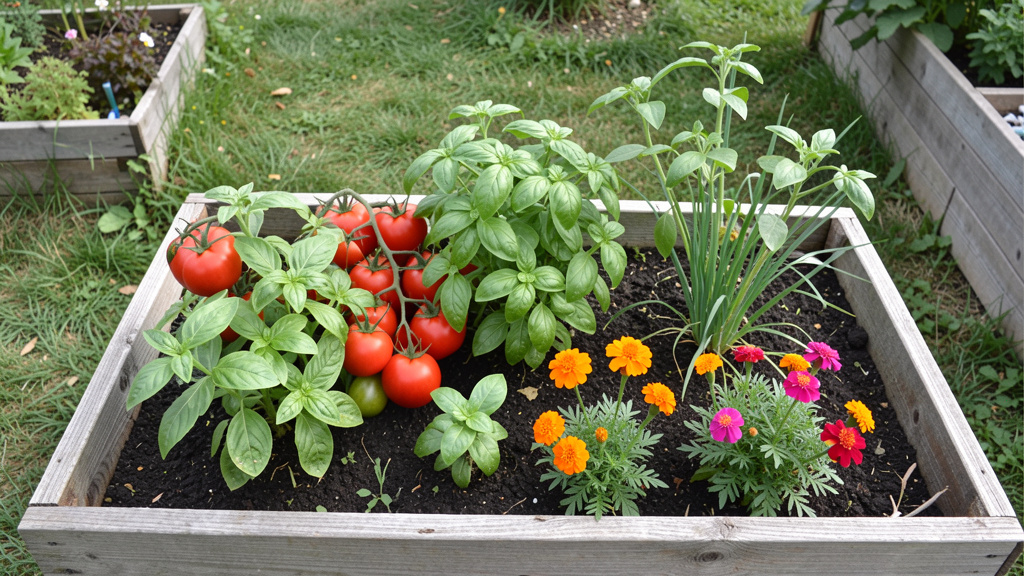
Move Beyond Folklore Charts—Master the Ecological Framework for Designing Resilient, Self-Sustaining Garden Ecosystems
Companion planting is far more than a nostalgic gardening tip or a simple list of “friends and foes.” It is a sophisticated ecological strategy that harnesses the invisible conversations between plants—the chemical signals, root exudates, microclimate modifications, and habitat creations that occur beneath and above the soil. When intentionally designed, these relationships can help suppress pests with reduced reliance on interventions, support soil vitality through natural processes, conserve moisture, attract pollinators, and contribute to overall garden resilience. This comprehensive guide transcends fragmented folklore to deliver a principle-based, adaptable framework rooted in agroecology, soil science, and cross-cultural observational wisdom. Whether you steward a suburban backyard plot, a compact urban container garden, or a community allotment, you will gain the knowledge to design a living system where every plant serves a purpose, and resilience emerges from thoughtful diversity.
Introduction: From Ancient Wisdom to Ecological Intelligence
Long before synthetic inputs dominated agriculture, Indigenous cultures cultivated profound understanding of plant interdependence. The Haudenosaunee (Iroquois) “Three Sisters” system—corn, beans, and squash grown in concert—exemplifies ecological insight. Corn provides structural support; beans contribute nitrogen to the soil through symbiotic bacteria; squash vines sprawl across the earth, shading soil to suppress weeds, conserve moisture, and create physical barriers. This triad demonstrates how complementary functions can enhance collective yield and soil renewal. Similarly, Mesoamerican farmers interplanted maize with Tagetes lucida (Mexican tarragon) to support soil health, while Southeast Asian rice systems integrated aquatic life—a precursor to modern polyculture thinking.
Today, this ancestral knowledge converges with contemporary ecological research. Studies in chemical ecology reveal that plants communicate through volatile organic compounds (VOCs). When a tomato plant experiences herbivore pressure, it may release VOCs that signal neighboring plants to activate defensive responses—and attract beneficial insects like parasitic wasps. Research published in journals such as Nature Plants and the Journal of Chemical Ecology suggests that diverse plantings can disrupt pest navigation, support soil microbial communities, and contribute to carbon cycling. Institutions including Cornell University, the Rodale Institute, and UC Davis have explored companion strategies through field trials, helping move the practice from anecdote toward evidence-informed application.
This guide synthesizes cross-cultural wisdom and peer-reviewed insights into an actionable system. We move beyond “plant basil with tomatoes” to explore why certain relationships may be beneficial, when environmental factors influence outcomes, and how to adapt principles to your unique climate, soil conditions, and gardening goals. You will learn to observe your garden as an interconnected community—not a collection of isolated specimens—and design partnerships that build long-term vitality. This is gardening as ecological stewardship: working with natural systems to cultivate abundance with intention and care.
The Symbiotic Design Framework: A Three-Layer Blueprint for Garden Resilience
Memorizing companion charts is inefficient and often misleading. Conditions vary by region, season, soil health, and microclimate. Instead, adopt the Symbiotic Design Framework—an adaptable methodology built on three interlocking layers: Ecological Roles, Spatial Strategy, and Temporal Planning. Master these layers, and you can thoughtfully diagnose challenges, design responsive solutions, and cultivate partnerships suited to your specific context. This framework transforms companion planting from guesswork into a deeply engaging, observation-based practice.
Layer 1: Ecological Roles — Decoding the Functional Language of Plants
Every plant performs multiple ecological functions. Some release biochemical compounds that may deter pests; others attract beneficial insects, contribute to soil fertility, suppress weeds, or modify microclimates. By categorizing plants into functional guilds, you assemble purposeful teams where each member addresses a specific garden need. Think of your garden as an orchestra: diversity of instruments creates harmony; uniformity creates monotony.
The Four Foundational Guilds of Companion Plants
Guild 1: Pest-Repellent Defenders — The Garden’s Biochemical Sentinels
Plants in this guild produce volatile oils, alkaloids, or sulfur compounds that may mask crop scents, create sensory complexity for pests, or alter the immediate environment. Their effectiveness often depends on density and strategic placement.
-
Alliums (Onions, Garlic, Chives, Leeks): Emit sulfur compounds that may interfere with pest navigation. Interplant chives among roses to support overall plant vitality; grow garlic near fruit trees where historical practice suggests benefit.
Why it may work: Some pests locate hosts primarily by scent. Alliums may create olfactory complexity that reduces pest efficiency. Research from institutions like the University of Vermont has indicated reduced pest activity in interplanted trials.
Common consideration: Planting alliums too sparsely may limit effect. For integration, consider placing them every 12–18 inches (30–45 cm) within susceptible crops—not just at bed edges.
Nuance: Alliums may inhibit growth of beans and peas in some conditions. Avoid direct adjacency; use a buffer crop like lettuce if concerns arise. -
Marigolds (Tagetes spp.): French marigolds (Tagetes patula) contain compounds studied for activity against certain soil-dwelling nematodes. Mexican marigolds (Tagetes minuta) emit strong aromas noted in traditional practice.
Why it may work: Nematodes detect host roots via chemical signals. Certain marigold compounds may disrupt this process. USDA and university trials have observed reduced nematode pressure following dense marigold plantings.
Critical detail: Only Tagetes species (not calendula, often mislabeled “pot marigold”) are associated with these effects. Plant densely: one marigold per square foot (30 cm) around tomatoes, potatoes, or strawberries.
Real-world context: Growers in various regions report success using marigolds as part of an integrated approach to soil health. -
Strong-Scented Herbs (Basil, Rosemary, Sage, Thyme): Basil’s aromatic compounds may deter certain insects; rosemary’s camphor notes are traditionally used near brassicas; sage is noted in historical practice for carrot beds.
Why it may work: Pest insects often rely on precise scent trails. Complex herbal aromas may create sensory interference. Some journal studies (e.g., Crop Protection) note reduced pest colonization in interplanted settings.
Pro tip: Pinch basil flowers to prolong leaf production. Allow some herbs to bloom late-season to support pollinators.
The Fundamental Principle: Repellent plants function as a distributed network—not a perimeter fence. Density, integration, and garden context matter significantly.
Guild 2: Beneficial Insect Attractors — The Habitat Architects
These plants provide nectar, pollen, shelter, and breeding sites for pollinators (bees, butterflies) and predatory insects (ladybugs, lacewings, hoverflies, parasitic wasps). A garden rich in beneficial habitat supports natural regulation: one ladybug larva may consume hundreds of aphids; parasitic wasps target specific pest eggs.
-
Umbellifers (Dill, Fennel, Cilantro, Parsley, Yarrow): Their flat-topped flower clusters (umbels) offer accessible landing platforms for tiny beneficials. Dill attracts swallowtail butterflies and predatory wasps. Yarrow’s extended bloom period supports insects through seasonal shifts.
Why it works: Beneficial insects require diverse pollen sources across seasons. Umbellifers offer shallow nectar ideal for small-bodied insects. Resources from the Xerces Society note increased beneficial activity in gardens with varied flowering plants.
Nuance: Fennel may inhibit growth of tomatoes and beans in some settings. Consider growing it in a dedicated “insectary patch” at the garden edge. Allow some dill/cilantro to bolt (flower)—this is when they attract the most allies.
Counter-example: Avoid highly aggressive spreaders like mint directly in beds. Plant in sunk pots to contain roots while allowing aromatic benefits. -
Aster Family (Cosmos, Sunflowers, Zinnias, Echinacea): Large, open flowers feed bees and butterflies; sunflower stems may host beneficial beetles. Cosmos self-seeds readily, providing continuous habitat.
Why it works: Bees navigate by visual cues. Bright, contrasting blooms act as “insect billboards.” Sunflowers can also serve as trap crops—luring certain pests away from vegetables when placed strategically on the garden perimeter.
Practical application: Plant a “beneficial border” along the south or west edge of vegetable beds: 3 cosmos, 2 zinnias, and a clump of yarrow. This creates a visible target for insects entering the garden. -
Low-Growing Ground Covers (Alyssum, Thyme, Clover): Alyssum’s tiny white flowers attract hoverflies (whose larvae consume aphids); thyme provides shelter for ground beetles that feed on slugs.
Why it works: Many beneficials nest in soil or low vegetation. Bare soil reduces habitat. Trials have observed increased hoverfly activity when alyssum is interplanted with crops like strawberries.
Mistake to avoid: Over-mulching. Leave small patches of bare soil for ground-nesting bees. Use living mulches like white clover in pathways where foot traffic is light.
Guild 3: Soil Enhancers — The Underground Alchemists
These plants actively support soil structure, fertility, and microbial life through root exudates, nitrogen fixation, or nutrient cycling.
-
Nitrogen-Fixers (Legumes: Beans, Peas, Clover, Vetch): Partner with rhizobia bacteria in root nodules to convert atmospheric nitrogen into plant-accessible forms.
Why it works: Legumes exchange carbohydrates with bacteria for fixed nitrogen. When legume roots decompose, nitrogen becomes available to neighboring plants. Research from institutions like the Rodale Institute suggests interplanting legumes can meaningfully contribute to soil nitrogen levels.
Critical nuance: Inoculating legume seeds with region-appropriate rhizobia powder may improve results—especially in new gardens. Avoid high-nitrogen fertilizers with legumes; they may suppress nodule formation.
Application: Plant bush beans between corn hills (as in Three Sisters). After harvest, chop bean plants and leave roots in soil to decompose. -
Dynamic Accumulators (Comfrey, Borage, Dandelion, Chicory): Deep taproots (comfrey reaches several feet) may draw minerals like potassium, calcium, and phosphorus from subsoil layers.
Why it works: Shallow-rooted crops (tomatoes, peppers) cannot access deep nutrients. When accumulator leaves decompose, minerals may become available in topsoil. Comfrey leaves are notably rich in potassium and other minerals.
Pro technique: “Chop-and-drop” mulching. Cut comfrey/borage leaves periodically, lay around fruiting plants. As they break down, they release nutrients directly to roots and feed soil microbes.
Caution: Dandelions spread readily. Grow in contained beds or harvest leaves regularly. Borage self-seeds prolifically—welcome it as a volunteer or deadhead flowers. -
Biofumigants (Mustard Greens, Radishes): When chopped and incorporated into soil, compounds in their tissues may suppress certain soil pathogens, nematodes, or weed seeds.
Why it works: Similar to marigolds but faster-acting in some contexts. A cover crop of mustard greens tilled under before planting may support soil health in subsequent crops.
Timing matters: For potential effect, chop plants at peak bloom and immediately incorporate into moist soil. Covering with black plastic for 1–2 weeks may help retain volatile compounds.
Guild 4: Structural & Microclimate Modifiers — The Garden Architects
These plants optimize physical space, light, moisture, and wind—creating favorable conditions for companions.
-
Living Trellises (Corn, Sunflowers, Jerusalem Artichokes): Provide vertical support for climbing beans, cucumbers, or Malabar spinach.
Why it works: Maximizes yield per square foot. Sunflowers planted north of beans create dappled shade for heat-sensitive crops like lettuce.
Design tip: Space sunflowers 18 inches (45 cm) apart to form a sturdy “living fence.” Train pole beans to climb in a spiral pattern for even coverage. -
Living Mulches (Squash, Pumpkins, Clover, Thyme): Broad leaves shade soil, suppressing weeds, reducing evaporation, and preventing erosion.
Why it works: Soil covered by living plants stays cooler, retains moisture longer, and supports soil organisms. In traditional Three Sisters plantings, squash vines significantly reduce weeding needs.
Balance is key: In small beds, use compact bush squash varieties. For pathways, white clover tolerates light foot traffic and contributes nitrogen. -
Windbreaks & Shade Providers (Sunflowers, Tall Grasses, Amaranth): Protect delicate seedlings from drying winds or intense afternoon sun.
Why it works: Wind increases transpiration (water loss). A sunflower windbreak on the west side of lettuce beds may prevent premature bolting in hot climates.
Observation cue: If seedling leaves flutter constantly, consider adding a temporary windbreak of tall grasses or bamboo stakes with burlap.
Synthesis Insight: No plant belongs to only one guild. Borage may deter certain pests (Defender), attract bees (Attractor), contribute minerals (Accumulator), and shade soil (Modifier). Prioritize multi-functional plants to maximize garden efficiency and resilience.
Layer 2: Spatial Strategy — The Geometry of Plant Relationships
Knowing which plants partner is useless without understanding where to place them. Spatial strategy minimizes competition while amplifying synergy. It considers root architecture, canopy spread, light requirements, and growth habits. Thoughtful spacing prevents more failures than plant incompatibility alone.
Root Zone Compatibility: Avoiding Underground Conflict
Plants compete least when their roots occupy different soil depths. Pair shallow-rooted crops with deep-rooted companions:
| Shallow-Rooted Crops (<12″) | Deep-Rooted Companions (>18″) | Benefit |
|---|---|---|
| Lettuce, Spinach, Radishes | Tomatoes, Carrots, Comfrey | Reduced root competition; deep roots may bring up water/minerals |
| Strawberries | Beans, Borage | Beans contribute nitrogen; borage provides mineral support |
| Cabbage, Kale | Dandelion, Chicory | Accumulators may supply calcium for brassica development |
Why this matters: Lettuce planted under tomatoes may access moisture and nutrients tomatoes bring up from depth, while lettuce’s shallow roots avoid competing with tomato taproots. This mimics natural ecosystems where canopy trees, shrubs, and ground covers coexist.
Canopy Layering: Building a Vertical Ecosystem
Design gardens in three vertical layers to capture maximum light and habitat:
- Upper Layer (3–8+ ft): Corn, sunflowers, trellised cucumbers
- Middle Layer (1–3 ft): Tomatoes, peppers, beans, basil
- Lower Layer (<1 ft): Lettuce, thyme, strawberries, alyssum
Example: In a 4×4 ft raised bed:
– North edge: 3 sunflowers (Upper)
– Middle: 2 tomato plants with basil at their base (Middle)
– South edge: Lettuce and alyssum (Lower)
Sunflowers shade lettuce from harsh afternoon sun; basil may support tomato health; alyssum attracts hoverflies near soil level. Every inch serves a purpose.
Precision Spacing Guidelines: The Goldilocks Principle
Too close = competition; too far = lost benefits. General considerations:
- Repellent Plants: Intersperse every 12–18 inches (30–45 cm) within crop rows. For tomatoes, consider one basil seedling per tomato.
- Attractor Plants: Cluster 3–5 together to create a visible “insect target.” A patch of yarrow at the end of a row often outperforms scattered singles.
- Trap Crops: Place slightly closer to expected pest pressure than main crops (e.g., nasturtiums 6 inches from cabbage). Monitor and remove infested leaves promptly.
- Living Mulches: Space squash 24–36 inches (60–90 cm) apart to allow vines to sprawl without smothering neighbors.
Pro Technique: The “Thumb Rule” for transplants. When setting seedlings, leave a gap equal to the width of your thumb between dissimilar plants. This allows growth without crowding. For seeds, follow packet spacing but consider slight reduction for companions (e.g., if carrots say 3″, plant 2.5″ with radishes).
Container & Small-Space Adaptations
Companion planting excels in confined areas. Key principles:
– Prioritize multi-functional plants: Borage (potential pest deterrence, pollinator attraction, mineral contribution) in a pot with tomatoes.
– Use vertical space: Train cucumbers up a trellis on the north side of a container; plant radishes in the shaded soil below.
– Avoid overcrowding: In a 15-gallon (57L) fabric pot:
– Center: 1 determinate tomato
– East side: 3 basil plants
– West side: 1 French marigold
– Soil surface: Creeping thyme (spills over edge)
– Herb Spiral: Build a spiral-shaped raised bed (stone or wood). Plant drought-tolerant rosemary and thyme at the top (fast drainage); moisture-loving mint and parsley at the base. Maximizes microclimates in minimal footprint.
Critical Note: Containers dry faster. Group plants with similar water needs. Avoid mint directly in pots with other herbs—it may dominate roots. Use sunk pots within the container for containment.
Layer 3: Temporal Planning — Orchestrating the Garden Calendar
Plants are not static. Their needs, benefits, and interactions shift across seasons. Temporal planning weaves companion strategies into succession planting, crop rotation, and seasonal adaptations.
Succession Planting with Companion Legacies
Design sequences where early crops prepare the way for later ones:
- Early Spring: Sow radishes with spinach. Radishes mature quickly, loosening soil for slow-growing spinach. Harvest radishes; spinach continues.
- Late Spring: After radish harvest, plant bush beans in the same spot. Beans may contribute nitrogen for the next crop.
- Early Summer: Harvest beans. Plant kale or broccoli. Residual soil benefits may support leafy growth.
- Fall: After kale, sow crimson clover as a cover crop. It may fix nitrogen over winter and suppress weeds.
Why it works: Each crop leaves the soil in a condition that may benefit its successor. Radishes break compaction; beans replenish nitrogen; clover protects soil. This creates a continuous cycle of support.
Seasonal Companion Shifts
Adjust partnerships with the calendar:
- Cool Season (Spring/Fall):
- Nasturtiums may deter aphids on kale and cabbage.
- Chives planted near apple trees are noted in traditional practice for supporting tree health.
- Garlic cloves planted around rose bushes are a common seasonal practice.
- Warm Season (Summer):
- Basil is traditionally paired with tomatoes for potential pest deterrence and gardener preference.
- Borage planted near squash may attract pollinators for better fruit set.
- Marigolds bordering potato beds are widely used in organic systems.
- Transition Periods:
- After harvesting garlic in midsummer, plant carrots in the same spot. Residual compounds may support carrot health.
- Sow buckwheat as a “nurse crop” when transplanting fall brassicas. It shades soil, suppresses weeds, and attracts beneficials until brassicas establish.
Integrating with Crop Rotation
Companion planting complements—but does not replace—rotation. Rotate crop families annually to disrupt disease cycles. Weave companions into the rotation:
- Year 1 (Tomato Family): Tomatoes + basil + marigolds
- Year 2 (Legume Family): Bush beans + nasturtiums (trap crop consideration)
- Year 3 (Brassica Family): Broccoli + thyme + dill (attracts wasps for cabbage worms)
- Year 4 (Root Family): Carrots + onions + rosemary
Tracking Tip: Keep a garden journal with sketches. Note: “2023: Tomatoes in Bed A with basil. Observed minimal pest activity. Soil test: N 8 ppm.” This builds personalized knowledge over time.
Cover Crops as Seasonal Companions
Cover crops support the soil ecosystem. Integrate them strategically:
- Winter Kill (Oats, Mustard): Sow in fall; die in hard frost, leaving protective mulch. Mustard may support soil bioactivity.
- Overwintering (Crimson Clover, Hairy Vetch): Fix nitrogen through winter; chop in spring before planting.
- Summer Cover (Buckwheat): Sow in empty beds for 4–6 weeks. Suppresses weeds, attracts bees, and adds organic matter when tilled under.
Advanced Technique: “Living pathways.” Sow white clover between raised beds. It may fix nitrogen, stay low under light foot traffic, and encourage beneficial insect movement. Mow occasionally to manage height.
Advanced Applications: Solving Real Garden Challenges
Targeted Pest Management Without Pesticides
Move beyond generic advice. Match companions to specific challenges using this evidence-informed approach:
| Pest | Vulnerable Crops | Companion Strategy | Mechanism & Implementation Tips |
|---|---|---|---|
| Aphids | Roses, lettuce, beans | Nasturtiums (trap crop), garlic chives, alyssum | Plant nasturtiums between rose bushes. Aphids may prefer nasturtiums; check daily and remove infested leaves. Underplant roses with garlic chives—their vertical growth minimizes competition, and scent may create a protective zone. Alyssum between lettuce rows attracts hoverflies. |
| Cabbage Worms | Broccoli, cabbage | Thyme, sage, rosemary, dill | Interplant thyme every 12″ among brassicas. Strong scents may mask host odor. Allow dill to flower at bed edges to attract parasitic wasps that target caterpillars. |
| Tomato Hornworm | Tomatoes, peppers | Basil, borage, marigolds | Plant basil within 6″ of each tomato stem. Borage nearby may attract braconid wasps (hornworm predators). French marigolds are commonly used near potatoes and tomatoes. |
| Squash Bugs | Zucchini, squash | Radishes, nasturtiums, tansy | Sow radish seeds around squash hills. Radishes may act as a sacrificial trap crop—squash bugs sometimes prefer them. Remove infested radish leaves promptly. Tansy (in pots) is noted in historical practice; keep away from pets due to toxicity. |
| Carrot Rust Fly | Carrots, parsnips | Onions, leeks, rosemary | Alternate rows: carrot-onion-carrot. Fly locates carrots by scent; alliums may create confusion. Rosemary sprigs placed among seedlings add aromatic complexity. |
| Colorado Potato Beetle | Potatoes, eggplant | Catnip, tansy, beans | Border potato rows with catnip (contains compounds noted for repellency). Interplant bush beans—they may mask potato scent and contribute nitrogen. Hand-pick beetles early morning when sluggish. |
Critical Implementation Note: Trap crops require active management. If nasturtiums become heavily infested with aphids, prune affected leaves immediately. Never let trap crops go to seed near main crops—they can become pest reservoirs.
Flavor Enhancement & Nutritional Synergy: The Subtle Alchemy
While controlled studies on flavor are limited, centuries of gardener observation and emerging research suggest plant partnerships may influence taste and nutrition through reduced stress and soil health:
-
Tomatoes + Basil: Many gardeners anecdotally report enhanced tomato flavor when grown near basil. Hypothesis: Reduced pest pressure may allow plants to allocate energy to fruit development. Basil’s proximity may also subtly influence the garden microenvironment. Try this: Grow two identical tomato varieties side-by-side—one with basil, one without. Harvest ripe fruit simultaneously. Conduct a blind taste test with family. Note differences in sweetness, acidity, and aroma.
-
Cabbage Family + Chamomile: European gardening traditions often pair chamomile with brassicas. Chamomile releases compounds through root exudates and decomposing leaves that may support soil mineral availability. Application: Tuck chamomile seedlings between broccoli plants. Allow some to flower for pollinators.
-
Strawberries + Borage: Cottage garden traditions link these plants. Borage’s deep blue flowers attract bees for thorough pollination (resulting in larger, well-formed berries). Its mineral-rich leaves, when used as chop-and-drop mulch, may support berry development. Gardeners often report strawberries taste sweeter and more aromatic. Test it: Mulch half your strawberry patch with borage leaves; leave the other half bare. Compare berry size and flavor at harvest.
Scientific Context: Research in journals like Frontiers in Plant Science suggests intercropping may influence phytonutrient levels in some vegetables. While flavor perception is subjective, healthier plants under reduced stress consistently produce more nutrient-dense, flavorful harvests. Companion planting supports overall plant vitality—indirectly elevating taste potential.
Disease Prevention: Disrupting Pathogen Pathways
Diversity is a foundational disease defense strategy. Monocultures create vulnerability; polycultures create resilience.
-
Powdery Mildew on Cucurbits: Interplant radishes or nasturtiums among squash. Their different leaf structures may improve air circulation around squash leaves. Some gardeners spray leaves weekly with diluted milk (1 part milk to 9 parts water)—the proteins may create a protective film. Why it works: Airflow reduces humidity on leaf surfaces, inhibiting spore germination. Radish roots may also release compounds that support soil microbial balance.
-
Early/Late Blight in Tomatoes: Surround plants with garlic, chives, or basil. Allium compounds have documented antimicrobial properties in laboratory settings. Mulch heavily with straw to prevent soil-borne spores from splashing onto leaves during rain. Critical action: Remove lower leaves touching soil. Space plants for airflow. Never compost diseased material—bag and discard.
-
Clubroot in Brassicas: Rotate crops rigorously. Before planting brassicas, sow mustard greens as a biofumigant cover crop. Chop at bloom and incorporate into soil. Mustard compounds may suppress Plasmodiophora brassicae, the clubroot pathogen. Soil note: Clubroot thrives in acidic soil. Test pH; amend with lime to raise pH above 7.2 if needed and appropriate for your crops.
Prevention Mindset: Companion planting is primarily prophylactic, not curative. Once disease is present, remove affected plants immediately. Focus energy on creating conditions where disease struggles to establish: diverse plantings, healthy soil biology, proper spacing, resistant varieties, and good sanitation.
Addressing Common Challenges & Misconceptions
“I Planted Basil with Tomatoes—Why Did Hornworms Still Attack?”
Companion planting reduces risk; it doesn’t guarantee immunity. Consider these factors:
– Density: One basil plant per tomato row may be insufficient. Plant basil within 6 inches of each tomato stem for closer integration.
– Plant Health: Stressed tomatoes (from drought, poor soil) may be more vulnerable. Ensure consistent watering and soil fertility.
– Pest Pressure: During high pest years, even good companions need backup. Hand-pick worms at dusk. Look for white cocoons on worm backs—these are braconid wasp larvae; leave them to hatch and parasitize other worms.
– Timing: Basil should be established before pests arrive. Start basil indoors 4 weeks before last frost; transplant with tomatoes.
Plants to Approach with Awareness: Allelopathy & Competition
Some plants may inhibit neighbors under certain conditions:
– Fennel: May release compounds that suppress growth of tomatoes, beans, and carrots in some settings. Grow fennel in isolation—in a dedicated pot or far corner of the garden.
– Black Walnut Trees: Produce juglone, toxic to tomatoes, potatoes, peppers, and eggplants. Avoid planting susceptible crops within the tree’s drip line. Juglone persists in soil after tree removal.
– Sunflowers: Some varieties may release compounds that affect potatoes and beans. Choose varieties noted for compatibility if interplanting. Better yet, use sunflowers as perimeter plants.
– Heavy Feeders Together: Corn and squash compete for resources. Only pair them with beans (as in Three Sisters) to replenish nitrogen. Without beans, both may struggle.
Small-Space Realities: When Competition Outweighs Benefits
In dense urban gardens, overcrowding is a common challenge. Signs: stunted growth, yellowing leaves, reduced yield. Solutions:
– Prioritize: Choose 1–2 high-impact companions per crop (e.g., for tomatoes: basil + marigold).
– Verticalize: Grow vining crops (cucumbers, pole beans) on trellises. Plant shallow-rooted lettuce beneath.
– Container Clustering: Place pots of companions close together (within 12 inches) so scents and root zones may interact, but roots remain separated. Group tomato pot with basil pot and marigold pot.
– Observe & Adapt: If a companion shows stress, adjust placement. Gardening is iterative. Your journal is your best tool.
Your Questions, Answered
Q: Is companion planting scientifically proven, or just gardening folklore?
A: It exists on a spectrum of evidence. Some pairings have strong research support: marigolds and nematode management (USDA and university studies), alliums masking carrot scent (University of Vermont trials), and umbellifers attracting beneficials (Xerces Society resources). Other traditional pairings lack controlled studies but persist across cultures and centuries of observation—suggesting empirical validity. View companion planting as an evidence-informed toolkit. Prioritize strategies with scientific backing for critical issues (pest pressure), and experiment thoughtfully with traditional pairings for soil health or personal preference. Track results in your journal to build context-specific understanding.
Q: Can I use companion planting in raised beds or square foot gardening?
A: Absolutely—and these systems excel with precise spatial control. In square foot gardening:
– Assign each square foot intentionally. Example: 1 sq ft = 1 tomato + 1 basil plant + 1 marigold seedling.
– Use vertical space: Train cucumbers up a trellis on the north edge; plant radishes in the shaded squares below.
– For 4×4 ft raised beds: Create zones. North side: tall plants (sunflowers); center: medium crops (tomatoes with basil); south edge: low-growers (lettuce, alyssum).
Ensure beds are at least 12 inches (30 cm) deep for healthy root development. Avoid overcrowding—follow spacing guidelines adjusted for density.
Q: How close must companion plants be to work?
A: Proximity depends on the mechanism:
– Scent-based considerations (basil, mint): Within 12–18 inches (30–45 cm) of target crop.
– Trap crops (nasturtiums): Slightly closer to expected pest pressure than main crop (e.g., 6 inches from cabbage).
– Soil enhancers (beans): Roots should intermingle—plant within 6 inches (15 cm).
– Attractors (yarrow): Cluster 3–5 plants together; place clusters every 10–15 feet (3–4.5 m) through the garden.
When uncertain, observe. If pests persist on your main crop, add more companion plants incrementally.
Q: Do companion plants need to flower to attract beneficial insects?
A: For attractor plants, flowering is essential—flowers provide nectar and pollen. However:
– Allow herbs like dill, cilantro, and fennel to bolt (flower) specifically for insect habitat. Harvest leaves before flowering for culinary use; let some plants go to seed.
– Deadhead spent flowers on perennials like yarrow to encourage reblooming.
– Include early, mid, and late-season bloomers (e.g., alyssum in spring, cosmos in summer, sedum in fall) to support insects year-round.
Beneficial insects also need water: place a shallow dish with stones (for landing) and fresh water near insectary patches.
Q: Can companion planting replace crop rotation?
A: No—they are complementary pillars of soil health. Rotation prevents soil-borne disease buildup and nutrient depletion over years (e.g., avoid planting tomatoes in the same spot annually). Companion planting addresses in-season interactions (pests, soil vitality). Use both: rotate crop families on a 3–4 year cycle, and within each season, deploy companions for added resilience. Example: Year 1—Tomatoes with basil/marigolds; Year 2—Beans with nasturtiums; Year 3—Brassicas with thyme/dill.
Q: What about companion planting in greenhouses or high tunnels?
A: Adapt with awareness. Enclosed spaces lack wind and natural insect movement, which may reduce scent dispersion. Strategies:
– Place pots of French marigolds directly beside tomato plants to support whitefly management.
– Hang sachets of dried lavender or rosemary near vents for aromatic diffusion.
– Introduce beneficial insects (ladybugs, parasitic wasps) and provide habitat: clip flowering dill or yarrow stems into water vials placed among crops.
– Prioritize airflow: space plants farther apart than outdoors to prevent humidity-related issues.
Greenhouses excel for starting companion seedlings early—transplant them together into the garden.
Q: How do I adapt companion planting for shady gardens?
A: Work with shade, don’t fight it. Strategies:
– Pair shade-tolerant crops: lettuce, spinach, kale, chard, parsley, mint.
– Use taller plants to create beneficial shade: Plant corn on the south side of lettuce beds to shield from hot afternoon sun.
– Avoid sun-loving companions (tomatoes, peppers, basil) in deep shade—they may stretch and weaken.
– Enhance low-light areas: Underplant fruit trees with mint (in pots) or comfrey. Tree roots typically won’t compete with shallow mint; comfrey mines nutrients from depth.
– Reflect light: Place light-colored stones or mulch on the north side of shade-loving beds to bounce available light upward.
Q: Are there companions for native plant gardens or wildlife habitats?
A: Absolutely—and this is where companion planting shines ecologically. Prioritize native species that evolved together:
– Pollinator Meadow: Pair milkweed (monarch host) with coneflowers, black-eyed Susans, and blazing star. Their varied bloom times support bees/butterflies all season.
– Woodland Garden: Grow trilliums with ferns and wild ginger. Ferns provide moisture-retaining shade; ginger suppresses weeds.
– Regional Research: Consult native plant societies (e.g., Lady Bird Johnson Wildflower Center) for plant communities indigenous to your area. These partnerships support local ecology far more effectively than non-native pairings. Avoid invasive species like garlic mustard or periwinkle.
Q: Can companion planting help with weed suppression?
A: Yes—through multiple mechanisms:
– Living Mulches: Squash, pumpkin, or white clover vines shade soil, preventing weed germination.
– Allelopathic Plants: Rye cover crop releases compounds that may inhibit weed seed germination. Chop and drop before planting vegetables.
– Dense Planting: Follow the “no bare soil” principle. After harvesting radishes, immediately sow lettuce or spinach to occupy the space.
– Strategic Pairing: Plant quick-growing crops (arugula) between slow starters (carrots). Arugula shades soil until carrots establish, then harvest arugula.
Combine with mulch (straw, wood chips) for maximum effect. Weeds thrive in disturbed, exposed soil—keep it covered.
Q: How do I keep track of all these partnerships without overwhelm?
A: Simplify with systems:
– Garden Journal Template: Sketch bed layouts each season. Note: Crop, Companions, Observations (pests, yield), Adjustments for Next Year.
– Digital Tools: Apps like Garden Planner or Planter allow drag-and-drop companion mapping with alerts for potential incompatibilities.
– Start Small: Focus on 3–5 high-impact partnerships your first year (e.g., tomatoes+bassil+marigold; carrots+onions; squash+radishes). Master these before expanding.
– Physical Reminders: Paint companion pairings on garden markers (e.g., “Tomato: Plant with Basil & Marigold”).
Progress, not perfection, builds confidence.
Q: Does companion planting work in container gardens on balconies or patios?
A: Exceptionally well—with intentional design:
– The Power Trio Pot (15-gallon): Center: Determinate tomato; East: 3 basil plants; West: 1 French marigold; Soil surface: Creeping thyme (spills over edge).
– Herb Container: Rosemary (back), thyme (middle), parsley (front). Rosemary may support pest deterrence for parsley; thyme suppresses soil pests.
– Strawberry Tower: Plant strawberries in pockets; tuck alpine strawberries or thyme at the base. Thyme may deter soil pests and adds visual appeal.
– Key Tips: Use quality potting mix (not garden soil). Ensure pots have drainage holes. Group plants with similar water needs. Rotate pots seasonally for even sun exposure. Containers dry faster—check moisture daily in heat.
Q: What if a “good” companion attracts pests to my garden?
A: This is intentional in trap cropping—but requires management. Nasturtiums will attract aphids. The strategy:
1. Place trap crops between pest source and main crop (e.g., nasturtiums on the windward side of roses).
2. Monitor daily. At first sign of heavy infestation, prune affected leaves.
3. Never let trap crops flower and set seed near main crops—they can become pest reservoirs.
4. Balance with repellents: Plant garlic chives around roses and nasturtiums nearby. The chives may repel while nasturtiums lure.
Trap cropping is advanced but highly effective when managed actively. Start with low-risk repellents (basil, marigolds) before experimenting with traps.
Conclusion and Next Step
Companion planting is not a rigid set of rules but a dynamic language of ecological relationships. It invites you to observe deeply, experiment thoughtfully, and collaborate with nature’s intelligence. By embracing the Symbiotic Design Framework—understanding plant roles, designing intentional spaces, and planning across time—you cultivate more than vegetables. You nurture resilience, biodiversity, and a profound connection to the living world. Your garden becomes a sanctuary where soil teems with life, pollinators dance between blooms, and harvests reflect the harmony you’ve woven through attentive care.
Recap: The Three Pillars of Strategic Companion Planting
- Function First: Diagnose your garden’s needs (pest pressure, soil fertility, space constraints). Select companions from the four guilds to address them intentionally—not randomly.
- Design with Precision: Layer plants vertically and horizontally. Respect root zones, canopy spread, and spacing guidelines. Adapt strategies to your space—raised beds, containers, or in-ground plots.
- Adapt Through Observation: Track results. Rotate crops. Adjust partnerships yearly. Let your garden teach you. Wisdom grows from attentive practice.
The 24-Hour Rule: Your Immediate Action Step
Within the next day, take one small, concrete step to activate this knowledge:
– If planning next season: Sketch a single 4×4 foot garden section. Choose one primary crop (e.g., tomatoes). Select two companions: one from the Defender guild (basil), one from the Attractor guild (marigold). Note exact placement on your sketch.
– If your garden is active now: Identify one challenge (e.g., aphids on roses). Tomorrow, transplant 3–5 garlic chive seedlings around the base of the roses. Observe changes over the next 14 days.
This tiny action bridges theory and practice. Momentum begins with a single seed.
The Big Picture: Cultivating Interconnection
Companion planting is a metaphor for how we might live: recognizing interdependence, valuing diversity, and designing systems where every element supports the whole. As you nurture these plant partnerships, you contribute to soil health, pollinator survival, and local food resilience. You join a global community of gardeners—from Indigenous stewards to urban balcony growers—who choose collaboration over control. Share your insights with neighbors. Gift seedlings of proven companions. Let your garden be a quiet testament to the power of harmony. The most abundant harvests grow not just in soil, but in shared wisdom and mindful action.
Explore Our Complete System:
The Organic Gardener’s Soil Building Handbook | Mastering Crop Rotation for Year-Round Harvests | Attracting Beneficial Insects: A Habitat Creation Guide | Small-Space & Container Gardening Mastery | The Seasonal Garden Journal: Templates for Observation & Growth | Regenerative Lawn Care: From Turf to Habitat | Seed Saving for Gardeners: Preserve Heirloom Varieties